Protein De Novo Design: ushering in the era of programmable molecules of life
Published on June 11, 2026
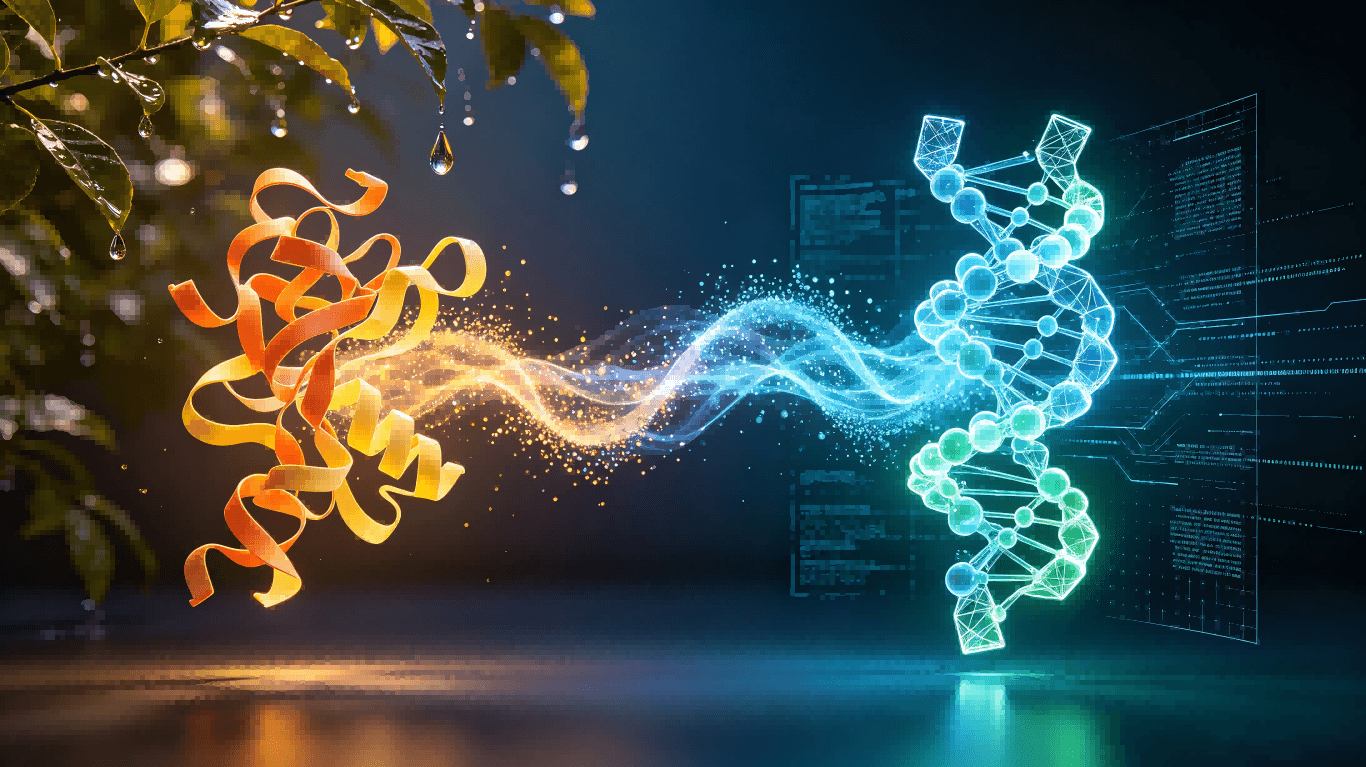
In 2003, a remarkable molecule was born in a laboratory at the University of Washington. Composed of 93 amino acids, it possessed a brand new three dimensional topology never seen in nature. The research team designed its sequence using computational algorithms. Subsequent in vitro synthesis and X ray crystallography confirmed that its actual three dimensional conformation matched the computer model with high fidelity—the root mean square deviation (RMSD) of Cα atoms between the designed model and the crystal structure was approximately 1.17 Å. This protein, named Top7, broke a decades old barrier in the field.
Before this breakthrough, human utilization and engineering of proteins had always been confined within the framework of natural evolution. Whether optimizing the catalytic performance of industrial enzymes or improving the binding affinity of antibodies, the essence was always tinkering on the basis of natural proteins. Top7 marked a turning point: humanity stepped out of the passive stage of “using” natural proteins and entered the era of actively “writing” entirely new proteins.
I. The Labyrinth of Natural Sequences: Inherent Difficulties of Traditional De Novo Design

Rare Luminance Amid the Amino Nebula
To understand the technological leap of protein de novo design, one must first return to the fundamental principle of protein folding. Proteins are linear chains of 20 standard amino acids; in aqueous environments they spontaneously fold into stable three dimensional structures. In 1972, Nobel laureate Christian Anfinsen proposed a core tenet: the primary amino acid sequence of a protein determines its three dimensional folded conformation, and the biological function of a protein relies on that specific spatial structure. This insight became the cornerstone of protein structure research and design.
But behind this seemingly simple rule lies a sequence universe of unimaginable vastness. A protein composed of only 100 amino acids theoretically has 20¹⁰⁰ possible sequence combinations—a number far exceeding the total number of atoms in the observable universe. Among this enormous set, only a tiny fraction of sequences can spontaneously fold into compact, stable three dimensional structures. Even if a stable structure is found, the protein must also fulfill practical requirements such as catalytic activity, substrate selectivity, and thermal tolerance—difficulties that increase exponentially.
Before the rise of deep learning, researchers relied primarily on physical energy functions for protein de novo design. The logical workflow was clear: first define the target protein’s spatial shape, then use algorithms to search for the amino acid sequence with the lowest energy. However, two major drawbacks long hindered the practical application of this approach. On one hand, interatomic interactions such as van der Waals forces, hydrogen bonds, and hydrophobic effects are highly complex, and traditional energy functions could not faithfully reproduce the true energy landscape, leaving an inherent accuracy gap. On the other hand, the sequence space is so vast that search algorithms easily get trapped in local optima; consequently, many designed constructs fail to fold properly in the laboratory or exhibit only weak functionality, lacking practical value.
Mainstream design platforms at the time, such as Rosetta (based on energy functions), were deeply trapped in this dilemma. In many design tasks, research teams often had to screen thousands of candidate sequences, and the number of experimentally validated successful products was usually only a handful (e.g., single digits). A full round of design, screening, and optimization could easily take several years. This extremely low efficiency kept protein de novo design at an exploratory, laboratory bound stage for a long time.
II. Paradigm Shift: Deep Learning Reconstructs the Entire Design Workflow

Pipeline of De Novo Protein Design
Over the past decade, artificial intelligence technologies, represented by the AlphaFold series, have completely rewritten the fundamental logic of protein research. The core challenge had been predicting structure from sequence. AlphaFold, through deep learning frameworks trained on massive protein sequence structure data, achieved atomic level structure prediction. In 2024, half of the Nobel Prize in Chemistry was awarded to Demis Hassabis and John Jumper for the AlphaFold breakthrough, and the other half to David Baker for computational protein design—a powerful endorsement of the series of breakthroughs in this field.
Researchers immediately thought in the reverse direction: since AI can accurately decipher the rules from sequence to structure, could it be used to generate entirely new amino acid sequences from a desired structure or function?
The answer gradually became clear. A technological stack comprising backbone generation, sequence optimization, and structure validation took shape, marking a fundamental transition from energy driven to data driven design.
The first step in protein de novo design is building a novel molecular backbone. Traditional backbone design relied on stitching together fragments from natural protein structures, limited by the diversity of natural folds. In contrast, diffusion models such as RFdiffusion introduced an entirely new paradigm: starting from random noise, they iteratively denoise to generate original protein backbones under specified constraints—such as geometric restrictions, target binding, or the placement of catalytic residues. Researchers can set design objectives (e.g., targeting a disease relevant protein, requiring a specific symmetry, or preserving defined catalytic residues), and the model adapts during generation.
The improvement in efficiency is striking. Traditional energy function based binder design often required experimental validation of tens of thousands of candidate samples to find a few effective molecules. With RFdiffusion combined with sequence design tools, only tens to a few hundred candidates are needed to obtain experimentally validated successes; in some design tasks, the overall success rate increased by about one to two orders of magnitude.
After the backbone is formed, the sequence design step takes over. ProteinMPNN, a mainstream sequence optimization tool, uses deep learning on the statistical relationships between sequence and structure in global protein databases to rapidly assign suitable amino acid sequences to a given backbone. Compared with traditional physics based methods, it achieves substantially higher sequence recovery rates, and the designed proteins exhibit better solubility and thermal stability.
The combination of RFdiffusion and ProteinMPNN has integrated fragmented, manual R&D into an automated pipeline. From specifying a functional requirement to generating the backbone, assigning the sequence, predicting the three dimensional structure, and outputting candidate molecules, the entire process can be completed in hours to days. What used to take months or even years can now be achieved efficiently with computational power. Protein de novo design has truly left the era of slow, handcrafted engineering.
III. Empirical Validation: Three Application Scenarios Demonstrate Practical Value

Triad of Engineered Functional Proteins
AI driven de novo design is no longer confined to theoretical speculation. Several real world cases across biomedicine and industrial materials have demonstrated the reliability and practicality of the technology.
• Artificial Luciferase – Building a Functional Catalytic Molecule from Scratch
Luciferases are widely used in bioimaging and reporter gene assays. However, natural luciferases are limited in number and often exhibit poor catalytic activity toward artificial substrates, constraining further applications. Using deep learning models, a research team generated a large number of structurally diverse protein scaffolds based on natural protein folds and then performed iterative screening and optimization against a target substrate.
The resulting LuxSit i artificial luciferase (molecular weight only 13.9 kDa) has a melting temperature exceeding 95 °C. Its catalytic efficiency (kcat/Km=106kcat/Km=106 M⁻¹ s⁻¹) toward the artificial substrate diphenylterazine reaches the level of natural luciferases, and its photon flux is about 38 % higher than that of the natural homolog. The significance of this achievement is that AI driven de novo design has moved beyond merely stabilizing a structure to accurately constructing active centers with full catalytic function—a leap from “making a structure” to “making a function.”
• Mini Protein Binder Targeting MKL1 – Tackling a “Undruggable” Disordered Target
MKL1 is a key transcriptional co activator in the Actin MRTF SRF signaling pathway, involved in signal transduction and gene expression regulation. Its critical RPEL domains are highly disordered in solution, making them extremely difficult to target with small molecule drugs or antibodies. This is a classic “undruggable” target, long hampering mechanistic studies and drug development for related diseases.
To tackle this challenge, the research team built a complete AI design pipeline: RFdiffusion was used to generate mini protein backbones targeting the RPEL1 domain; sequences were optimized by ProteinMPNN; and multiple rounds of structural screening and evaluation were performed with AlphaFold2/3. The final mini protein binder, A(F) 1, was characterized by isothermal titration calorimetry (ITC), giving a dissociation constant of approximately 2.5 μmol/L against His MKL1(5 75) (the standard deviation was large, so this value should be considered preliminary), a stoichiometry of 0.913 ± 0.116 (approximately 1:1 binding), and a binding strength comparable to that of the natural ligand G actin. AlphaFold3 structural predictions indicate that the binder may induce the originally disordered RPEL domain to adopt a stable conformation through intermolecular hydrogen bonds and complementary hydrophobic interfaces. This case demonstrates that AI driven de novo design can effectively target disordered proteins that are refractory to traditional approaches.
• SuperMyo Ultra Stable Protein – A Biomaterial for Extreme Environments
Thermal stability and mechanical strength are critical properties for industrial proteins and biomaterials. Combining AI design with molecular dynamics simulations, researchers developed the SuperMyo series of ultra stable proteins, pushing the performance limits of natural proteins.
Experimental data show that the best performing variant has a mechanical unfolding force of about 1000 pN, roughly 4 5 times that of the corresponding domain of natural titin. Its melting temperature exceeds 100 °C, and it retains structural integrity even after exposure to 150 °C (no irreversible denaturation). Hydrogels prepared from this protein remain stable after standard autoclaving at 121 °C, whereas hydrogels from natural proteins rapidly denature and precipitate under the same conditions. This achievement opens new avenues for high temperature industrial catalysis and the development of biomaterials that withstand extreme environments.
IV. Future Outlook: From Single Molecules to Intelligent Biological Systems
Current protein de novo design is only the beginning of the programmable era of biomolecules. The ultimate goal of the field is not simply to replicate natural protein functions, but to create entirely new protein molecules—and even biological nanomachines—that never existed in nature and are tailored for human defined applications. This development path is steadily becoming clearer.
At the molecular design level, research boundaries are expanding from single domain proteins to multi subunit protein complexes and symmetrical protein assemblies. Using symmetry constraints, researchers have successfully designed large protein assemblies with icosahedral symmetry; such molecules hold promise as novel vaccine delivery vehicles and nanoscale reaction containers, with potential applications in biomedicine and nanotechnology.
At the R&D model level, AI design is deeply integrating with automated experimental platforms, forming a closed loop system of “design synthesize test iterate.” After AI generates a large number of candidate sequences, automated equipment can simultaneously perform gene synthesis, protein expression, and functional assays. Experimental data are fed back to the AI model in real time to drive the next round of optimization. This closed loop system can dramatically shorten R&D cycles, compressing work that would have taken months or even years into weeks.
At the same time, the application boundaries of the technology continue to expand. Initial progress has been made in de novo design algorithms for other biomacromolecules, such as RNA. Moreover, synthetic biology platforms that integrate protein design, metabolic pathway engineering, and genetic circuit construction are gradually becoming the foundational infrastructure for biomanufacturing and cellular engineering, driving the upgrading of the entire biotechnology industry.
V. Conclusion: From Reverence for Nature to Programming Life
Looking back at the development of protein de novo design, the path of several generations of researchers is clearly traceable: in the late 1980s, the first self assembling artificial peptide appeared, validating the feasibility of artificial design; in 2003, Top7 was born, the first fully artificial globular protein that does not exist in nature; after 2020, tools such as AlphaFold, RFdiffusion, and ProteinMPNN arrived one after another, elevating the efficiency and success rate of de novo design by orders of magnitude.
Today, an ordinary research team can complete a target specific protein design within weeks—something unimaginable a decade ago. Yet the rapid pace of technological development also brings new challenges: as AI can quickly generate vast numbers of candidate sequences, how can the throughput of experimental validation be similarly scaled up? When the length of designed proteins increases from tens to hundreds of amino acids, can computational models maintain their accuracy? When we begin to design complex protein machines, can we fully elucidate the underlying principles of functional emergence? These questions will become core research directions for the next phase of the field.
From discovering proteins in the treasure house of nature to programming them with computational power and algorithms, this is a quiet scientific revolution. The 20 amino acids are like a basic code, and humanity is learning to write entirely new life molecules with that code. As proteins become a new type of programmable matter, fields such as biomanufacturing, biomedicine, and advanced materials will also embrace infinite possibilities.