News

AI Enzyme Engineering from Design Goals to Experimental Feedback
AI enzyme engineering combines sequence, structure, functional measurements, and machine learning to turn a vast mutation space into a smaller set of testable candidates. Its value is not the replacement of enzymology experiments, but a traceable loop connecting objective definition, candidate ranking, structural reasoning, and measured feedback.
Sep 29, 2026
Protein Inverse Folding from Backbone Blueprint to Candidate Sequence
Protein inverse folding does not mean unfolding a protein. It starts with a three-dimensional backbone and asks which amino-acid sequences may be compatible with that structure. The design direction is reversed from “What structure will this sequence adopt?” to “What sequences could support this backbone?” This article explains structural conditioning, motif constraints, sequence diversity, and validation, while positioning MatwingsVenus™(晓鹜™) across adjacent retrieval, design, prediction, and experimental capabilities.
Sep 29, 2026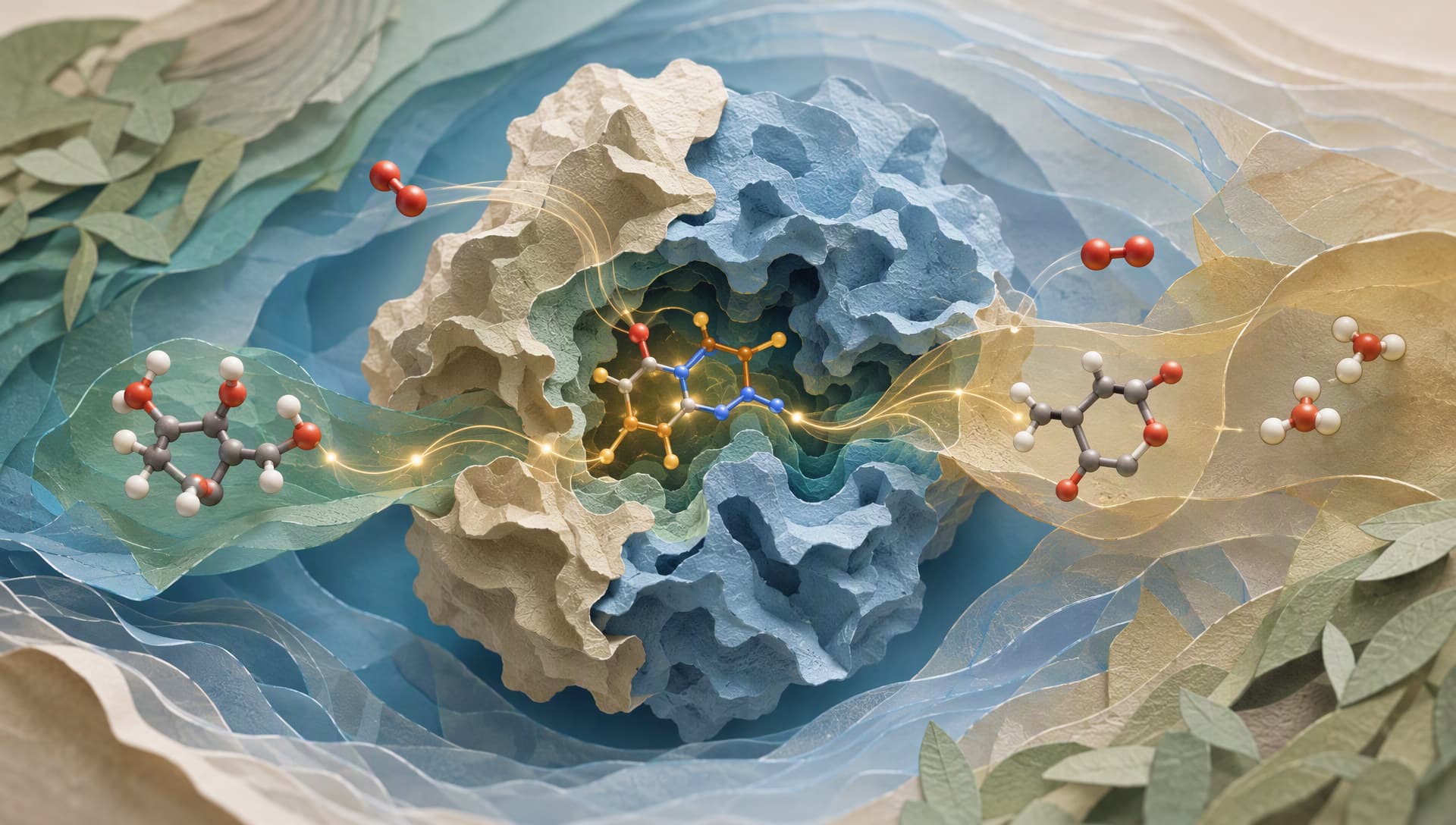
Glucose Oxidase: Managing Oxygen and Hydrogen Peroxide
Glucose oxidase uses FAD to oxidize glucose while consuming molecular oxygen and producing glucono-delta-lactone and hydrogen peroxide. Understanding these coupled effects is essential when selecting the enzyme for food processing, biosensing, biocatalysis, immobilization, or protein engineering.
Sep 29, 2026
Protein Structure Generation from Design Constraints to Candidate Backbones
Protein structure generation does not simply guess the shape of an existing sequence. It explores new, designable backbone candidates from functional goals, local geometry, topology, and other constraints, then connects those candidates to sequence design, refolding checks, physical filters, and experimental validation.
Sep 29, 2026
Why Pullulanase Makes Starch Hydrolysis More Complete
Pullulanase targets alpha-1,6 glycosidic branch linkages in starch-type polysaccharides, exposing chain segments that other hydrolases can continue to process. This article connects debranching mechanism, substrate fit, activity assays, saccharification, stability, and enzyme engineering.
Sep 29, 2026
Homology Modeling from Template Evidence to a Usable 3D Hypothesis
Homology modeling uses known structures to build a three-dimensional hypothesis for a target protein, but value depends on more than sequence similarity. Template state, alignment quality, variable regions, and intended use all shape the result. This article follows template audition, alignment review, candidate comparison, and experimental validation, while explaining where MatwingsVenus™(晓鹜™) can connect database, prediction, design, and wet-lab capabilities.
Sep 29, 2026
Phospholipase Development from Interface to Process
Phospholipase performance depends on more than activity. Cleavage site, phospholipid composition, oil-water interface, ions, and process endpoint jointly determine results. This guide connects task definition, assay design, degumming, functional lipid synthesis, and protein engineering.
Sep 29, 2026
Protein-Ligand Complex Prediction: From Poses to Evidence
Protein-ligand complex prediction is not merely about finding a small molecule pose that fits inside a pocket. It must ask whether the receptor state, ligand microstate, and pocket environment are plausible. This decision guide connects input preparation, pose inspection, interaction interpretation, and experimental validation, while showing how MatwingsVenus™(晓鹜™) can link database retrieval, structural computation, and wet-lab tasks.
Sep 28, 2026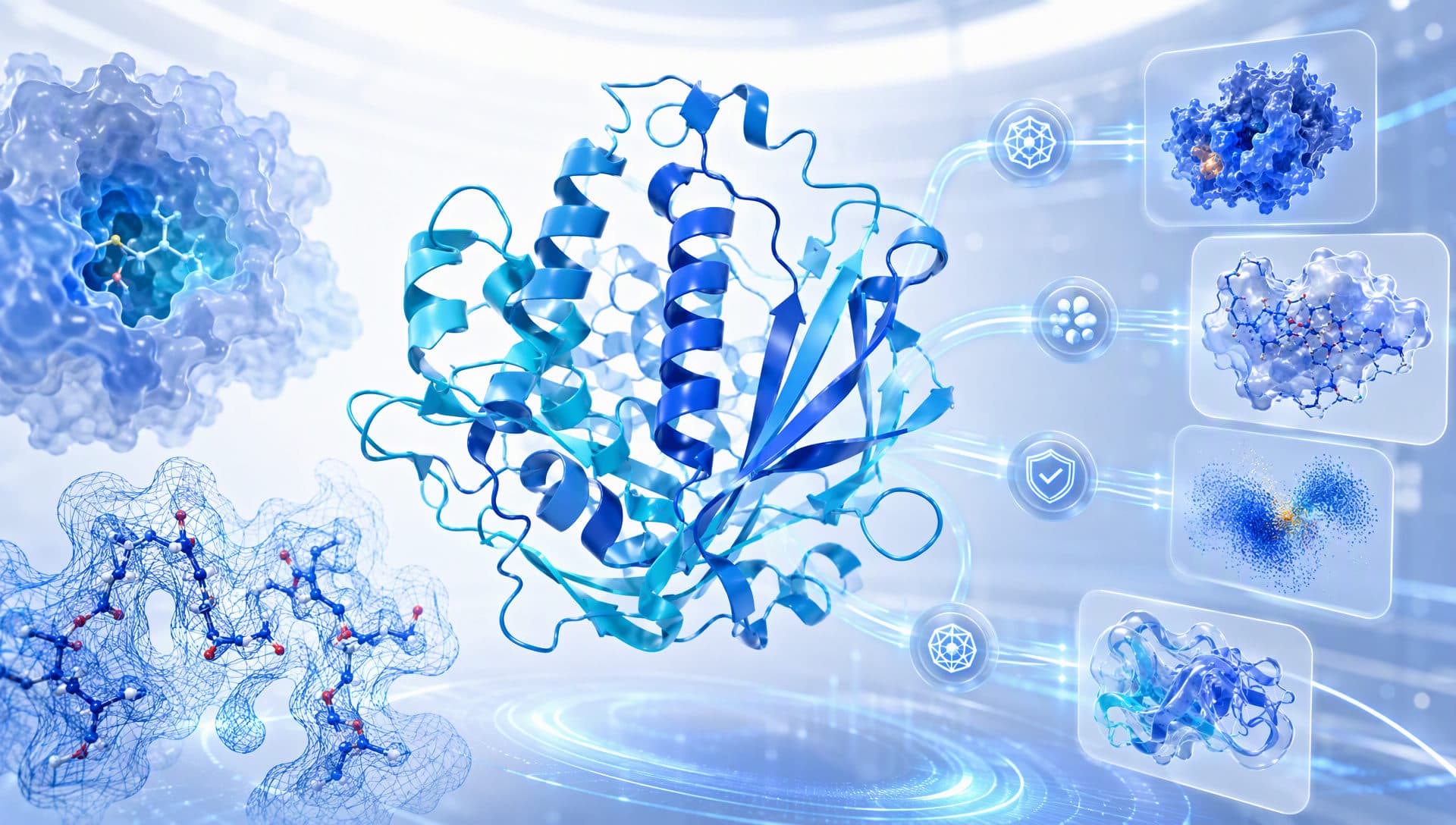
Protein 3D Structure Analysis Workflow: From Data to Decisions
In target research, enzyme engineering, and mechanistic biology, an attractive molecular rendering is not the same as a reliable conclusion. A useful protein 3D structure analysis workflow connects provenance, quality gates, functional interpretation, and validation so that teams can move from seeing a structure to making defensible R&D decisions.
Sep 28, 2026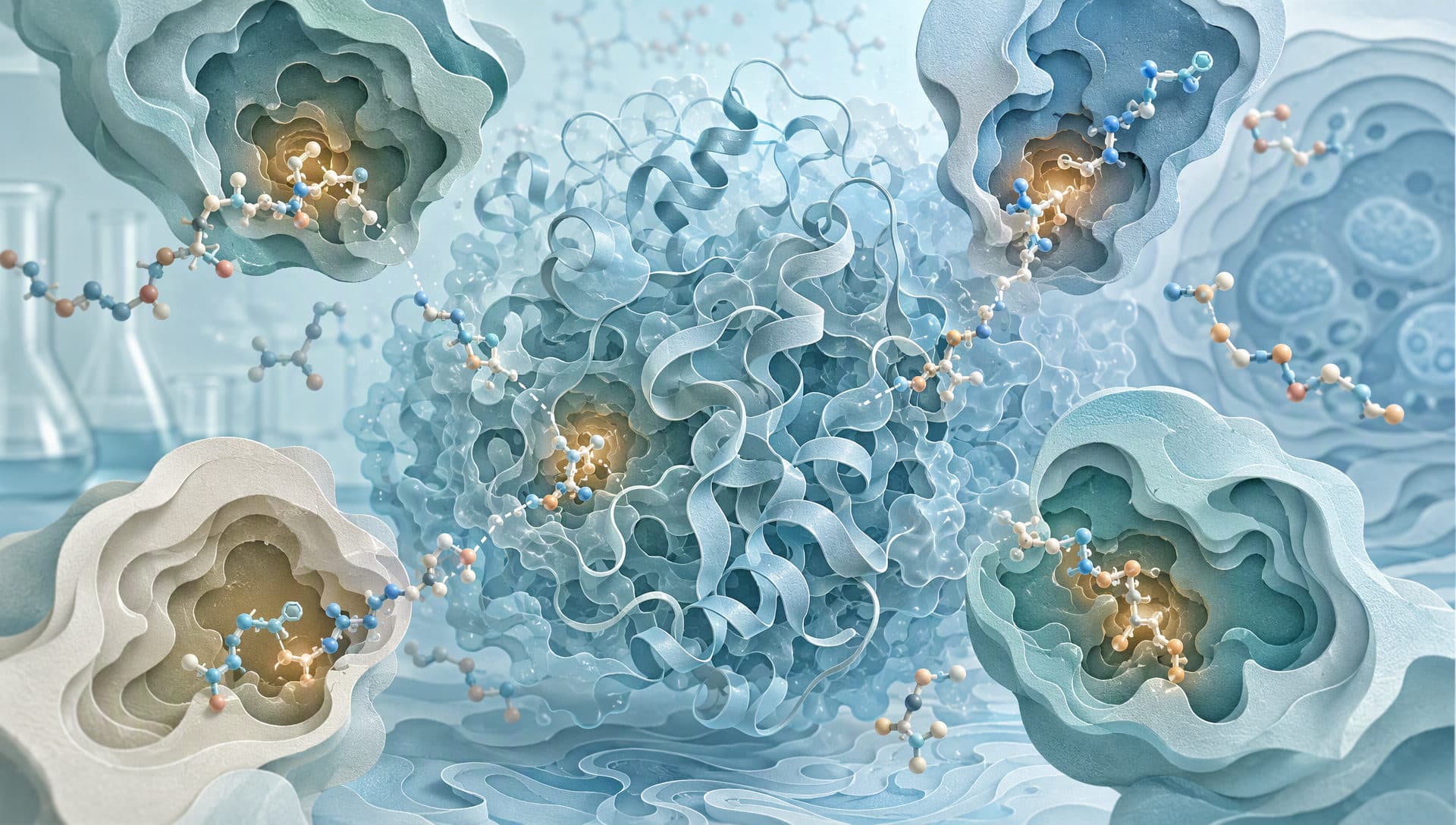
Protease Selection Beyond a Single Activity Number
Protease is a diverse enzyme group rather than one fixed catalyst. This guide explains how catalytic class, cleavage position, substrate structure, assay design, process conditions, and engineering goals shape practical selection.
Sep 28, 2026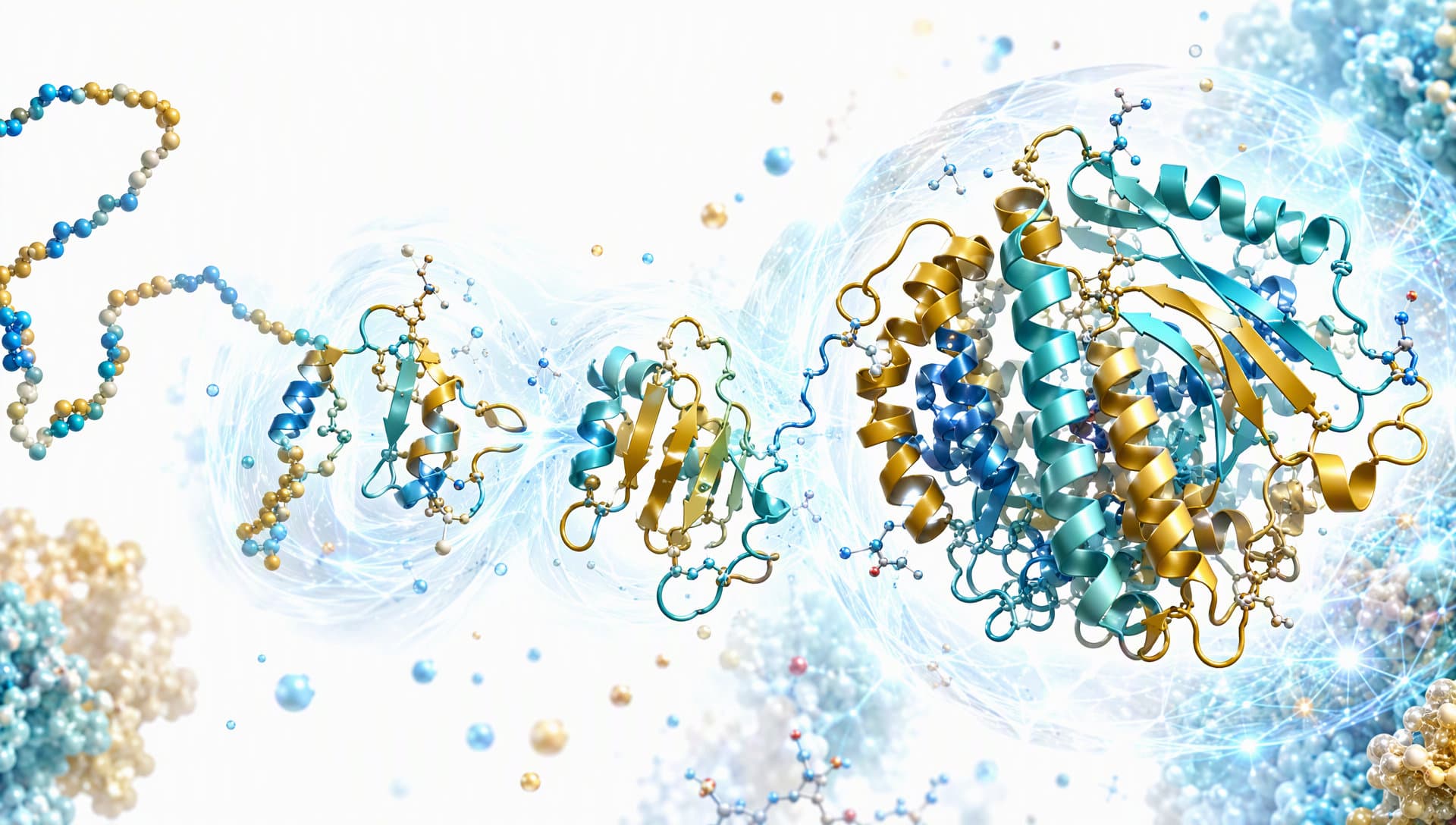
Boltz Protein Structure Prediction Tutorial: From YAML Input to Confident Decisions
This Boltz protein structure prediction tutorial walks computational biology, structural biology, protein engineering, and early drug discovery teams through installation, YAML inputs, inference, confidence interpretation, and downstream validation. It also shows how MatwingsVenus™(晓鹜™) can connect a single prediction to a traceable research workflow.
Sep 28, 2026
Protein Structure Modeling Through Three Layers of Confidence
Protein structure modeling converts sequence, template evidence, and physical constraints into a three-dimensional hypothesis, but usefulness depends on the question being asked. This article explains models through three layers—global fold, domain arrangement, and local site—then shows how MatwingsVenus™(晓鹜™) can connect database retrieval, structure prediction, downstream design, and experimental work.
Sep 28, 2026
Neutral Protease: Building a Controlled Hydrolysis Process
Neutral protease supports controlled protein hydrolysis near neutral conditions, but the category name alone does not define catalytic class, substrate preference, or stability. Using a representative development scenario, this article connects mechanism, activity assays, food and fermentation applications, expression, and protein engineering.
Sep 28, 2026
Protein Complex Structure Prediction from Encounter Models to Testable Interfaces
Protein complex structure prediction must answer more than whether two structures can fit together. It asks which subunits assemble, in what ratio, and in which biological state. This article follows an assembly-evidence chain from component definition through interface review and experimental validation, while showing how MatwingsVenus™(晓鹜™) can connect database retrieval, structural tasks, and downstream R&D.
Sep 28, 2026
Protein Structure Prediction Result Validation: From Scores to Decisions
Protein structure prediction result validation becomes valuable when a team knows which regions are dependable, which assumptions remain uncertain, and what evidence is needed before acting. This guide presents a layered path from confidence and geometry to biological context and experimental planning.
Sep 28, 2026
Can Alkaline Protease Protein Engineering Improve Stability?
Alkaline protease catalyzes peptide-bond hydrolysis under alkaline conditions and supports controlled protein processing in detergent, food, leather, and textile workflows. This guide follows a practical sequence from task definition and activity assays to stability, formulation compatibility, authentic-substrate testing, and protein engineering.
Sep 28, 2026
Protein Purification Resin Design from Microscopic Pores to a Robust Process
A protein purification resin is not simply a collection of particles packed into a column. It is a separation system shaped by the matrix, pore network, ligand, and surface chemistry. This article explains how capacity, mass transfer, pressure, elution, and cleaning interact, and introduces Protein A affinity options and process-support information available through MatwingsVenus™(晓鹜™).
Sep 27, 2026
AlphaFold 3 Complex Prediction Workflow for Practical Research
Moving from a single protein to a protein–protein, protein–nucleic acid, or protein–ligand system creates a problem larger than structure generation. Researchers must define the right entities and stoichiometry, interpret confidence at the interface, and connect the model to evidence and validation. This guide presents an AlphaFold 3 complex prediction workflow from input preparation through decision-making, with MatwingsVenus™(晓鹜™)as an evidence-led companion for database retrieval, structural analysis, and downstream R&D planning.
Sep 27, 2026
How Is Xylanase Activity Evaluated for Industrial Use?
Xylanase cleaves key glycosidic linkages in the xylan backbone of plant cell walls, but enzyme performance changes with substrate architecture, enzyme family, and operating conditions. This guide connects mechanism, assay design, food and feed uses, pulp and paper processing, thermostability, and protein engineering in one selection framework.
Sep 27, 2026
RoseTTAFold Structure Prediction for Evidence-Aware Research Decisions
RoseTTAFold structure prediction links sequence, residue relationships, and three-dimensional coordinates through continuous information exchange. Rather than focusing on which button to press, this guide explains what the model can answer, how its output should be interpreted, and how MatwingsVenus™(晓鹜™) can connect a structural hypothesis to a testable R&D decision.
Sep 27, 2026
ESMFold Structure Prediction for Evidence-Aware Protein R&D
As protein sequence collections expand, the practical bottleneck is often no longer access to sequences but deciding which structural hypotheses deserve attention. ESMFold structure prediction reads a single amino-acid sequence with a protein language model and produces an atomic-level structural candidate. Its strongest use is not as a final answer, but as an early decision layer connected to retrieval, confidence assessment, candidate screening, and experimental validation.
Sep 27, 2026
How to Choose a Protein Complex Structure Prediction Tool for Real Research Workflows
A protein complex structure prediction tool should do more than produce a compelling 3D model. Its practical value lies in connecting evidence retrieval, input preparation, interface-confidence interpretation, candidate comparison, and downstream validation into a traceable workflow that supports better research decisions.
Sep 27, 2026
A Practical Guide to ColabFold Protein Structure Prediction
ColabFold protein structure prediction connects sequence search, multiple sequence alignment, and three-dimensional modeling in an accessible workflow. This guide explains input quality control, confidence interpretation, model comparison, and validation planning, then shows how MatwingsVenus™(晓鹜™) can place a prediction inside an evidence-aware protein R&D process.
Sep 27, 2026
How Can Invertase Protein Engineering Expand the Process Window?
Invertase connects a familiar reaction—splitting sucrose into glucose and fructose—with syrup processing, fermentation, enzyme assays, immobilized catalysis, and protein engineering. This article follows that technical transition and explains how to turn a simple hydrolysis concept into a measurable, process-ready development workflow.
Sep 27, 2026
ColabFold Protein Tutorial for Practical Structure Prediction
This ColabFold protein tutorial walks from sequence preparation and monomer or complex setup to pLDDT, PAE, output handling, and downstream validation, helping research teams turn a cloud prediction into a traceable starting point for protein R&D.
Sep 27, 2026
Why Do ADC Conjugation Enzymes Matter for Product Homogeneity?
ADC conjugation enzymes are not one fixed protein class. They are biocatalytic tools that recognize natural antibody sites, engineered peptide tags, or Fc glycans. This article explains transglutaminase, Sortase A, glycan remodeling, and formylglycine routes through the lens of site access, drug-to-antibody ratio, purification, and process control.
Sep 27, 2026
How to Choose a Multiple Sequence Alignment Tool for Reliable Biological Conclusions
A multiple sequence alignment tool places protein, DNA, or RNA sequences into a shared coordinate system so that conserved positions, insertions, deletions, and family-level variation become visible. The value of the output, however, depends less on attractive colors than on whether the input sequences are genuinely comparable, the alignment strategy fits the dataset, and downstream conclusions can tolerate the remaining uncertainty.
Sep 24, 2026
Papermaking Enzymes Explained: Xylanase, Cellulase, Lipase, and Amylase
Papermaking enzymes are not a universal additive. They act on specific substrates such as xylan, cellulose surfaces, triglyceride-rich pitch, starch, and selected phenolic structures. This guide matches enzyme choice to mill problems, process windows, and measurable pulp or sheet outcomes.
Sep 23, 2026
Lactase Protein Engineering: A Practical Design-to-Test Workflow
Lactase hydrolyzes lactose into glucose and galactose, yet a strong assay result does not automatically predict performance in milk. This workflow connects raw-material profiling, activity testing, real-matrix validation, immobilization, and protein engineering.
Sep 23, 2026
AlphaFold Structure Confidence Assessment for Better R&D Decisions
AlphaFold structure confidence assessment should go beyond the color painted on a protein ribbon. This guide explains how to combine pLDDT, PAE, domain relationships, and validation boundaries, then connect those signals to evidence retrieval, protein engineering, and experimental planning with MatwingsVenus™(晓鹜™).
Sep 23, 2026
Protein Physicochemical Property Analysis: Reading the R&D Signals Hidden in Sequence
Protein physicochemical property analysis should not end with a list of molecular weight, pI, or hydropathy values. A more useful approach combines sequence-derived parameters, structural context, property predictions, and experimental conditions into an R&D profile that highlights risks in expression, purification, storage, and engineering.
Sep 23, 2026
AlphaFold Protein Structure Prediction: Build a Verifiable Research Workflow
The main challenge in AlphaFold protein structure prediction is no longer obtaining a three-dimensional model. It is turning that model into an executable, traceable, and verifiable research path. A coordinate file becomes useful only when it is connected to sequence identity, database evidence, confidence assessment, a defined scientific question, and a next experiment.
Sep 23, 2026
How to Interpret an AlphaFold PAE Plot Without Overreading It
How to Interpret an AlphaFold PAE Plot starts with one distinction: a model can be locally convincing while its global arrangement remains uncertain. This guide explains the axes, colors, diagonal blocks, off-diagonal patterns, and practical checks that turn a confidence heatmap into a better structural decision.
Sep 23, 2026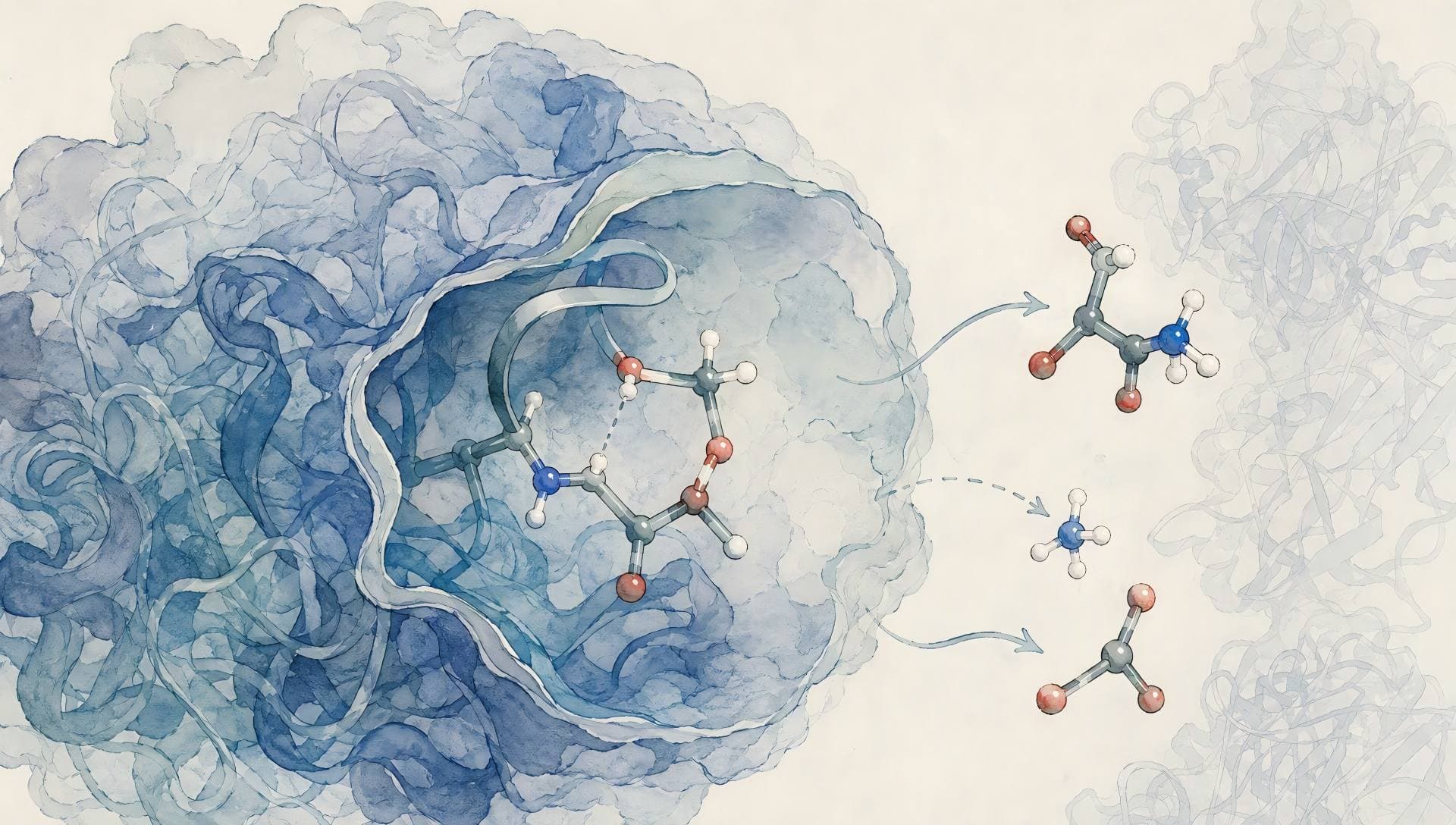
L-Asparaginase: From a Single Reaction to Multidimensional Development
L-asparaginase converts L-asparagine to L-aspartate and ammonia. This trend-focused guide explains changing priorities in mechanism, specificity, assays, food processing, stability, and protein engineering.
Sep 23, 2026
How to Interpret AlphaFold pLDDT with Confidence
How to interpret AlphaFold pLDDT is not a matter of memorizing one average score. The useful approach is to inspect confidence residue by residue, distinguish stable domains from flexible or disordered regions, combine pLDDT with PAE, and match the evidence threshold to the downstream research decision.
Sep 23, 2026
Asparagine-Converting Enzyme: Reaction Logic and Development Boundaries
An asparagine-converting enzyme usually means L-asparaginase. This guide explains terminology, catalytic logic, activity assays, substrate specificity, food processing, and protein engineering decisions.
Sep 23, 2026
Protein Molecular Weight Calculation: From Sequence Mass to Experimental Bands
Protein molecular weight calculation can rapidly estimate theoretical mass from an amino acid sequence, yet a database precursor, an expressed construct, and a mature protein may be different objects. This guide separates mass conventions, sequence boundaries, and experimental migration so discrepancies can be investigated systematically.
Sep 23, 2026
AI Scientific Illustration: From Visual Appeal to Scientific Trust
AI scientific illustration can accelerate ideation and visual iteration in life-science communication, but a usable research figure must pass four gates: evidence, logic, visual grammar, and review. This article explains how to build the scientific backbone first so every entity, arrow, and conclusion remains traceable.
Sep 22, 2026
Protein Isoelectric Point Prediction: Turning One pI Value into an Experimental Plan
The most valuable outcome of protein isoelectric point predicting is not the seemingly precise decimal, but a set of verifiable pH conditions. Treat it as a starting point for condition design rather than an endpoint, and, by integrating considerations of sequence and environment, allow the prediction to truly be incorporated into the experimental process.
Sep 22, 2026
Protein Secondary Structure Prediction: Turning Sequence Labels into Experimental Clues
Protein secondary structure prediction converts an amino acid sequence into residue-level clues about helices, sheets, and other local conformations. This guide explains how to interpret labels, boundaries, and confidence, then connect them with database evidence, structural analysis, protein engineering, and experimental validation.
Sep 22, 2026
Lipase: From Catalytic Mechanism to Industrial Application
Lipase connects interfacial catalysis with selective hydrolysis and synthesis. This guide explains screening, activity assays, protein engineering, immobilization, and the practical decisions that turn an enzyme candidate into a useful biocatalyst.
Sep 22, 2026
Protein MSA Result Interpretation: From Alignment Patterns to Research Decisions
Protein MSA result interpretation is difficult not because alignments are hard to generate, but because dense patterns of conservation, substitution, and gaps must become testable hypotheses. This guide connects sequence quality, structural context, evidence levels, and research decisions.
Sep 22, 2026
Protein Disorder Region Prediction: Finding Functional Clues in Flexible Sequences
Protein disorder region prediction should not be reduced to a “no structure” label. It can highlight dynamic ensembles, regulatory motifs, modification hotspots, and construct-design risks. This guide explains probability tracks, boundaries, evidence integration, and how MatwingsVenus™(晓鹜™) can connect retrieval, functional-site analysis, and validation decisions.
Sep 22, 2026
Papermaking Enzyme Systems Explained: A Substrate-Based Selection Guide
Papermaking Enzyme Systems are not one enzyme or one sizing chemical. The term connects pulp treatment, fiber modification, deinking, pitch control, and starch preparation. Selection should begin with the process problem and the actual substrate, then proceed through operating-window, pulp-quality, sheet-performance, and mill-compatibility checks.
Sep 22, 2026
How to Make a Protein Sequence Logo from Alignment to Insight
If you are asking how to make a protein sequence logo, the decisive work happens before clicking “generate.” You need a biologically coherent sequence set, a quality-controlled multiple sequence alignment, an appropriate frequency or information-content model, and a clear plan for interpreting the result. This guide turns those requirements into a practical workflow that connects the figure to broader protein analysis.
Sep 22, 2026
Protein Coevolution Site Analysis Guide for Better Engineering Decisions
When single-site conservation cannot fully explain protein structure, function, or mutational tolerance, protein coevolution site analysis can reveal coordinated changes across homologous sequences and turn them into testable priorities for contact inference, functional interpretation, and protein engineering.
Sep 22, 2026
Enzymatic Degumming Decisions Start with the Feedstock
Enzymatic Degumming is not governed by one universal recipe. A sound decision starts with the gum barrier and product target, then selects pectinase, multi-enzyme combinations, pretreatment, and finishing. This guide focuses on diagnosis, ratio screening, strength retention, troubleshooting, and scale-up gates.
Sep 22, 2026
AI Shared Laboratory: Turning Research Capabilities into Connected Infrastructure
An AI shared laboratory is more than laboratory robotics. It connects literature and database retrieval, computational design, experimental services, data feedback, and human decisions. This article explains the model and how MatwingsVenus™(晓鹜™) connects agents, wet-lab validation, and expert collaboration for protein R&D.
Sep 21, 2026
A Paper Guidance Platform That Connects Research Design and Validation
When researchers face fragmented databases, expanding literature, complex methods, and publication requirements, a useful paper guidance platform should not replace the author. It should connect question framing, evidence retrieval, study design, interpretation, and validation in a workflow whose assumptions and limits can be checked.
Sep 21, 2026
Why Sweet Proteins Taste Sweet and How They Are Engineered
Sweet Proteins are not a single structural family. They are a functionally defined group of proteins capable of triggering human sweet taste. Thaumatin, Brazzein, and Monellin differ markedly in size, fold, and stabilizing interactions, yet each can engage the sweet taste receptor through a distinct molecular surface. This combination of structural diversity and shared sensory output defines both their promise and their engineering challenge.
Sep 21, 2026