A century of effort: Big-molecule drugs are finally making the switch from injections to pills
Published on June 25, 2026
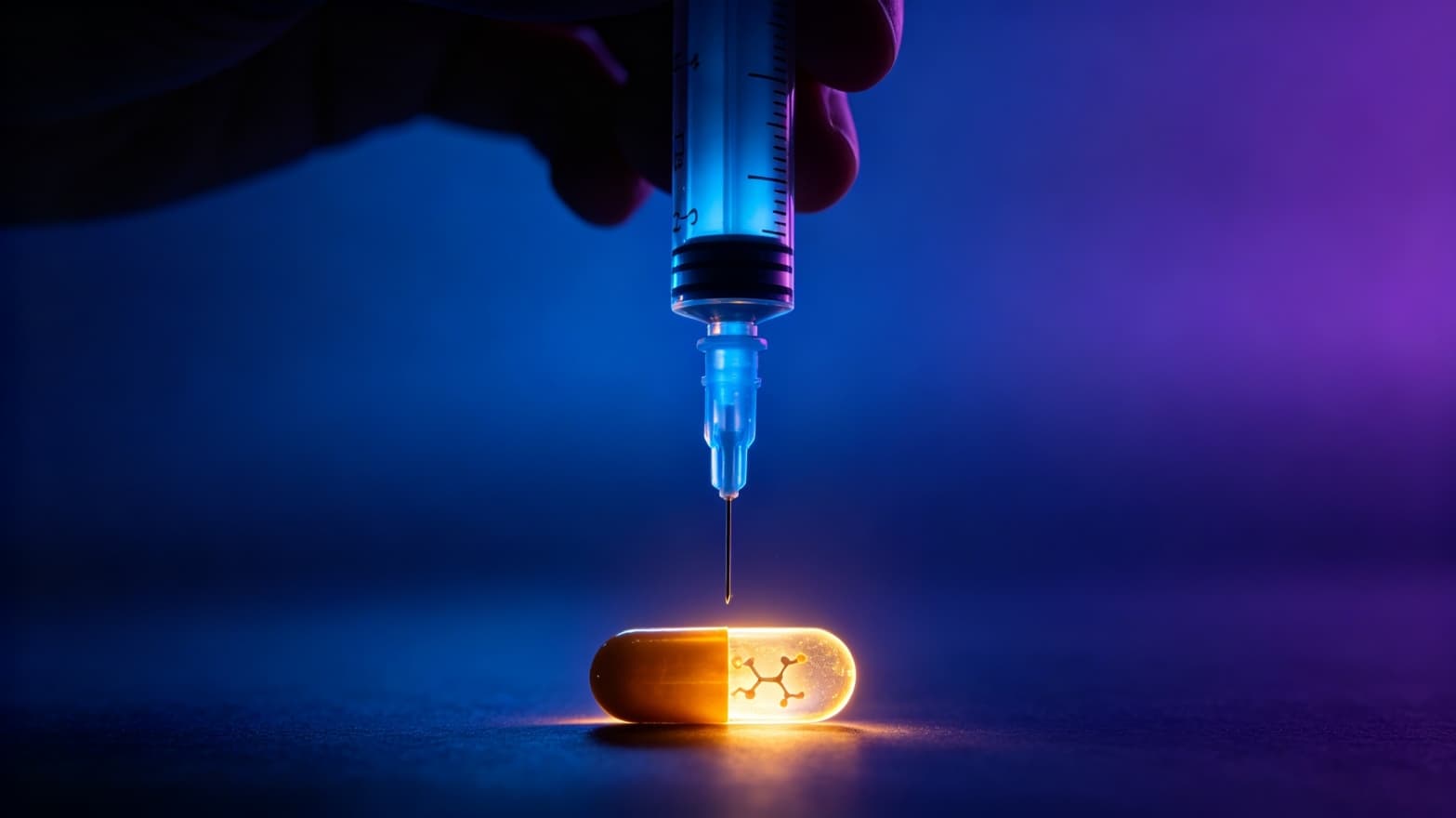
A daily injection, hundreds of times a year, repeated for decades—this is the everyday reality that tens of millions of chronic disease patients can’t escape.
Patients with diabetes, autoimmune diseases, obesity, and inflammatory conditions often rely on injecting protein and peptide drugs. The pain from the needles, the inconvenience of carrying them around, subcutaneous hardening, and psychological resistance—all these overlapping burdens make countless people harbor the same simple hope: can the injectable drugs be made into a pill that can be taken with warm water?
This wish has been pursued by humanity for a whole century. Today, with breakthroughs in nanodelivery, protein engineering, and AI protein design, switching from injections to oral delivery is no longer just a lab idea—it’s gradually becoming a reality.
1. Three natural physiological barriers have trapped large molecules from being taken orally for a hundred years
Many people wonder: the process for ordinary oral tablets has long been mature, so why is it so hard to take peptide and protein drugs like insulin and GLP-1 orally?
The root cause lies in the digestive system’s three layers of “natural defense,” which make it nearly impossible for large molecule drugs to survive intact and enter the bloodstream:
- Strong stomach acid degrades them: with stomach pH as low as 1-2, the highly acidic environment quickly denatures and breaks down protein drugs. Most peptides are inactivated within a very short time of reaching the stomach.
- Digestive enzymes continuously break them down: proteases in the stomach and pancreas keep hydrolyzing drug molecules. Unprotected proteins taken orally have a degradation rate of over 99%.
- Dense intestinal barrier blocks them: small-molecule drugs can easily penetrate the intestinal wall, but peptides and proteins, with molecular weights often in the thousands or tens of thousands of daltons, are like large trucks trying to pass through a narrow city gate—they can hardly get into the bloodstream on their own.
With all these obstacles combined, the oral bioavailability of most large-molecule drugs is less than 1%. By comparison, conventional small-molecule oral drugs often have a bioavailability over 30%. This huge gap has been the core reason why biologics have depended on injections for the past century.
The clinical costs of long-term injections are evident: adherence issues with injectable drugs in chronic diseases like diabetes are widely recognized, and repeated injections over time significantly reduce patients’ willingness to stick to treatment. Blood sugar control worsens, and the risk of complications like diabetic foot and kidney disease rises. At the same time, injectable drugs require needles, refrigeration, and proper injection procedures, adding ongoing burdens both to patients and the healthcare system.
2. Four major technological approaches working in parallel to solve the oral dosing challenge

Three Biotherapeutic Delivery Systems
To open up the oral pathway for large molecules, research teams worldwide have pursued multiple differentiated technical routes, including both mature commercialized solutions and cutting-edge technologies empowered by AI for protein modification, gradually aiming to replace injections with oral administration.
2.1. SNAC absorption enhancement system: The core solution for the first commercialized oral peptide
Oral semaglutide is the benchmark of this route and is also the world’s first successfully marketed oral GLP-1 formulation.
With the multiple roles of SNAC excipients: it raises local pH in the stomach, creating a neutral microenvironment that inhibits pepsin degradation; maintains the peptide in its monomeric form to prevent aggregation and inactivation; and reversibly alters the fluidity of gastric epithelial cell membranes, forming transient lipid channels to aid transcellular absorption. The effect is reversible and does not cause long-term damage to the gut barrier. This absorption mechanism also dictates that oral semaglutide must be taken as a whole tablet on an empty stomach, cannot be split, and cannot be taken after a meal.
The traditional low-dose oral version has a bioavailability of only 0.4%–1%, with weight-loss effects lagging behind injections. But by 2025, high-dose oral versions (25mg/50mg) show weight-loss effects comparable to injections in clinical trials, and their marketing application has been recommended for approval in Europe, signaling that oral delivery is gradually approaching the efficacy level of injectables. According to Novo Nordisk’s 2025 annual report, oral semaglutide Rybelsus achieved DKK 22.093 billion (about USD 3.5 billion) in sales for the year, proving the commercial viability of oral peptide formulations.
2.2. Nanocarriers: Putting a “protective coat” on drugs
The industry generally uses biocompatible polymers to prepare nanomicrospheres that encapsulate drugs, shielding them from stomach acid and digestive enzymes, and rely on intestinal cell endocytosis to cross barriers, greatly improving drug retention.
On this basis, engineered protein nanocarriers are a hot spot in the field: recombinant mussel adhesive proteins (Mfp) are genetically engineered and site-modified to self-assemble into delivery particles. Compared with traditional polymer carriers, protein materials have better biocompatibility, lower immunogenicity, and intrinsic tissue adhesion, allowing long-term retention and sustained release at disease sites. This carrier technology is not limited to oral administration and also has huge potential in topical eye and joint drug delivery.
Multiple published animal studies from 2025–2026 confirm that protein nanocarriers can increase oral peptide absorption efficiency by several times. Currently, this approach is mainly in preclinical research and is still far from large-scale commercialization.
2.3. Intragastric Microneedle Capsules: Another Approach to Non-Invasive Injection
This method is completely different from the logic of intestinal absorption. Essentially, it achieves non-invasive in-situ injection in the stomach and is not considered a traditional intestinal absorption formulation.
After the patient swallows the capsule, it uses counterweights and magnetic navigation to adjust its position in the stomach on its own. Once the stomach acid dissolves the protective layer, the built-in microneedles pierce the stomach wall to release the drug. In pig model experiments, the capsule's blood sugar-lowering effect was basically comparable to conventional subcutaneous injections.
However, this technology still has clear drawbacks: the capsule is large and unpleasant to swallow; people with stomach ulcers or inflammation cannot use it; the manufacturing process is complex, making mass production costly. Overall, it is still in the preclinical research stage and has not yet been commercialized.
2.4. AI Protein Reverse Design: Redesigning Drug Properties from the Molecular Level

AI Ordering Disordered Amino Acids
The first three types of technological approaches all focus on 'building a protective shell to help drugs pass through the digestive tract,' while AI protein design directly optimizes the drug itself from the sequence level. These two routes are complementary and serve as the core foundational tools for long-term oral peptide development.
Traditional protein engineering relies on multiple rounds of site-directed mutagenesis and screening. For a protein made up of only 100 amino acids, a single-point mutation already has 1,900 possible variants, and multiple point mutations generate an enormous number of candidate sequences. The full development cycle can take several years, with very low screening efficiency.
Today, AI protein reverse design completely bypasses the traditional trial-and-error approach: with clear target functions such as 'acid-resistant, enzyme-resistant, easy intestinal absorption, retaining high pharmacological activity while maintaining correct 3D folding, and prolonging in vivo half-life,' AI directly derives the optimal amino acid sequence, significantly skipping a lot of repetitive experiments.
Take Tianwu Technology’s MatwingsVenus (Xiaowu™) AI protein R&D platform as an example. This platform integrates over 200 specialized protein design tools and supports natural language input for R&D requirements. The system can automatically carry out sequence design and virtual screening, and it can connect with automated labs to complete protein purification and in vitro functional testing, closing the loop between dry and wet experiments.
Researchers have already used such AI tools to generate tens of thousands of GLP-1 candidate peptides in one go, with an in vitro activity screening success rate over 50%. AI-directed modification can simultaneously optimize peptide resistance to degradation and intestinal permeability, providing entirely new molecular frameworks for oral peptides.
3. Exploding Market Demand, Huge Growth Potential for Oral Biologics
The oral biologics market is currently growing rapidly. According to multiple market research firms, the global market size will reach nearly $10 billion by 2025, with high growth expected to continue in the coming years.
The growth logic is clear:
- For patients: Oral administration avoids injections, is convenient to carry, requires no special refrigeration, greatly improves medication adherence, reduces complication risks, and spares the daily pain of injections;
- For the industry: Oral forms have lower storage and transportation costs, can reach a wider population, and if a blockbuster injectable drug successfully becomes oral, the market size will expand dramatically.
The commercial success of oral semaglutide has already proven the real-world value of this sector; it’s not just a theoretical concept.
But, objectively speaking, there are still multiple challenges for large-molecule oral drugs. Different individuals have widely varying gastrointestinal environments, making it difficult to consistently control drug absorption. The systemic safety of long-term oral protein therapy still needs prolonged clinical follow-up. Low-cost, scalable production processes still need ongoing optimization.
Classic examples, such as oral insulin R&D, have taken over a century. Numerous multinational pharma companies have invested billions of dollars, with multiple candidate drugs failing in Phase III trials, showing just how challenging this sector is.
4. From Needle to Pill: The Delivery Revolution Is Far From Over.

Injection to Oral Shift
From the first use of insulin in humans in 1922 to the successful launch of oral semaglutide; from relying solely on absorption-promoting excipients to combining protein nanocarriers with AI-driven protein engineering, humanity has spent a century steadily tackling the challenge of oral delivery for large molecules.
Nowadays, the field is no longer limited to glucose-lowering or weight-loss peptides. Oral insulin, oral antibodies, and oral small nucleic acid drugs are all progressing steadily. In the future, patients with high cholesterol, autoimmune diseases, and cancer may all be able to avoid long-term injections.
The two technical routes of local protein delivery and oral protein drugs complement each other: AI protein design platforms, as core underlying tools, can both develop targeted local delivery carriers for corneas or joints and modify orally degradable peptides, ensuring the drug precisely reaches the affected area, reduces systemic side effects, and achieves efficient and gentle treatment.
The pain and inconvenience caused by injections will gradually fade from daily life as technology evolves.
Being able to take medicine in pill form with warm water, without needles, is not just a technological breakthrough for the pharmaceutical industry—it’s also the simplest wish for a better quality of life for millions of chronic patients. With the deep integration of protein engineering and artificial intelligence, this century-spanning revolution in drug delivery is steadily maturing.