Protein Interaction Prediction: How AI is Reshaping the Fundamentals of Life Sciences?
Published on July 6, 2026
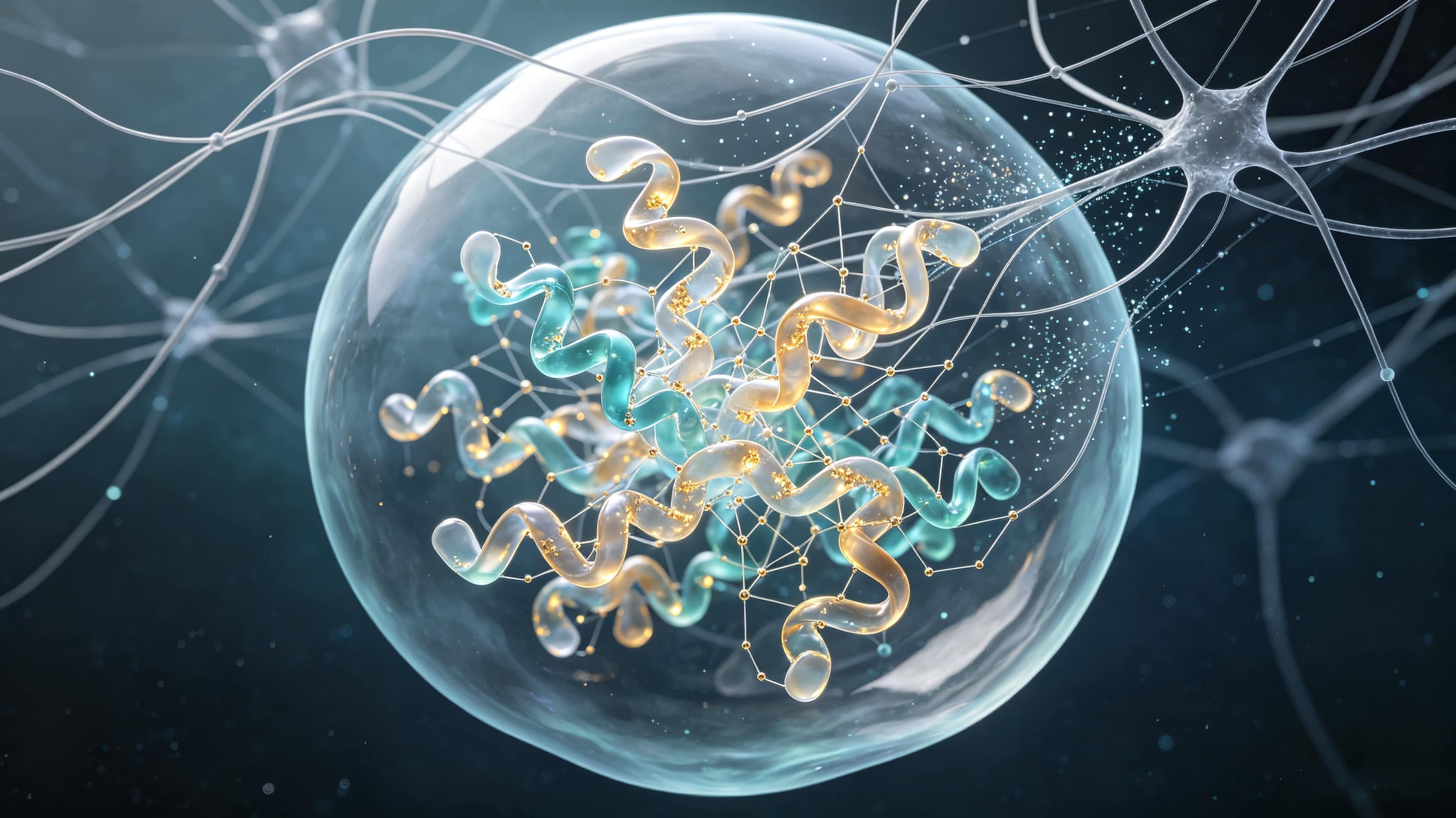
Inside human cells, there's a constantly happening and incredibly complex social activity—hundreds of thousands of protein molecules interact, bind, separate, and transmit signals. It's these protein-protein interactions (PPIs) that form the underlying network that keeps life running.
It's estimated that the human proteome contains around 130,000 to 650,000 pairs of binary protein interactions. In cellular signaling networks, peptide-mediated interactions (domain-motif interactions driven by short linear motifs, SLiMs) are estimated to make up about 15%–40% of interactions in the human interactome. These "protein social connections" determine everything—from when a cell divides to when it self-destructs, from how the immune system recognizes invaders to how viruses hijack host cells.
But for a long time, decoding this social network has been extremely difficult. Traditional experimental methods—yeast two-hybrid, co-immunoprecipitation, surface plasmon resonance, and so on—can identify interactions, but they are low-throughput, expensive, and time-consuming. The potential interactions in the human proteome number in the hundreds of thousands, yet what has been experimentally verified is just the tip of the iceberg. AI-driven protein interaction prediction is fundamentally changing this landscape.
This article explains three things clearly: the evolution of methods for protein interaction prediction, why it's so difficult, and why it’s becoming one of the hottest commercial infrastructures in protein research.
1. Protein interaction prediction: from sequence to structure, from structure to function.

Third-generation protein interaction prediction technology
The core question of protein interaction prediction can be broken down into three levels: whether they interact (qualitative), how they interact (conformation and interface), and how strong the binding is (affinity). Around these three levels, the computational method has evolved through three generations: "sequence-driven" to "structure-driven" and then to "multimodal fusion."
First Generation: Sequence-driven statistical learning. Researchers encoded amino acid sequences as numerical vectors and used traditional machine learning models such as support vector machines and random forests for classification and prediction. The limitation of these methods is that, although the sequence information is rich, it is difficult to directly reflect the interactions between proteins in three-dimensional space—whether two proteins bind is essentially determined by their folded three-dimensional surface shape and chemical properties.
Second Generation: Structure-driven docking computation. With breakthroughs in protein structure prediction technology, high-precision singlemer structure prediction from sequences has become possible. With the structure in place, molecular docking can be used to infer the relative arrangement of two proteins in three-dimensional space. However, challenges remain: proteins often undergo conformational changes (induced fit) during binding, static rigid structures struggle to capture this dynamic process, and the precision of traditional docking methods drops sharply at flexible interfaces.
Third Generation: Deep learning-driven multimodal fusion. This is the current mainstream paradigm. Researchers integrated sequence representations extracted from protein language models (PLMs), three-dimensional coordinates provided by structural prediction models, and multi-source data such as evolutionary information and physicochemical properties into a unified deep learning framework. Architectures such as Graph Neural Networks (GNN), Transformer, and Comparative Learning are widely used. A review published in The Plant Journal in 2026 summarized current methods into four main categories: sequence-centered predictors (extracting evolutionary features using protein language models), structure-based predictors (integrating co-evolutionary signals to reconstruct three-dimensional complex arrangements), network-level learners (using graph architectures to capture global interacting group topologies), and geometric and generative methods (using symmetry perception networks for specific site identification and de novo design).
More importantly, predictions are no longer just about answering "whether the bond is combined," but further quantify "how tight the bond is"—that is, the affinity prediction of the binding. This is crucial for screening and optimizing lead compounds in drug development. A 2024 review published in Molecular Pharmaceutics points out that AI is advancing the ability to identify protein-binding hotspots and molecules in rational drug design by providing powerful computational resources and methods.
2. The "Three Major Mountains" of Protein Interactions

Three Major Challenges in Protein Interaction Analysis + AI-Assisted Folding Breaks the Deadlock
Despite rapid technological advances, protein interaction prediction still faces several major core challenges. The toughest nut to crack is completely different from traditional drug targets.
First, data is sparse and extremely imbalanced. Known protein interactions are incredibly rare compared to the potentially huge interaction space, and high-quality co-crystal structure data is even more scarce. Experimentally verified positive samples (interaction pairs) are far fewer than negative samples (non-interaction pairs), and many of the 'non-interaction pairs' may actually contain undiscovered true interactions, which can easily bias models.
Second, and perhaps the deadliest structural challenge — it’s a 'square' rather than a 'deep hole.' Typical small-molecule binding pockets are deep and narrow 'holes' (~300–500 Ų), and medicinal chemists are good at stuffing small molecules into them. But PPI interfaces are usually wide and flat 'squares' (1200–2000 Ų) without obvious grooves, only scattered with weak binding hotspots. Almost all the intuitions from traditional medicinal chemistry, like Lipinski’s Rule of Five, fail at PPI interfaces.
The first FDA-approved PPI inhibitor designed based on structural rational design — Venetoclax targeting the BCL-2 protein interaction interface (approved in 2016) — perfectly illustrates the huge difficulty and value in this field: it showed that blocking protein-protein interfaces can provide clear clinical benefits, yet the number of approved PPI small-molecule inhibitors since then remains very small. In fields like anti-thrombosis, the advantage of PPI interference strategies lies in "targeting interfaces of pathological clots under specific shear and surface conditions for more selective antithrombotic therapy that might reduce bleeding risk."
Third, generalization ability is insufficient. Many models perform well on specific datasets, but their ability to generalize across species or families is still worrying. A model trained well on human proteins may perform poorly on bacterial or plant proteins.
Moreover, proteins are dynamic molecules, with binding processes involving conformational changes, water-mediated interactions, and ion regulation, among other complex factors. Most prediction methods still take static structures or sequences as input, making it hard to fully capture this dynamic nature.
Although the challenges are many, the industry is no longer waiting around.
3. Breaking the AI Barrier: How Co-Folding and Multi-Modal Integration Precisely Address Pain Points
Facing the above-mentioned 'three mountains,' AI-driven methodologies are undergoing a profound paradigm shift—from traditional 'docking' to deep learning-driven 'co-folding.'
The core of traditional docking is 'search and scoring': exhaustively exploring the relative positions and orientations of two proteins in three-dimensional space, then evaluating feasibility using physical energy functions. These methods are fast and well-established but often fail at flexible interfaces—because protein conformations can change significantly before and after binding, making the rigid assumption naturally invalid.
Co-folding takes a completely different approach: it doesn’t rely on pre-set rigid monomer structures to 'piece together a puzzle,' but rather starts from sequences to directly predict the 3D structure of the complex end-to-end. Deep neural networks learn co-evolutionary signals from massive sequence data—if two proteins 'evolve in sync,' they are likely to directly contact each other in 3D space. This signal bypasses traditional dependence on static structures and is naturally suited for flexible interfaces.
The main advantage of co-folding is that it doesn’t require assuming that monomer structures remain unchanged before and after binding. A 2026 review in *Briefings in Bioinformatics* summed up this shift: 'Co-folding models unify protein folding and ligand binding within a single prediction framework, bridging the gap between sequence-level learning and structural resolution.'
In the toughest-to-predict area of peptide-protein interactions, modern deep learning methods can also be categorized into three types: predicting peptide-binding sites on protein surfaces to guide docking, using general structure prediction methods for protein-peptide co-folding and refinement, and generative models that sample peptide conformations based on target protein structures. These methods have significantly improved the accuracy and applicability of peptide-protein docking.
On a more macro level, AI-driven PPI prediction has begun mapping an unprecedented 'protein social network.' A landmark 2025 study published in *Science* integrated 30 PB of genomic data with deep learning technology, systematically identifying 17,849 high-confidence human protein interactions through deep multiple sequence alignment and novel deep learning networks, among which 3,631 were completely new discoveries, achieving a prediction accuracy of about 90%.
4. Commercial Infrastructure: From 'Tools' to 'Platforms'—How Closed-Loop Integration Realizes Industrial Value

Closed-loop Intelligent R&D Platform for Dry and Wet Testing
When PPIs can be predicted, the more fundamental question is: can they be designed? And can such designs be quickly validated?
The answer to this directly relates to a huge business opportunity—PPI-targeting drugs and functional protein products. About 40% of human disease-related proteins act through protein interaction networks. Since the first FDA-approved PPI inhibitor, venetoclax, a large number of PPI inhibitors have entered clinical research. In the antiviral field, PPIs are "essential in viral replication, pathogenic mechanisms, and the virus's effects on the host." In kinase-targeting strategies, directly disrupting the Hsp90-Cdc37 protein interaction interface, compared with classic ATP-competitive inhibitors, "selectively weakens oncogenic kinases, representing a more precise, selective, and less toxic targeting strategy."
From a technological perspective, AI-driven PPI design is advancing in three directions: interface hotspot prediction and inhibitor design (AI analyzes which residues contribute most to binding energy); de novo design of binding proteins (directly generating mini-proteins that don’t exist in nature but bind precisely to the target); and peptide-protein interaction prediction and peptide drug design (peptides make up about 40% of cellular PPIs, and deep generative models are changing this landscape).
But single-point tools aren’t enough. The industry is moving from a "single model" approach to "platform-based solutions." Protein interaction prediction is no longer an isolated computational task; it’s embedded within a complete protein R&D pipeline—from target discovery, interaction prediction, and interface design, to sequence optimization, experimental validation, and iterative improvement.
This is exactly the trend represented by MatwingsVenus™ (Xiaowu™) from Shanghai Matwings Technology. In April 2026, Matwings Technology officially launched the conversational protein R&D AI, MatwingsVenus™ (Xiaowu™). The platform is agent-centered and supports retrieval of tens of billions of real labeled protein data, integrating over 200 protein design tools and more than 30 skills optimized by experts across fields. Users only need to input task goals in natural language, and the system automatically breaks down tasks and schedules the corresponding design, prediction, analysis, and screening capabilities.
In June 2026, the platform achieved a major upgrade for protein docking capabilities, focusing on issues like whether structure preprocessing is correct, whether key ligands and metal ions are properly retained, and whether binding sites have biological relevance—moving docking from simply "working" to "working accurately." The upgraded platform runs customized workflows for different target types (pure proteins, peptides, small molecules, and metal-containing small molecules), with model-to-correct-workflow accuracy exceeding 95%.
At the model level, the platform has simultaneously added three core models: BoltzGen, LigandMPNN, and Protenix. Protenix can predict the 3D structures of multi-component systems like proteins, DNA/RNA, small molecule ligands, and ions, and it can analyze inter-molecular binding conformations and interaction interfaces—especially suitable for complex scenarios like protein-ligand, protein-nucleic acid, and antigen-antibody interactions. LigandMPNN focuses on high-precision protein sequence design under given 3D structural constraints, particularly for systems involving small molecule ligands, metal ions, or protein interaction interfaces. BoltzGen enhances the ability to design completely new binding proteins from scratch, generating candidate binding molecules based on targets like proteins, peptides, or small molecules.
Connecting computational predictions with experimental verification is MatwingsVenus™ (Xiaowu™), which has built a 'conversational dry-wet closed-loop' model. After AI completes the design, it drives an automated wet lab platform via standardized interfaces to carry out steps like protein purification and functional testing, and the experimental data then flows back into the model for the next round of iteration—so the results of protein interaction predictions are no longer theoretical models on a screen, but experimental data that can be quickly verified and iteratively optimized.
In real project validation, MatwingsVenus™ (Xiaowu™) has completed full-process validation in a de novo design project targeting immune-regulatory receptors—the platform takes target structures and functional requirements as input and automatically executes all computational tasks including scaffold screening, interface design, sequence optimization, and druggability prediction. After automated experimental verification, it successfully produced dozens of entirely new binding molecules with in vitro cell-blocking activity. In another directed evolution project for a protein-based sweetener, through continuous iterations of 'AI design—automated experiments—AI feedback—redesign', candidate variants were obtained with sweetness increased by more than tenfold compared to the wild type, while maintaining a high thermal stability around 75°C.
When PPI predictions shift from 'requiring a computational structural biology PhD to operate' to 'just issuing tasks to an intelligent agent via natural language', their accessibility expands from a few specialized labs to a broad R&D team with clear target hypotheses—this is the real significance of protein interaction prediction as a commercial infrastructure.
5. Next Stop: From 'If they bind' to 'Where and when they bind'
Protein interaction prediction is at a crucial turning point. The evaluation standards are shifting from 'Can it be predicted?' to 'Is the prediction accurate?' and then to 'Can the prediction be practically used?'—moving from academic metrics to industrial effectiveness.
The future development is focused on four dimensions:
First, deep multimodal integration. Unified representation of sequence, structure, evolutionary information, physicochemical properties, and even textual knowledge from literature will further improve prediction accuracy and interpretability.
Second, dynamic interaction modeling. From static structures to dynamic conformational ensembles, from binary interactions to multi-component complexes (protein-protein-nucleic acid-small molecule), this is the next frontier for algorithm breakthroughs.
Third, closing the loop from prediction to design. AI-generated interaction predictions directly guide molecular design, and the designed products are verified through automated experiments and fed back to the model—this is exactly the core value of the "interactive wet-dry hybrid" paradigm represented by MatwingsVenus™ (Xiaowu™).
Fourth, making it accessible to all. Protein interaction prediction capabilities are moving from a few large institutions to individual researchers and small teams. As MatwingsVenus™ (Xiaowu™) advocates—shifting protein R&D from "big platform-driven" to "available to individuals."
Ultimately, PPI prediction should not only tell you whether two proteins interact, but also where they interact, under what conditions, and what physiological functions are triggered after binding.
Protein interactions are the most exquisite "dialogue" of life, and AI is giving us the ability to understand and even participate in this dialogue. From Venetoch proving that PPI can be druggable, to Science mapping 17,849 human protein interactions using 30PB of data, and now MatwingsVenus™ (Xiaowu™) embedding interaction prediction into a full design-to-validation loop—the ultimate goal of this technological revolution is to take protein R&D from "slow trial and error" to "efficient and precise design."
And all of this is just getting started...