Traditional Process Development Relies on Experience—What Does AI-Driven Process Development Rely On?
Published on July 2, 2026
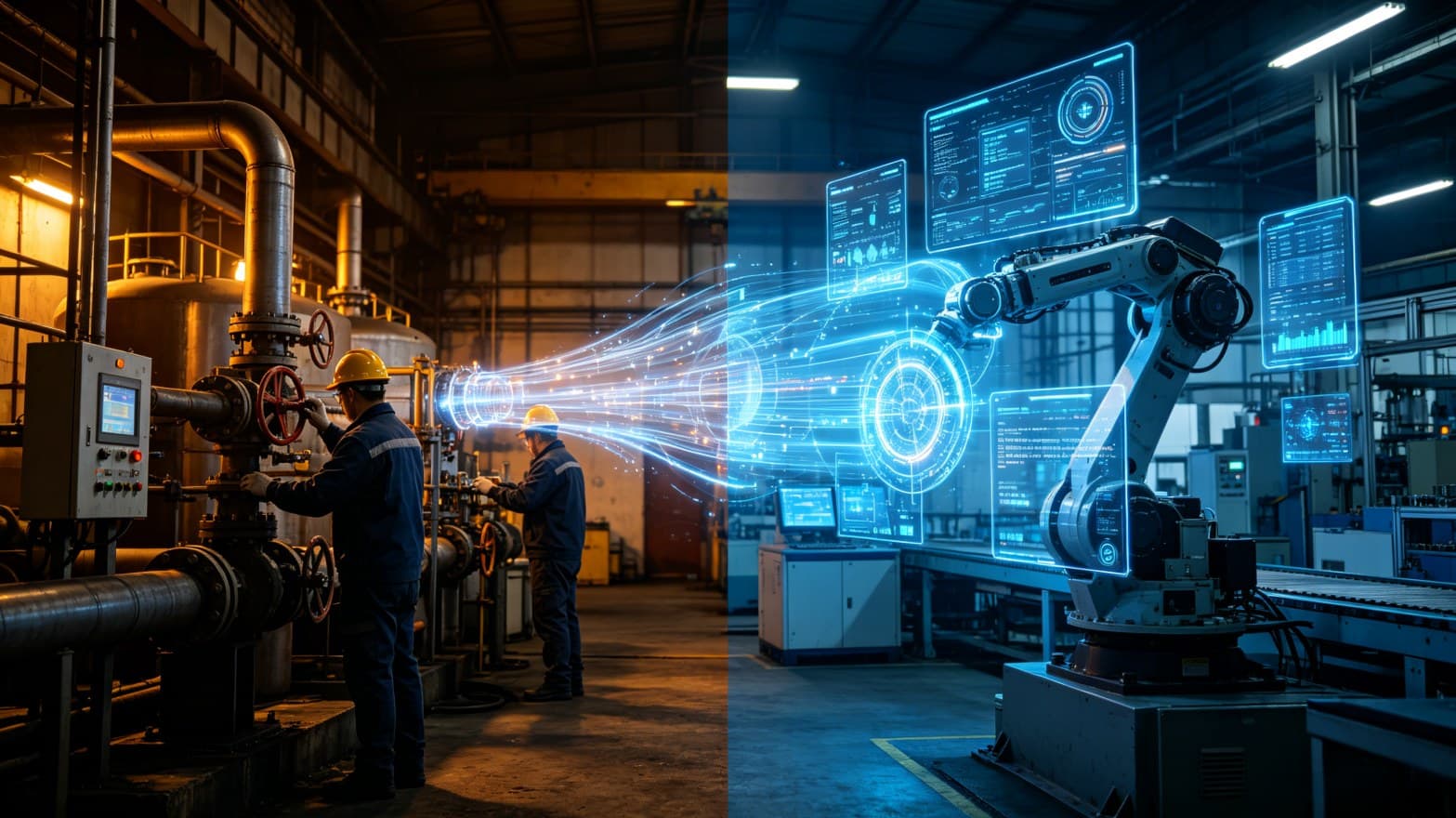
Traditional chemical and biopharmaceutical process development has long depended on engineers’ personal experience. Lengthy trial-and-error cycles, high scale-up failure rates, and the inability to formalize process knowledge have become core bottlenecks restricting large-scale industrial production. With the maturation of artificial intelligence, digital twin technology, and industrial foundation models, AI-driven process development now connects the full workflow from molecular design, pilot-scale verification, to full commercial manufacturing, covering core segments such as fermentation pharmaceuticals and peptide/protein therapeutics. Breaking the shackles of empirical trial and error, it shortens R&D cycles, boosts production capacity, and enables intelligent production line upgrades.
I. A Century-Old Bottleneck of Traditional Process Development: The Limitations of Experience-Led Trial and Error

Trial & Error to Data-Driven Manufacturing
Before large-scale AI adoption, chemical and biomanufacturing process R&D was trapped in three persistent industry-wide pain points, widely known as the "three major hurdles" of process development.
Prolonged R&D cycles and exorbitant trial-and-error costs
For biomanufacturing products including antibodies, industrial enzymes, and peptide drugs, the full process development from lab-scale trials to commercial production usually takes 2 to 5 years. Conventional combinatorial screening relies solely on researchers’ subjective experience, often ignoring nonlinear coupling relationships between variables such as temperature, pressure, dissolved oxygen, and feed ratio. This leads to massive waste of raw materials, manpower, and time on repetitive, low-yield trials. Traditional new drug process development alone requires 2–3 years of work, accompanied by heavy consumption of experimental materials.
High scale-up failure risk and unpredictable scaling performance
Processes with stable performance at lab scale frequently face imbalanced mass and heat transfer, reduced product purity, and excessive by-product accumulation when transferred to pilot or production reactors. Human operators cannot accurately simulate complex reaction environments inside thousand-liter or ten-thousand-liter bioreactors; validation requires repeated pilot batches, resulting in chronically high scale-up failure rates.
Untransferable tacit process knowledge and idle data assets
Senior process engineers require 5–10 years of training, and their core know-how only exists in personal notes and implicit operational experience. Staff turnover directly causes process discontinuity. Meanwhile, massive historical production data are scattered across isolated systems with inconsistent formatting and incomplete labeling, making structured reuse impossible. Replicating mature processes on new production lines still demands months of on-site commissioning, creating an extremely inefficient knowledge accumulation mechanism.
The first batch of typical cases selected by the Ministry of Industry and Information Technology (MIIT) in 2025, alongside the Implementation Opinions on the Special Action of "Artificial Intelligence + Manufacturing" jointly issued by eight central ministries at the end of 2025, both explicitly confirm that experience-driven traditional process development has hit an efficiency ceiling. AI-enabled digital transformation of process workflows has become the core path for industrial upgrading.
II. Three-Tier Progressive Capability Architecture for AI-Driven Process Development

AI Process Capability Pyramid
AI is not a standalone algorithm for local optimization. It delivers an integrated three-layer capability system covering real-time parameter control, predictive process scale-up, and closed-loop integration of molecular design and manufacturing, covering the full biomanufacturing value chain.
Tier 1: Real-Time Production Parameter Optimization for Autonomous Closed-Loop Control
Traditional production adopts periodic manual sampling, offline testing, and post-facto adjustments, resulting in severe response lag. Combined with high-precision sensors, AI builds digital twin systems to collect dozens of core indicators (temperature, pH, dissolved oxygen, stirring speed) in real time. Machine learning algorithms dynamically tune process parameters, forming a closed loop of "real-time monitoring → intelligent analysis → autonomous parameter adjustment."
In biomanufacturing, AI has been deployed to optimize key fermentation parameters in real time, lifting final product titer without modifying core strains or feedstock formulas. Matwings Technology leverages machine learning to optimize core fermentation variables including temperature, dissolved oxygen, and feeding ratio, shifting process control from experience-based manual operation to data-driven intelligent decision-making. For production lines with untapped optimization potential, this tier delivers a 5–20% yield improvement (specific gains depend on the maturity of existing processes). It is currently the most widely deployed and fastest-returning AI transformation solution in the industry.
Tier 2: Digital Twin Simulation and Predictive Scale-Up
AI integrates reaction thermodynamics, fluid mechanics principles, and historical process data to build predictive models applicable to lab, pilot, and full-scale production scales. By running tens of thousands of virtual simulation iterations, it identifies scale-up bottlenecks in advance, drastically cutting physical trial batches and eliminating costly, resource-intensive repeated pilot tests.
Tier 3: Bidirectional Closed-Loop Linking Molecular Design and Process Development

MatwingsVenus™
Under the traditional model, molecular design and process development operate in silos: molecular R&D ignores manufacturability, while process teams cannot feed optimization feedback back to molecular structural design. AI platforms break down this barrier and build a mutually reinforcing iterative closed loop, representing the most transformative value of AI-driven process development.
Matwings Technology’s self-developed MatwingsVenus™ platform embodies this innovation. Centered on its proprietary protein foundation model, it breaks the conventional "sequence → structure → function" prediction paradigm and realizes direct closed-loop design based on functional requirements. The platform boasts two core modules: AI-directed evolution and AI enzyme discovery. Powered by a billion-scale labeled protein dataset, it integrates over 200 protein design tools, more than 50 certified professional experts, and over 30 domain-specific fine-tuned functional modules.
Crucially, MatwingsVenus™ covers the complete R&D pipeline: literature and patent mining, molecular design, small-scale verification, pilot process optimization, and production scale-up. Users only need to input target requirements in natural language; the system automatically decomposes tasks and schedules matched tools for target research, enzyme mining, directed evolution, de novo protein design, and automatic coordination of wet-lab experiments.
Its core advantage lies in bridging the digital and physical realms via a conversational dry-wet closed loop. Once digital design is completed, the built-in Agent transmits output through a proprietary communication protocol to plasmid synthesis and experimental scheduling pipelines, automatically triggering follow-up lab workflows including sample preparation, protein purification, and functional testing. Adopting the paradigm of "foundation model design + limited experimental verification," the platform reduces traditional screening workload from tens of thousands of trials to roughly 100 batches, lifting experimental success rates from 0.1% to 30%.
III. Benchmark Cases: Commercial Value of AI-Driven Process Development
Full-Chain Molecule-to-Process Development (Matwings Technology × Jinsai Pharmaceutical)

Industrial Data Flywheel of AI Process Iteration
The strategic cooperation between Matwings Technology and Jinsai Pharmaceutical stands as an industry landmark case of AI-driven process development. Supported by protein engineering foundation models and iterative dry-wet closed-loop verification, the R&D team quadrupled the alkali tolerance of an inherently alkali-sensitive single-domain antibody within just four months and doubled its service life. The optimized antibody has been successfully scaled up and applied on a 5,000-liter industrial fermentation line.
This product marks the world’s first foundation model-designed protein to complete 5,000-liter scale-up and industrial commercialization, cutting tens of millions of yuan in annual raw material costs for partner manufacturers. The underlying technology can transform any single-domain antibody into industrial-grade alkali-resistant affinity ligands, with proven applications in purifying GLP-1 molecules, cell/gene therapy vector proteins, AAV particles, and multiple other biomolecules.
De Novo Design and Functional Verification of Immune Regulatory Receptor Targets
For a de novo development project targeting an immune regulatory receptor, Matwings Technology utilized its proprietary MatwingsVenus™ platform to generate dozens of novel binding molecules with confirmed in vitro cell inhibitory activity. The project faced extreme design challenges: a novel target with no reference drug candidates, abundant polar surface regions, and a lack of classic druggable binding pockets. Even so, the intelligent Agent independently completed the full computational pipeline—scaffold screening, binding interface design, sequence optimization, and druggability assessment—rapidly outputting high-quality candidate sequences. Samples prepared via automated lab platforms exhibited outstanding performance in cellular functional assays, with dozens of molecules showing obvious target-blocking activity.
Project Delivery & Industry Recognition
To date, Matwings Technology has delivered over 30 finished protein design projects, with an additional 40 projects under active development, covering innovative therapeutics, in vitro diagnostic reagents, industrial enzymes, and nutritional health products.
In 2025, the company was selected into MIIT’s first batch of Typical Application Cases of Artificial Intelligence in Biomanufacturing, rated "Excellent";
Shortlisted for the TOP30 list of the 2025 World AI Conference SAIL Awards;
Included in 36Kr’s 2026 Top 100 Most Valuable High-Growth Enterprises (AI & Foundation Model Track) in June 2026.
Its general-purpose protein design foundation model AIACCLBIO™ is trained on nearly 9 billion protein data entries, adopting few-shot learning algorithms and dry-wet iterative optimization to realize end-to-end "sequence-to-function" predictive modeling.
IV. Practical Barriers to Deploying AI-Driven Process Development
The industry has entered a consolidation phase; the core bottleneck is no longer algorithm capability, but the industrial supporting infrastructure for landing. This aligns with the industrial AI "10/20/70 Rule": algorithms account for only 10% of implementation efforts, data and IT infrastructure account for 20%, and the remaining 70% depends on enterprises’ internal process transformation, knowledge system reconstruction, and talent development.
Inadequate data governance: messy, siloed data are the primary restraint. Incomplete sensor deployment on production lines, incompatible interfaces between legacy equipment systems, and unstandardized labeling of historical data create fragmented, low-quality "dirty data" that impairs model prediction accuracy. Many enterprises blindly invest in computing power and foundation model procurement while ignoring data standardization, leading to stalled transformation projects. National policies released in 2026 explicitly require data governance to align with model training demands, urging enterprises to inventory internal data assets and conduct targeted data cleansing and annotation.
Limited model generalization ability & high cross-scenario adaptation costs: Models trained for a specific strain or product cannot be directly reused for other production lines. New application scenarios demand full retraining or fine-tuning, imposing unaffordable costs for small and medium-sized manufacturers.
Trust barriers from AI black-box decision-making; full autonomous operation remains unattainable. Biomanufacturing continuous production allows almost no error tolerance. The poor interpretability of most current black-box AI predictive models restricts industrial practice to a semi-closed-loop mode: "AI generates recommendations, humans review and execute." Fully autonomous end-to-end decision-making requires sustained technological breakthroughs.
Regulatory compliance restrictions limiting large-scale rollout The pharmaceutical industry is subject to strict supervision. Any adjustment to process parameters requires complete traceable documentation. Traditional fixed SOP systems conflict with dynamic parameter tuning enabled by AI, and unified global compliance frameworks for AI-aided manufacturing processes are still under development.
V. Three Major Industry Trends
Guided by the end-2028 five-ministerial joint Implementation Opinions on the Special Action of "Artificial Intelligence + Manufacturing," which sets targets of building 500 AI manufacturing demonstration scenarios and developing 100 high-quality industrial datasets by 2027, three transformative trends will reshape AI-driven process development over the next 3–10 years:
Wide adoption of general industrial process foundation models lowers the threshold of intelligent manufacturing. Current models are mostly customized for single isolated scenarios. Moving forward, universal industrial foundation models integrated with chemical engineering and biological metabolic mechanisms will achieve large-scale commercialization. Enterprises can quickly adapt these general models to their own production lines with minimal local data, eliminating the need for full training from scratch. Market data supports this trend: the global AI-aided synthesis market reached USD 3.1 billion in 2025 and is projected to hit USD 82.2 billion by 2035, representing a compound annual growth rate (CAGR) of 38.8%. This statistic covers the broader computer-aided manufacturing sector, including chemical and discrete manufacturing beyond biomanufacturing. Separately, the global AI pharmaceutical market, valued at USD 2.49 billion in 2025, is expected to exceed USD 46 billion by 2035.
AI process Agents realize fully autonomous closed-loop R&D Unlike existing models that passively receive human instructions, next-generation industrial Agents will independently complete the full workflow: data collection, digital twin simulation, process testing and result feedback. MatwingsVenus™ has already validated this capability: via natural language dialogue, the Agent autonomously organizes literature retrieval, sequence design, and experimental verification. In the future, R&D cycles for novel bioproducts will be shortened from years to months.
Continuous data flywheel operation; digitized process knowledge becomes the core corporate competitive moat. Every round of AI process optimization generates new structured production data that continuously retrains industrial models to form a self-reinforcing positive cycle. Standardized process data will become non-replicable digital assets, freeing enterprises from reliance on senior engineers’ personal experience and enabling systematic storage, reuse, and iterative upgrading of process know-how.
VI. Conclusion
From fermentation parameter optimization to full-chain molecule-to-process development, AI-driven process development is triggering a cross-value-chain manufacturing revolution. It is far more than a productivity-boosting tool for production lines—it forms a digital infrastructure that fundamentally restructures the entire process R&D paradigm, shifting the century-old experience-led trial-and-error model to a standardized engineering system based on data simulation and precise iteration.
For biomanufacturing and pharmaceutical enterprises, the key to implementing AI process development does not lie in blind procurement of computing resources and foundation models. Priorities should include standardized data governance, end-to-end connectivity between molecular R&D and production process pipelines, and phased deployment of digital twin optimization. As universal industrial foundation models and AI Agent technologies mature, the manufacturing sector will fully break away from the inefficient era of "years of repeated trials for a single technological breakthrough," stepping into a new age of data-driven precision biomanufacturing.