Mutation Design: The Precise Engineering of Rewriting the Code of Life
Published on June 1, 2026
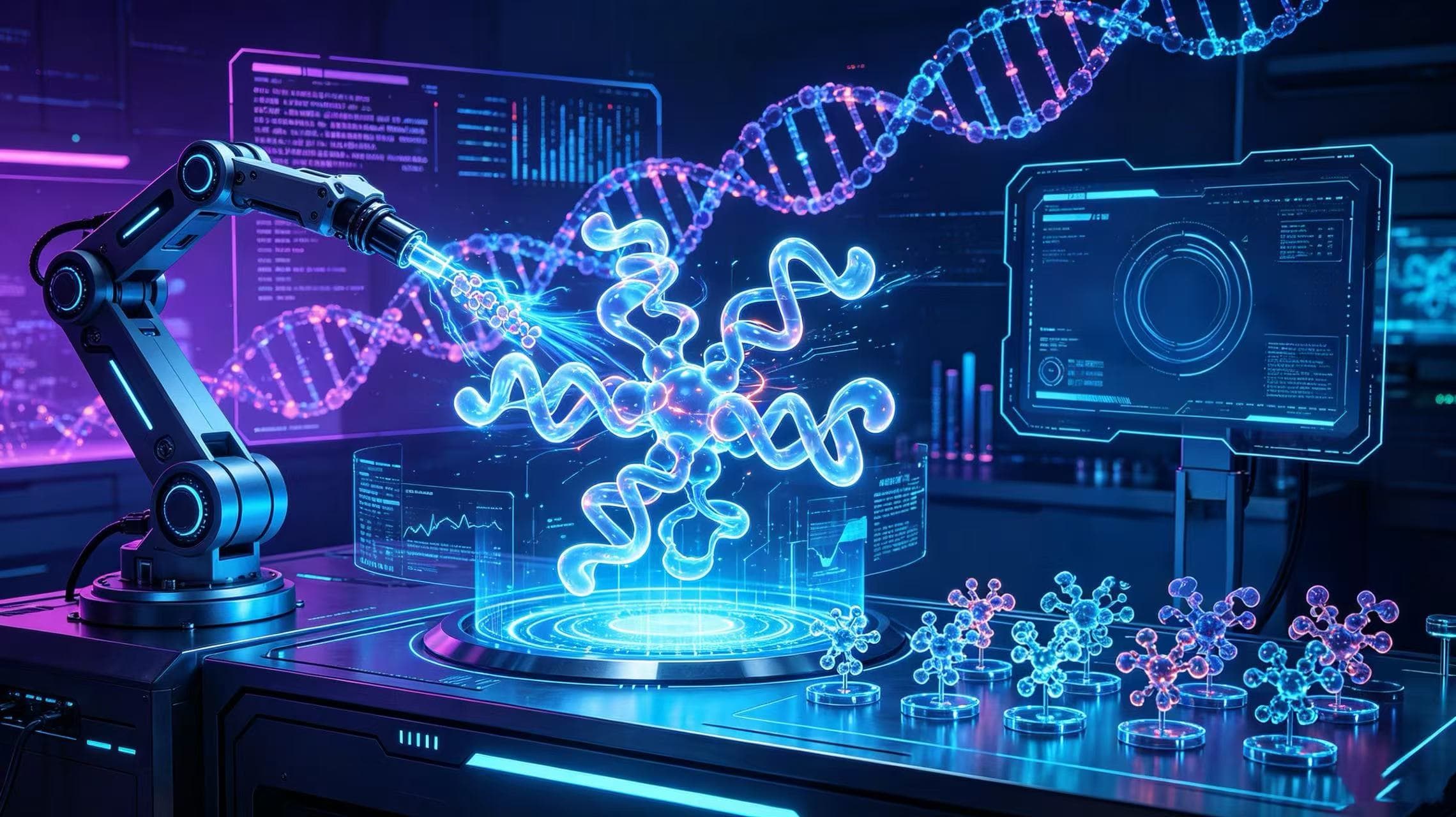
If your beloved car's engine does not have enough power, what would you do? Ordinary people might spend a long time searching online without coming up with a good solution, then try their luck at a repair shop; but experts would say: swap in a high-flow intake, flash the ECU program, replace the camshaft with a higher angle one—just by modifying a few core parts, the engine can release much stronger power. Applying this idea to the field of protein design leads us to today's main topic—mutation design.
At the forefront of modern biotechnology and synthetic biology, Mutation Design is no longer simply a passive record of natural evolution, but has transformed into an active, precise, and predictable engineering approach. This field combines computational biology, structural biology, and directed evolution techniques, aiming to modify protein or nucleic acid sequences in a rational or semi-rational way, thereby endowing biomolecules with brand-new functions, higher stability, or better catalytic efficiency. The core of mutation design lies in understanding the complex mapping relationship between sequence, structure, and function, and using this knowledge to guide precise editing of genetic information.
From Random Screening to Rational Design
Traditionally, discovering enzymes with improved traits mainly relied on Directed Evolution, an experimental method that simulates the natural selection process by introducing random mutations and screening for high-performing variants. Although directed evolution has achieved great success in industrial enzyme development (for example, enhancing enzyme thermostability or substrate specificity), its inherent randomness requires building large mutation libraries and conducting high-throughput screening, which is often time-consuming and resource-intensive.
In recent years, with the advancement of computing power and algorithms, research has gradually shifted toward Rational Design and Computational Protein Design. Rational design relies on a deep understanding of the three-dimensional structure and catalytic mechanisms of proteins, using site-directed mutagenesis to precisely replace specific amino acid residues. For instance, in the study of improving cannabidiol acid synthase activity, researchers used molecular docking simulations to predict key sites and significantly enhanced enzyme catalytic efficiency through site-directed mutations. This approach not only reduces experimental blind spots but also makes it possible to optimize specific functional properties, such as stereoselectivity or thermal stability.。

Experimental workflow
Computational tools and AI-driven mutation prediction
The effectiveness of mutation design largely depends on the accuracy of the predictive model. Traditional computational methods such as free energy calculations can provide some guidance, but often struggle to capture long-range interactions and dynamic effects. Breakthroughs come from the application of Protein Language Models (PLMs), which analyze massive sequence data to learn co-evolution patterns of amino acids and predict the impact of mutations on protein function. For example, the MutaPLM framework is specifically optimized for mutation interpretation and engineering design, overcoming the limitations of traditional PLM lacking supervised signals and providing more interpretable mutation prediction results.
Additionally, models based on sequence covariance analysis, such as EVcouplings, have been shown to accurately predict the combination of multiple mutations needed to maintain protein folding and function. In a study focused on multifunctional enhancement, researchers used evolutionary information to guide protein design, successfully improving multiple functional traits simultaneously, indicating that integrating evolutionary historical data is crucial for addressing the multimutation synergistic effect.
In this cutting-edge field, the addition of AI agents is redefining the workflow of mutant design. For example, Matwings Technology launched the MatwingsVenus™ (Xiaowu™ ) intelligent agent, deeply integrating PLM with an automated experimental platform. Users only need to input design goals through conversational interaction, and the agent can automatically complete complex tasks such as literature review, sequence design, and experiment scheduling, forming a closed-loop dry and wet system of "compute-driven wet experiments, wet experiments ™ feeding back into computation." Based on this, the MatwingsVenus™ (Xiaowu ™) agent once helped a company modify an industrial protein that quadrupled its alkali resistance and lifespan in just four months, successfully achieving industrial production at a scale of 5,000 liters—the world's first industrialized case of protein design by large models.
Generative AI also shows tremendous potential in this field, especially in de novo drug design and the generation of entirely new proteins, offering new avenues to explore sequence spaces previously unreachable.
Key technical strategies: fixed-point mutation and consensus design

Site-Directed Mutagenesis & Consensus Design
The specific experimental methods for implementing mutation design mainly include site-directed mutagenesis and consensus design. Site-directed mutagenesis allows researchers to introduce predetermined changes at specific locations in a DNA sequence. Its principle involves using custom primers with intentional mismatches to amplify DNA fragments containing the mutation sequence during PCR, followed by selective degradation of the original methylated template using the DpnI enzyme, ensuring that only the newly synthesized mutant DNA is retained. This technique is fundamental for analyzing protein functional sites and constructing specific mutants.
Consensus design is another powerful strategy. It analyzes a family of homologous protein sequences to determine the most frequently occurring amino acids (i.e., the "consensus" sequence) and replaces non-consensus residues in the target protein with consensus residues. This method typically significantly improves a protein's thermal stability and soluble expression levels. For example, in the engineering of the plastic-degrading enzyme MHETase, researchers used a consensus design strategy to successfully enhance the enzyme's soluble expression in E. coli and its whole-cell activity, thereby overcoming major barriers to its industrial application. Similarly, by combining directed evolution with rational design, the thermal stability of GH 62 α-L-arabinofuranosidase was significantly improved, laying the foundation for its application in the treatment of agricultural industrial residues.

Mutation Design
Application Scenarios and Future Prospects
Mutation design is unleashing tremendous application value in the fields of biomedicine, industrial biotechnology, and synthetic biology. In the medical field, combined with AI-assisted de novo protein design, researchers have successfully developed highly precise mitochondrial DNA base editors, providing new tools for the treatment of genetic diseases. In industrial enzyme engineering, AI-driven mutation design has significantly shortened R&D cycles—for example, MatwingsVenus™ (Xiaowu™) intelligent agents from Matwings Technology have been successfully applied to multiple projects such as food ingredients and industrial enzymes, achieving exponential improvements in performance and industrial-scale amplification. In the field of synthetic biology, guided by PLM-directed evolution, researchers have not only engineered artificial genetic information processors such as TNA polymerase but have also successfully improved the thermal stability and editing efficiency of lead editing reverse transcriptases.
In the future, mutation design will evolve along three main directions. First, the popularization of conversational intelligent R&D platforms, such as the “cloud design and automated experiments” closed-loop represented by MatwingsVenus™ (Xiaowu™) intelligent agents, is transforming protein R&D capabilities that were previously only accessible to large enterprises into infrastructure available to individuals. Second, the deep integration of microfluidics and machine learning, with the continuous production of high-throughput functional data, will provide endless training fuel for AI models. Third, the democratization of R&D tools, with the emergence of open-source protein structure databases and generative AI models, is rapidly lowering the technical barriers for mutation design.
In summary, as a core technology connecting fundamental biological discoveries with practical applications, mutation design is undergoing a profound transformation from “experience-driven” to “data-driven, AI-led, and industrially applicable.” By integrating cutting-edge computational models, high-precision experimental validation, and conversational intelligent R&D platforms, scientists are rewriting the code of life with unprecedented accuracy, efficiency, and accessibility, offering innovative solutions and infrastructure to address global challenges in energy, environment, healthcare, and biomanufacturing.