How Can Invertase Protein Engineering Expand the Process Window?
Published on September 27, 2026
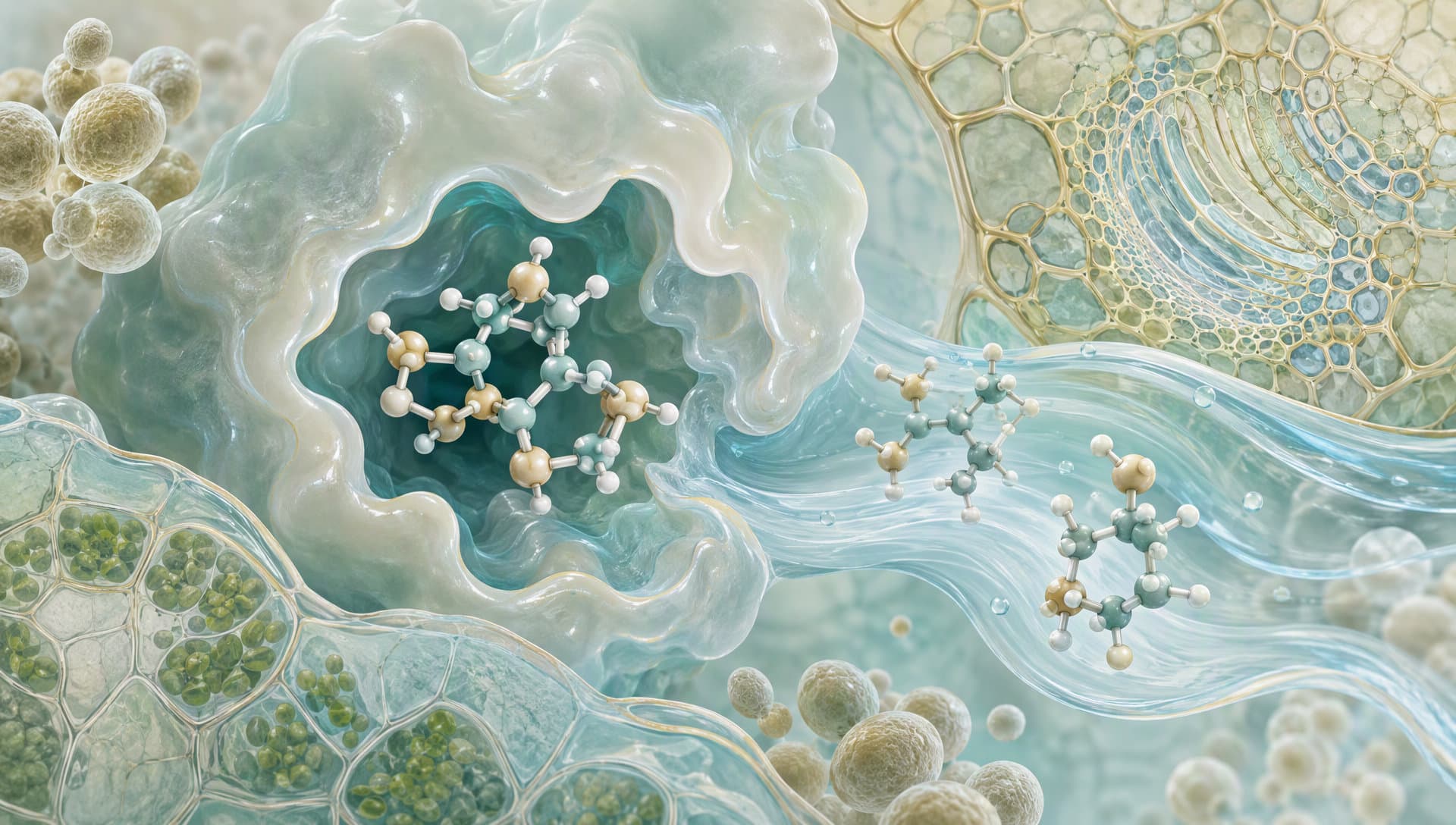
The invertase mechanism separates sucrose into glucose and fructose within an enzyme active site.
Category: Biotechnology, Industrial Enzymes, Food Science, Carbohydrate Processing
Abstract: Invertase links sucrose hydrolysis with syrup processing and fermentation. This article explains its mechanism, activity assays, process conditions, transfructosylation, immobilization, and protein-engineering workflow.
Sucrose is one of the most familiar carbohydrates in food and biomanufacturing, yet “splitting sugar” is not merely a change in sweetness. For a syrup processor, the reaction can alter crystallization behavior, solubility, viscosity, and formulation stability. For a fermentation team, it changes when glucose and fructose become available to cells. For an enzyme engineer, it offers a compact model for studying catalytic efficiency, stability, substrate access, and product release.
Invertase is commonly described by the enzymatic name beta-fructofuranosidase. Its best-known function is the hydrolysis of sucrose into glucose and fructose. Complete hydrolysis gives the two monosaccharides in an equimolar chemical relationship, but an industrial batch does not reach that endpoint automatically. Enzyme loading, reaction time, acidity, temperature, substrate concentration, product accumulation, water activity, and matrix composition all shape the observed conversion.
That distinction separates enzyme identification from process design. A protein may be active in a simple buffer but perform differently in a concentrated syrup, a bakery filling, or a fermentation feed. The technical evolution of invertase therefore begins with mechanism, but it quickly expands into measurement, process-window definition, immobilization, and sequence-level optimization.
Why the Invertase Mechanism Still Defines the Starting Point
The catalytic cycle can be understood as recognition, binding, bond cleavage, and product release. Sucrose enters an active-site pocket in which catalytic residues create the microenvironment needed to break its glycosidic linkage. Glucose and fructose then leave the pocket, allowing another turnover.
Each stage can become limiting. Acidity changes the protonation state of catalytic groups. Temperature accelerates molecular motion but may destabilize the protein. Raising substrate concentration increases encounter frequency, yet it also raises viscosity and can reduce effective mass transfer. As products accumulate, the chemical environment changes again. The result is not a single intrinsic number but a response surface connecting the enzyme to its operating conditions.
Real matrices add further complexity. Salts, pigments, polysaccharides, proteins, and other sugars may affect diffusion, nonspecific adsorption, assay background, or water availability. This is why a high activity value measured in dilute buffer cannot be treated as a guarantee of high productivity in concentrated syrup.
Proteins assigned the same functional name may also differ in sequence, oligomeric state, glycosylation, secretion behavior, acid tolerance, and thermal stability. Candidate selection should therefore ask more than whether a protein can hydrolyze sucrose. It should ask whether the enzyme remains useful at the target sugar concentration, temperature, residence time, and downstream separation conditions.
From Invert Syrup to Broader Industrial Invertase Applications
The classic application is invert syrup production. Once sucrose is split, the sugar composition changes, and that can influence crystallization, solubility, moisture behavior, and perceived sweetness. Bakery products, confectionery centers, syrups, and selected beverage systems may therefore control the degree of hydrolysis rather than simply maximizing reaction speed.
Too little conversion may not achieve the formulation objective. Excessive treatment may disturb an established flavor, viscosity target, or production schedule. The relevant endpoint is consequently a product specification, not the theoretical completion of a chemical equation.
Fermentation creates a different decision problem. Hydrolysis can make glucose and fructose available earlier, but microorganisms vary in how they take up and regulate these sugars. Pretreating the feed, coupling hydrolysis with fermentation, or using a production organism that expresses its own enzyme are distinct process strategies. The best choice depends on growth kinetics, product formation, osmotic stress, contamination control, and feeding design.
Sucrose sensing represents another branch. In an enzyme-based sensor, the target substrate is first transformed into products that can be recognized by a downstream detection element. Selectivity, response time, interference from background sugars, stability of the enzyme layer, and reusability of the device can matter as much as catalytic rate.
A crucial boundary is the difference between invertase and sucrose isomerase. The former is primarily associated with hydrolysis to glucose and fructose. The latter rearranges sucrose into products such as isomaltulose. The enzymes begin with the same substrate but lead to different product profiles, analytical requirements, and process objectives.
Why an Invertase Activity Assay Should Become a Reaction Curve
Activity is commonly estimated from product formation or substrate disappearance. Reducing-sugar colorimetric assays are convenient for screening, but glucose, fructose, and other reducing compounds in the matrix can all contribute to the signal. More selective analytical methods can resolve individual sugar components and are better suited to mechanism confirmation and mass-balance work, although they require more sample preparation and instrumentation.
A robust assay should answer at least four questions. Has the blank removed spontaneous substrate change and matrix background? Were samples collected during an approximately linear phase? Was the enzyme amount proportional to the observed response? Were quenching, dilution, and storage handled consistently?
A single endpoint can hide substrate depletion, product inhibition, or time-dependent inactivation. Initial-rate measurements across several time points are more informative. A subsequent substrate-concentration series helps define the useful response range, and testing in the actual matrix reveals whether a buffer result transfers to the intended formulation.
Normalization also matters. Comparisons may be based on total protein, enzyme volume, purified enzyme mass, or an activity unit, but the chosen basis must remain consistent. Samples produced in different hosts may contain different background proteins, glycosylation patterns, secretion impurities, or endogenous sugar-converting activities. These factors should be treated as part of data interpretation rather than dismissed as experimental noise.

Invertase activity is evaluated across substrate concentration, acidity, temperature, and reaction time in a syrup matrix.
Invertase Optimal Conditions Are Not One Temperature or pH Value
An optimum is always conditional. A laboratory assay may use a dilute solution and a short reaction to identify a peak rate, whereas production may require useful activity over many hours. A higher temperature can produce a faster initial rate while also accelerating enzyme inactivation. A milder setting may begin more slowly yet deliver a more stable cumulative conversion.
Concentrated sucrose adds a second layer. Viscosity rises, diffusion slows, and effective water availability changes. Glucose and fructose accumulate as the reaction proceeds, so the surrounding environment is dynamic rather than fixed. A practical process window should therefore combine rate, stability, target conversion, processing time, and product-quality metrics.
A staged testing strategy makes this complexity manageable. First, use a buffer system to narrow the temperature and acidity range. Next, introduce the intended sucrose concentration. Then add salts, other sugars, proteins, or processing aids from the real formulation. Finally, verify mixing and heat transfer in the intended equipment. Controls at each layer help distinguish a true enzyme effect from a matrix or device effect.
This approach also reduces a common development error: optimizing a variable in isolation. Changing acidity may alter not only catalytic groups but also carrier charge in an immobilized system. Increasing temperature may lower syrup viscosity while destabilizing the protein. Longer residence time may improve conversion while increasing exposure to unfavorable conditions. The operating point must balance these interacting effects.
Hydrolysis and Transfructosylation Create Two Different Routes
Some beta-fructofuranosidases can do more than use water to complete hydrolysis. Under suitable conditions, they can transfer a fructosyl group to another acceptor molecule and form fructooligosaccharide-type products. Hydrolysis and transfructosylation may compete in the same vessel, but their relative rates depend on the protein and the reaction environment.
This capability cannot be generalized to every enzyme called invertase. Different microbial proteins have different activity profiles, and the molecular information available for some groups is less extensive than for well-characterized yeast enzymes. Any development claim should therefore be verified with a defined candidate and a complete sugar profile.
When the objective is glucose and fructose production, the key measurements include hydrolysis rate, final conversion, product effects, and long-term stability. When the objective shifts toward fructooligosaccharides, the questions change. The team must follow products of different chain lengths, residual monosaccharides, competing reactions, and the time window in which the desired distribution is greatest.
High substrate concentration may favor transfer behavior for some candidates, but it also creates viscosity and mass-transfer pressure. A trend observed in one system cannot establish a fixed yield in another. Product analysis across time is more useful than assuming that a single high-sucrose endpoint represents the best process.
Substrate identity must also remain clear. Inulin and related fructans are not the same as sucrose, and an inulinase that strongly favors fructan chains should not be treated as interchangeable with a sucrose-focused catalyst. The target linkage and target sugar profile should be specified before sequence mining, purchasing, or process screening begins.
Why Immobilized Invertase Encourages Continuous Processing
Immobilization confines an enzyme to a carrier, gel, membrane, or defined space. The concept is attractive because it can simplify separation of protein from product and create options for recovery, packed-bed operation, and continuous flow. In a syrup process, limiting free protein in the product stream may also simplify downstream handling.
However, immobilization is not an automatic performance upgrade. Coupling can block access to the active site. Pores can restrict diffusion of a viscous substrate. The microenvironment near a charged carrier may differ from the bulk solution. Mechanical strength, cleaning compatibility, microbial control, carrier lifetime, and enzyme leakage all affect process economics.
Evaluation should therefore include retained initial activity, operational stability across cycles, volumetric productivity, pressure drop, product profile, and protein leakage. A material that gives excellent first-cycle activity may fail quickly under cleaning conditions. Another carrier may retain less apparent activity but provide a more predictable long-duration process.
The transition from batch to continuous operation also requires more than choosing a support. Feed concentration, flow rate, residence time, bed dimensions, and temperature control must be matched. A sensible development path starts with a small recirculating system to separate catalytic limitations from mass-transfer effects. Runtime can then be increased while monitoring whether performance decline is explainable, cleanable, and reversible.
How Invertase Protein Engineering Can Broaden the Process Window
Protein engineering becomes relevant when existing candidates fall short in thermal stability, acid tolerance, expression, secretion, or compatibility with concentrated substrate. The first step is not a mutation. It is a measurable target—for example, retaining activity after a defined exposure, performing at a specified sugar concentration, or reducing activity loss after immobilization.
Candidate discovery can begin with protein-database search and function prediction, followed by comparison of conserved residues, catalytic pockets, signal peptides, glycosylation patterns, and family-level differences. MatwingsVenus™(晓鹜™) provides protein database search, function prediction, and enzyme discovery capabilities that can help organize this phase. The aim is to move from a name-based candidate list to explicit sequence features, structural hypotheses, and testable functions.
Design can then focus on residues near the active-site entrance, flexible regions, surface charge, or stability networks. Every design objective needs a corresponding experimental readout. A variant with improved thermal persistence may lose catalytic efficiency. A protein with higher expression may still fail in concentrated syrup. A mutation that benefits the soluble enzyme may behave differently after immobilization.
MatwingsVenus™(晓鹜™) can also support protein-design tasks and conversational coordination across targets, candidates, variants, and validation conditions. This does not replace expression, purification, activity curves, or matrix testing. Its practical role is to make assumptions and task dependencies visible so that computational prioritization and wet-lab evidence can inform one another.

Invertase protein engineering connects sequence exploration, structural hypotheses, activity screening, and immobilization tests.
A Platform Workflow Linking Candidate Screening to Wet-Lab Validation
A productive enzyme program is a closed loop rather than a one-time prediction. It begins by defining the product profile, temperature, acidity, substrate concentration, and operating duration. Candidate search and small-scale expression follow. The first activity data identify the dominant limitation, which determines whether the next step should be broader natural-sequence discovery, process adjustment, immobilization, or variant design.
MatwingsVenus™(protein design agent) can help organize database search, functional interpretation, protein design, and candidate-validation tasks, connecting candidates, hypotheses, and test conditions. Platform-assisted hypotheses still need to pass through expression, purification, multi-point activity assays, authentic matrices, and scale-relevant equipment.
The most useful pattern is computational narrowing, experimental calibration, and data return. It is more informative than chasing a single predicted score because the major bottleneck may not be the property initially assumed. If a native enzyme meets the specification after adjusting residence time, complex sequence engineering may be unnecessary. If mass transfer dominates, reactor design may be more direct than mutation. If environmental inactivation is the true constraint, stability engineering and immobilization can be compared in parallel.
This layered decision process prevents the project from treating every problem as a protein-sequence problem. It also gives each experiment a clear role: confirm substrate scope, define the process window, identify failure modes, or test a proposed improvement.
FAQ
Are invertase and sucrose isomerase the same enzyme?
No. Invertase primarily hydrolyzes sucrose into glucose and fructose. Sucrose isomerase rearranges the sucrose molecule and can form products such as isomaltulose. Their products, assays, and process goals differ.
How can an invertase activity result be made more reliable?
Use substrate blanks, enzyme blanks, and matrix controls. Confirm that sampling occurs in an initial linear phase, keep enzyme amount and reaction conditions consistent, and verify complex samples with a method that can distinguish individual sugar components.
Can every invertase produce fructooligosaccharides?
No. Meaningful transfructosylation is candidate- and condition-dependent. Substrate concentration, water activity, reaction time, and the protein’s catalytic profile influence the resulting sugar distribution.
Does immobilization guarantee more reuse cycles?
Immobilization creates the possibility of reuse, but cycle life depends on retained activity, carrier strength, mass transfer, cleaning, microbial control, and leakage. Repeated-cycle data are needed to establish operational value.
How should a food or fermentation team select an enzyme candidate?
Define the desired sugar profile, matrix, temperature, acidity, processing time, and downstream separation first. Then compare catalytic activity, operational stability, expression, and immobilization compatibility. Final selection should be based on the authentic matrix and relevant equipment.
Conclusion
Invertase is evolving from a familiar sucrose-hydrolysis tool into a biocatalytic module that can be measured, immobilized, integrated, and engineered. Its successful use depends less on one isolated optimum and more on the match among protein properties, sugar composition, analytical methods, and equipment conditions.
A disciplined program begins with a clear product target, builds a reaction curve instead of relying on one endpoint, validates the process window in the real matrix, and only then chooses between process adjustment, immobilization, enzyme discovery, and protein design. That progression turns a simple glycosidic-bond reaction into a stable and explainable development strategy.