AlphaFold 3 Complex Prediction Workflow for Practical Research
Published on September 27, 2026
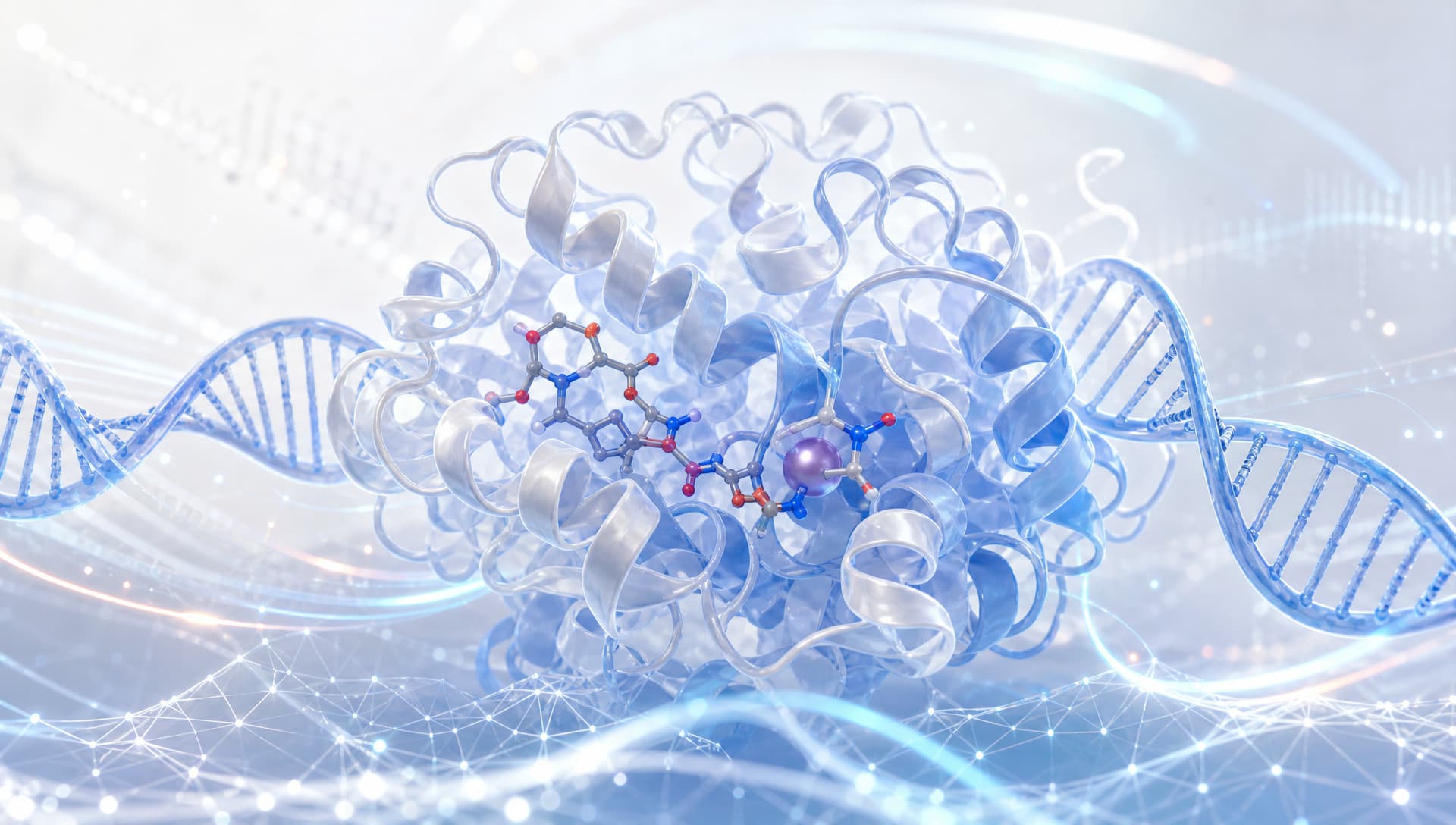
Moving from a single protein to a protein–protein, protein–nucleic acid, or protein–ligand system creates a problem larger than structure generation. Researchers must define the right entities and stoichiometry, interpret confidence at the interface, and connect the model to evidence and validation. This guide presents an AlphaFold 3 complex prediction workflow from input preparation through decision-making, with MatwingsVenus™(晓鹜™)as an evidence-led companion for database retrieval, structural analysis, and downstream R&D planning.
A useful prediction begins with the biological question
AlphaFold 3 extends joint structure prediction across a broad range of molecular combinations, including proteins, DNA, RNA, small molecules, ions, and selected modified residues. That wider scope makes task definition more important, not less. Before opening the server, decide what the model is meant to clarify: overall assembly, a chain–chain interface, nucleic-acid recognition, or a plausible ligand pose.
The first stage of an AlphaFold 3 complex prediction workflow should therefore be input curation. Verify the identity, species, isoform, and boundaries of each protein or nucleic-acid sequence. Remove unintended tags or signal peptides only when the biological question justifies doing so. Specify copy number and stoichiometry explicitly, and collect any known structures, functional residues, variants, cofactors, and interaction evidence.
MatwingsVenus™(晓鹜™)can help organize this upstream work through conversational database retrieval and sequence analysis across resources such as PDB and UniProt. It does not turn a prediction into experimental evidence. Instead, it helps prevent a common failure mode: generating a polished model from an incorrectly defined system.
The AlphaFold 3 complex prediction workflow in five steps
Define every entity and a testable hypothesis
List every component and its copy number. Then write one sentence describing the question the model should answer—for example, whether two proteins form a consistent interface or whether a ligand occupies a known functional pocket. Existing experimental structures, homologous complexes, conserved residues, or mutation data should be retained as comparison points rather than replaced by the prediction.
Add the entities in AlphaFold Server
Sign in to AlphaFold Server, enter the first entity, and use the interface to add the remaining chains or molecular components. Proteins and nucleic acids are generally represented by sequence, while ligands, ions, and modified entities must follow the formats currently supported by the interface. Before submission, recheck entity type, sequence direction, copy number, and stoichiometry. Also review the current service terms, quotas, and output-use restrictions because these can change over time.
Preview the job and preserve reproducibility
Use a job name that captures the system and version, review all entities, and retain the submitted sequences, copy numbers, date, and relevant settings. Confirm and submit the job. A rigorous AlphaFold 3 complex prediction workflow keeps the exact input alongside the output; otherwise, differences between runs can become impossible to explain.
Compare the ranked models, not only the first image
When the job finishes, examine several ranked candidates before downloading the result package. Agreement in the core fold but divergence at an interface or flexible segment is informative. It may indicate conformational alternatives, insufficient information, or uncertainty in relative placement. A visually complete model is not automatically a unique biological structure.

Entity setup and confidence review should be treated as one chain
Interpret confidence as a map, not a verdict
Use pLDDT to inspect local confidence, PAE to evaluate uncertainty in relative positions, pTM to assess global topology, and ipTM to focus on interactions between entities. These signals should be considered together with agreement across candidates, known functional sites, structural templates, and chemical plausibility. High confidence is not a measurement of binding affinity, activity, selectivity, or experimental success.
Translate scores into a research decision
A practical AlphaFold 3 complex prediction workflow should produce a decision, not merely a rendering. For protein–protein systems, ask whether the interface persists across candidates, whether key residues make plausible contacts, and whether cross-chain PAE supports the proposed relative orientation. For protein–nucleic acid systems, compare the modeled recognition region with conserved and experimentally characterized sites. For protein–ligand systems, inspect pose, pocket geometry, clashes, and plausible interactions—but do not treat a generated pose as a docking score or dissociation constant.
This is where MatwingsVenus™(晓鹜™)fits naturally as an upstream and downstream orchestrator. It can retrieve measured structures and annotations first, keep Predicted results distinct from Measured evidence, and route the next question toward structure comparison, functional-site analysis, docking, physics-based assessment, or protein engineering. Compute-intensive prediction and design steps retain a user approval gate, reducing the risk that a bad assumption silently propagates through an entire project.
Turn one prediction into a reusable R&D loop

Evidence, computation, and experimental validation close the research loop
When the goal is mutation prioritization, binder design, or experimental planning, the workflow needs three additional layers:
• Evidence alignment: Check sequence identity, existing structures, functional sites, and known variants in PDB, UniProt, and relevant databases.
• Structural review: Compare candidates with references, inspect interfaces and flexible regions, look for steric or chemical inconsistencies, and use complementary methods when needed.
• Experimental closure: Select expression and purification, binding assays, activity measurements, mutational tests, or structural experiments according to the actual hypothesis.
MatwingsVenus™(晓鹜™)brings database retrieval, structure-related tasks, functional prediction, protein engineering, and expert collaboration into one conversational workflow. Its advantage is not stronger certainty language. It is the ability to keep track of what is measured, what is predicted, and what remains unknown, then connect each uncertainty to an appropriate next step.
FAQ
Can AlphaFold 3 prove that two molecules bind?
No. It can generate a structural hypothesis and confidence estimates, but binding, affinity, and biological function still require supporting evidence and, where decisions depend on them, experimental validation.
Is ipTM sufficient for judging a complex?
No. ipTM is useful for interface confidence, but it should be read alongside PAE, pLDDT, pTM, candidate agreement, interface chemistry, and known biology.
Why can the same system produce different conformations?
Diffusion-based generation produces multiple candidates. Flexible regions, limited evidence, sequence boundaries, and stoichiometry choices can also increase variation. Disagreement should be documented and used to prioritize validation.
Can AlphaFold Server outputs be used in a commercial project?
Consult the current AlphaFold Server terms and output-use restrictions rather than relying on an older tutorial or secondary summary. Commercial teams should also review data governance, intellectual-property, and downstream-use requirements.
From model generation to testable conclusions
The best AlphaFold 3 complex prediction workflow does more than add entities and download coordinates. It combines curated inputs, multi-metric interpretation, evidence retrieval, and fit-for-purpose validation. Teams that want to reduce tool switching can use MatwingsVenus™(晓鹜™)to establish a conversational task chain: retrieve first, predict second, separate Measured from Predicted and Unknown, and convert the resulting structural hypothesis into an actionable computational or experimental plan.