High pH elution of Protein A resins: the end of 'low acid shock' in antibody purification?
Published on July 30, 2026
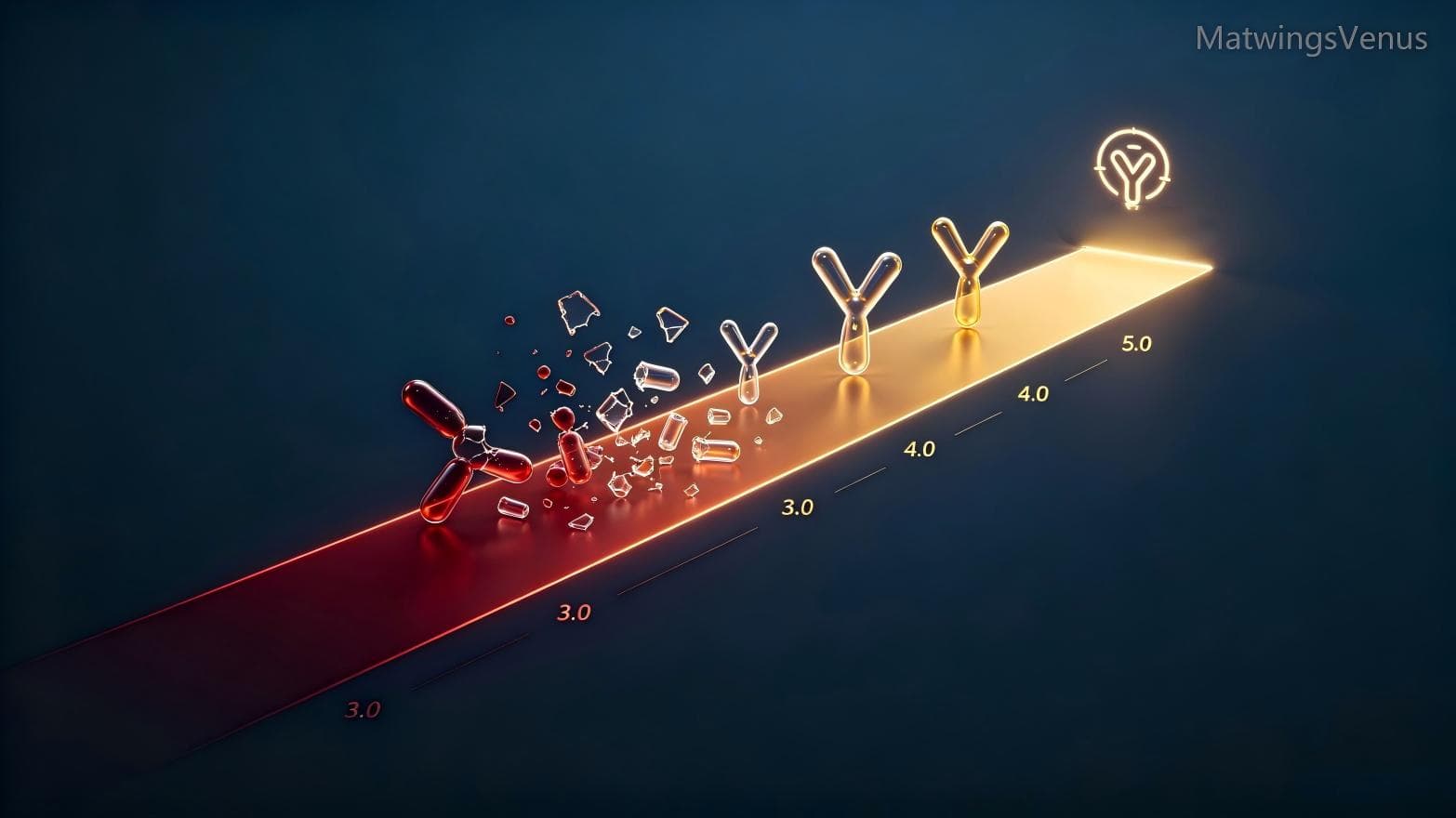
In the downstream purification of biopharmaceuticals such as monoclonal antibodies, bispecific antibodies, and Fc-fusion proteins, Protein A affinity chromatography is widely recognized as the gold standard for capture. By virtue of its highly specific recognition of the Fc region of immunoglobulin G (IgG), this technology enables one-step enrichment of target antibodies from complex fermentation broths. Yet for decades, this classic process has adhered to a fixed principle—low-pH elution.
The binding of antibodies to native Protein A ligands is strongest at near-neutral pH. Conventional processes typically require reducing the system pH to 3.5–4.0 to disrupt intermolecular interactions and achieve elution; for antibody variants with exceptionally strong binding, even harsher conditions of pH 3.0–3.5 may be necessary. The binding interface between antibodies and Protein A ligands is primarily maintained by hydrogen-bond networks and hydrophobic interactions involving conserved histidine residues on the Fc region (His310, His435, His436) and ligand residues. When the pH drops to 3.0–4.0, protonation of these Fc histidines disrupts the hydrogen-bond network, causing a sharp decline in binding affinity and triggering elution.
For structurally stable conventional monoclonal antibodies, brief acidic exposure is generally tolerable. However, as antibody drug formats have expanded from conventional mAbs to bispecific antibodies, multispecific antibodies, antibody fragments, and Fc-fusion proteins, the limitations of low-pH elution have become increasingly apparent. Against this backdrop, high-pH elution Protein A resins have emerged, offering a milder and more efficient alternative for antibody elution that is better suited to next-generation antibody therapeutics.
I. The Cost of Low-pH Elution: More Than Just Acidic Stress

The Hidden Cost of Low-pH Elution
For structurally sensitive novel antibody molecules, the acidic environment of pH 3.5–4.0 disrupts native protein conformational equilibrium, triggering a cascade of adverse effects.
Antibody aggregation is the most immediate process pain point. Acidic conditions induce conformational changes in antibodies, exposing hydrophobic regions that become entangled to form soluble or insoluble aggregates. The formation of aggregates not only significantly reduces monomer purity and yield but also increases the burden on subsequent polishing steps.
A second issue is compromised impurity clearance. Low-pH elution tends to cause co-elution of host cell proteins (HCPs) with the target antibody. Elevated HCP levels substantially increase the risk of clinical immunogenicity. Furthermore, standard processes include a post-elution low-pH viral inactivation step—incubation at pH 3.5 ± 0.2 for 30–60 minutes after elution and immediate neutralization—which significantly extends the duration of acidic exposure and amplifies acid-induced structural damage.
Most critically, irreversible molecular damage. Some pH-sensitive antibodies, even after immediate neutralization following low-pH elution, fail to fully recover their native conformation, resulting in permanent activity loss.
This problem is particularly acute for bispecific antibodies. The structural stability of bispecifics is far weaker than that of symmetric conventional mAbs, and low-pH elution readily induces heterodimer degradation, substantially reducing product purity and yield.
Also, frequent exposure to a strongly acidic elution environment speeds up changes in the conformation of Protein A ligands and reduces their activity. This is the core issue that low-pH damage to Protein A resins highlights—the resin gradually loses ligand activity over repeated low-pH cycles, the dynamic binding capacity keeps dropping, and eventually the resin wears out early, increasing both process costs and supply chain pressure.
II. High-pH Elution Protein A Resins: Principles of Molecular Engineering and Industrial Performance

The pH Shift Advantage
The technological breakthrough of high-pH elution Protein A resins lies in targeted engineering of the ligand at the molecular level, reshaping the binding properties between the ligand and the antibody Fc region from a thermodynamic perspective.
Native Protein A ligands exhibit extremely strong binding affinity to the antibody Fc region, requiring pH 3.0–3.5 to forcibly disrupt the interaction. Novel high-pH elution resins achieve this through site-directed mutagenesis of key amino acid residues in the Protein A ligand, reducing the binding affinity of the ligand to the antibody Fc region under weakly acidic conditions, allowing antibodies to be released smoothly at pH 4.0 and above. It should be noted that the elimination of VH3 non-specific binding sites was already accomplished in first-generation alkali-stable recombinant Protein A ligands (e.g., MabSelect SuRe); the core breakthrough of high-pH elution resins lies in further optimizing the pH responsiveness of the ligand while maintaining alkali stability, thereby achieving a systematic elevation of elution pH.
Neutral-to-mild-acid elution Protein A—i.e., raising the elution pH from 3.0–3.5 to the 4.0–5.0 range—transforms the elution environment from "harsh acidic stress" to "gentle weak-acid conditions." The core value of this shift is that it substantially reduces acid-induced damage to both target molecules and resin ligands without sacrificing binding capacity or specificity.
Currently, mainstream products can raise elution pH to 4.0–5.0, with some achieving elution above pH 5.0, effectively reducing acid-induced aggregation and improving antibody yield. Other resins can achieve over 95% antibody recovery at pH 3.8–4.0.
Notably, high-pH elution does not come at the cost of binding capacity. At a 6-minute residence time, the dynamic binding capacity (DBC) of mainstream high-pH elution resins reaches above 60 mg/mL, balancing process mildness with production efficiency. The gentle elution conditions also make these resins typical low-acid-damage Protein A resins—with substantially reduced acidic stress on the ligand, the resin maintains higher capacity after repeated use, effectively extending its service life.
III. Academic Validation: Mild Elution Delivers Dual Upgrades in Purity and Safety

The Dual Advantage
A systematic study published in an international academic journal in 2025 compared multiple high-pH elution resins against conventional low-pH elution controls, confirming the performance advantages of high-pH elution resins.
The study demonstrated that the overall purification performance of high-pH elution processes is comprehensively superior to conventional processes:
In aggregate clearance, conventional resins generally lack aggregate separation capability. In contrast, high-pH elution resins, leveraging their mild dissociation conditions, effectively remove both soluble and insoluble aggregates from the feed while maintaining high monomer recovery. For complex molecules such as bispecific antibodies, this process significantly reduces fragmentation and aggregation risk.
In HCP impurity clearance, high-pH elution resins substantially reduce HCP levels in the eluate—by several-fold to an order of magnitude—significantly alleviating the burden on subsequent polishing steps.
In viral clearance,mild elution resins also perform exceptionally well, achieving 5.1 log reduction for mouse minute virus (MVM) and 4.6 log reduction for retrovirus-like particles (RVLP).
Notably, the study explicitly concluded that although high-pH elution resins were originally designed for acid-sensitive antibodies, they are a better choice for conventional antibodies as well.
IV. Application Scenarios: From Niche Rescue to Broad-Spectrum Best Practice
High-pH elution resins are progressively transitioning from a specialized solution to a superior standard for the antibody capture step.
Bispecific antibodies represent the highest-value application scenario. For asymmetric bispecifics with differential Fc designs (e.g., H435R/Y436F mutations), Protein A chromatography can exploit affinity differences between Fc regions (one side binds strongly, the other weakly or not at all) to separate heterodimers from homodimers through avidity effects. The mild environment of high-pH elution further protects the conformational integrity of bispecific heterodimers, reducing acid-induced mispairing or degradation.
pH-sensitive antibodies and Fc-fusion proteins are core beneficiaries. Neutral-to-mild-acid elution Protein A raises the elution environment to the 4.0–5.0 range, fundamentally avoiding acidic stress damage at the process level.
Even conventional mAbs with good stability can benefit from process upgrade—mild elution effectively reduces aggregation risk, improves monomer yield, and alleviates downstream purification burden.
V. Industry Landscape and Selection Framework
High-pH mild elution has become a key innovation area in the global chromatography consumables sector.
In the upstream core ligand segment, GenAlwings recombinant Protein A products provide critical support for domestic substitution. The product is expressed in E. coli and purified by chromatography, with purity exceeding 95%. The C-terminal cysteine enables oriented ligand coupling, and the product withstands 0.5 M NaOH cleaning, demonstrating excellent CIP tolerance. Its product portfolio includes enterokinase, carboxypeptidase B, KEX2 protease, maltogenic amylase, and Protein A.
Matwings Technology's independently developed MatwingsVenus™ (Xiaowu™) platform is extending AI-driven protein design capabilities to resin development. The core logic: since resin performance is determined by the ligand protein, introduce AI foundation models at the ligand design stage. The platform has integrated a billion-scale protein sequence dataset containing billions of functional labels, covering sequences from extreme environments such as deep-sea and volcanic sources with high-temperature, high-pressure, and extreme acid/alkali tolerance. Based on this foundation, the platform jointly optimizes multiple targets including ligand binding capacity, alkali resistance, specificity, and elution conditions. For Protein A ligands, AI design performs rational substitution of surface-sensitive residues while optimizing overall folding stability, yielding recombinant Protein A ligands that withstand 1M NaOH cleaning and regeneration with no significant capacity loss after repeated cycles.
Matwings Technology has established a "dry-wet closed loop" R&D model powered by MatwingsVenus™—AI drives high-throughput design, automated wet labs perform validation, forming an efficient "design-validate-feedback-upgrade" cycle that compresses traditional R&D timelines from years to months.
For biopharma companies evaluating options, the following selection framework is recommended:
Elution pH and product compatibility: For highly pH-sensitive molecules, prioritize resins with elution pH ≥ 4.5. Core focus: whether the resin possesses neutral-to-mild-acid elution Protein A capability.
Dynamic binding capacity and process efficiency: Validate DBC under the company's own residence time conditions; capacity should reach ≥ 60 mg/mL at 6-minute residence time.
Impurity clearance performance: Different resins exhibit varying aggregate and HCP clearance capabilities; side-by-side comparisons under identical feed conditions are recommended.
Industrial stability: Focus on alkaline CIP tolerance, cycle life, and ligand leakage levels. Low-acid-damage Protein A resins offer distinct advantages in this dimension.
Regulatory and supply chain assurance: Verify DMF filings, quality documentation, and manufacturing scale capabilities.
VI. Conclusion
The technological innovation of high-pH elution Protein A resins represents a fundamental correction to the underlying logic of antibody purification—shifting from "making the protein fit the harsh process" to "adapting the process to the protein's characteristics."
Neutral-to-mild-acid elution Protein A—raising elution pH from 3.0–3.5 to 4.0–5.0—is the core technical embodiment of this philosophy. Low-acid-damage Protein A resins, from the perspective of resin protection, represent a paradigm shift from "tolerating acid stress" to "avoiding acid damage."
Both academic research and industrial practice have amply demonstrated that high-pH mild elution resins outperform conventional processes across aggregate control, HCP clearance, and product activity retention. For complex molecules such as bispecific antibodies and Fc-fusion proteins, the technology breaks through quality and yield bottlenecks; for conventional mAbs, it offers a milder and purer upgrade pathway.
At the heart of this transformation is not product replacement, but a comprehensive upgrade of the antibody purification evaluation framework—industry standards are evolving from "yield first" to "molecular stability first, product quality first." As next-generation complex antibody therapeutics become the R&D mainstream, high-pH elution Protein A resins have already become the new core technology foundation for antibody capture process evolution, providing robust process support for high-quality development of the biopharmaceutical industry.