
Urate Oxidase: Why Humans Lost It, Yet Uric Acid Testing Depends on It
Published on November 4, 2026
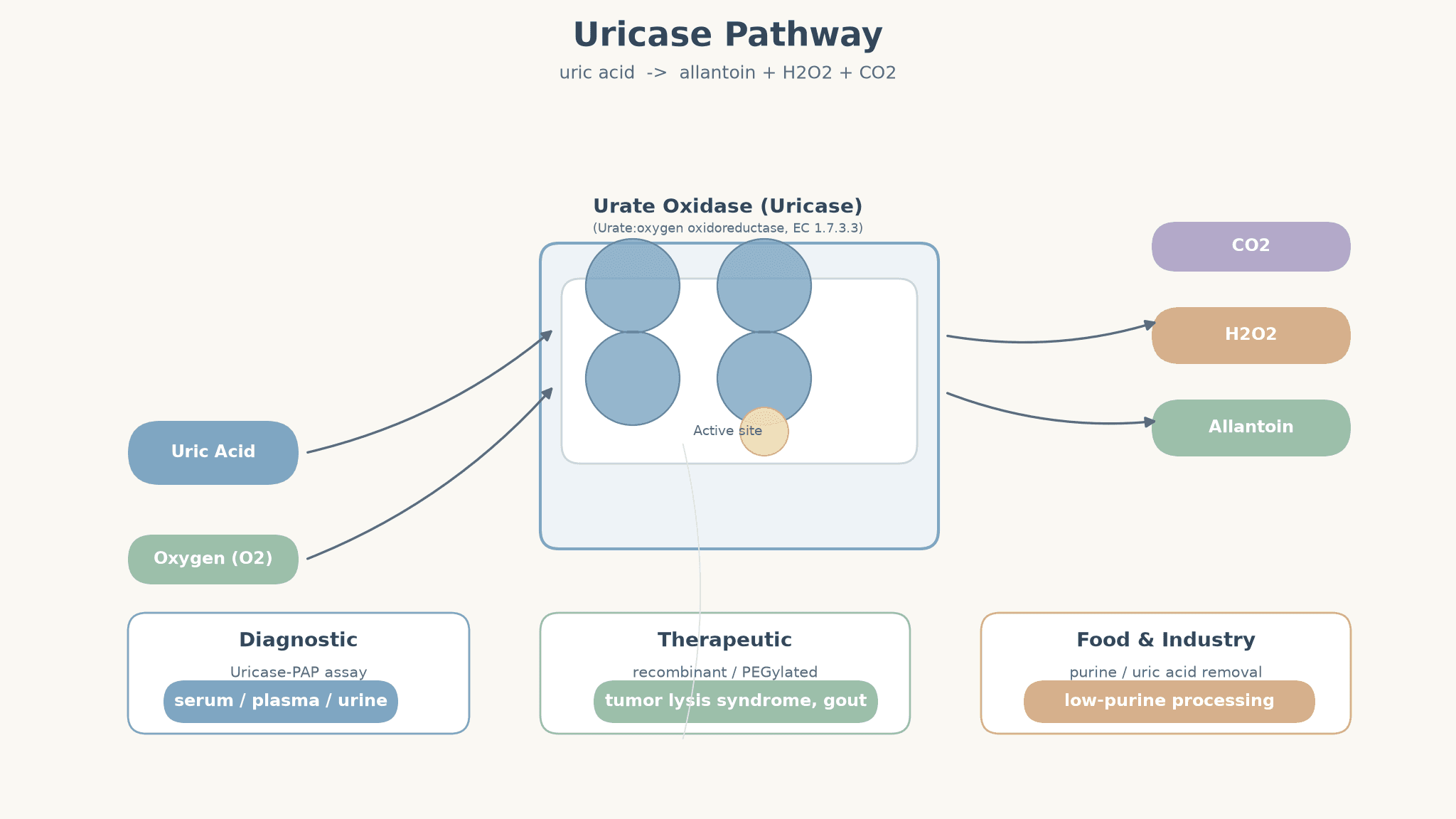
figure1. Full pathway of uricase-catalyzed oxidation of uric acid to allantoin with H2O2 and CO2
Classification: Enzymology & Enzyme Engineering (Related: Analytical & Diagnostic Biotechnology, Biopharmaceuticals)
1. Why Humans "Lose" This Enzyme: An Evolutionary Puzzle
1.1 Uric Acid and Allantoin: Two Kinds of Waste, One Hard and One Soft
Most mammals carry an enzymatic "processing plant" that converts poorly soluble uric acid into readily soluble allantoin; humans happen to have lost it, so uric acid must queue to be excreted by the kidneys.
Think of uric acid as a hard, water-insoluble lump of waste, and allantoin as a spoonful of easily soluble syrup that flushes out with urine. Urate oxidase converts the lump into the syrup; when it is missing, uric acid accumulates and may crystallize in joints and kidneys.
In standard terms, urate oxidase (Uricase, EC 1.7.3.3) is a key oxidase in the purine degradation pathway, catalyzing the oxidation of uric acid to allantoin and releasing hydrogen peroxide and carbon dioxide. Most mammals retain the enzyme; humans and great apes lack a functional enzyme because the uricase gene (UOX) is inactivated.
1.2 The Cost and Double Edge of Losing It
Losing the enzyme leaves human blood urate higher than other mammals overall, an important driver of gout and kidney stones; some studies also suggest higher urate may bring antioxidant and blood-pressure effects, making it an evolutionary double edge.
Uric acid is the terminal product of purine metabolism, coming mainly from cell turnover and some foods. It has low solubility at physiological pH and tends to crystallize at high concentration, so its elevation is widely linked to gout, kidney stones, cardiovascular disease and metabolic syndrome.
This yields a clear view for selection: intervention in hyperuricemia follows two routes, inhibiting uric acid production (xanthine oxidase inhibition, a source approach) and promoting uric acid breakdown (the uricase route, an outlet approach). The two mechanisms are distinct and should not be confused.
2. How Urate Oxidase Works: Mechanism and Key Products
2.1 An Oxygen Molecule Opens the Ring
The essence of urate oxidase is to use oxygen to oxidize uric acid, opening its purine ring to form more soluble allantoin while producing hydrogen peroxide and carbon dioxide.
The reaction can be written as: uric acid + O2 + H2O -> 5-hydroxyisourate (5-HIU) + H2O2. 5-HIU then decomposes spontaneously (or via downstream enzymes) to allantoin and carbon dioxide.
There is an easy point of confusion: many assume the enzyme converts uric acid to allantoin in one step. In fact urate oxidase only performs the first oxidative ring opening, making 5-HIU and H2O2; the later decomposition to allantoin and CO2 is largely spontaneous. This clarifies why detection reagents also carry peroxidase.
2.2 "Geometric Catalysis" Without a Metal
The urate oxidase active site contains no metal cofactor and relies on no organic cofactor; it mainly lowers the activation energy by placing the uric acid substrate into an optimal reaction geometry.
Mechanistic studies show urate oxidase holds uric acid as a dianion, anchoring it through hydrogen bonds from conserved residues such as Arg176 and Gln228, so the substrate, oxygen and active pocket form the most favorable arrangement. This precise guidance gives high substrate specificity, essentially recognizing only uric acid.
Structurally, the functional unit is typically a homotetramer, with each subunit carrying one active site. This "four-station" structure makes stability and cooperativity part of process evaluation.

figure2. Uricase catalytic reaction (left) and active-site geometric catalysis (right)
2.3 The Dual Identity of Hydrogen Peroxide
Hydrogen peroxide is both a "messenger" in uric acid detection and an oxidative byproduct that must be controlled.
On the detection side, the H2O2 produced by urate oxidase is used by peroxidase (POD) to oxidize 4-aminoantipyrine and a chromogen into a colored quinone-imine, whose absorbance is proportional to uric acid concentration. This is the chemical basis of the uricase-peroxidase coupled method (uricase-PAP).
On the control side, ascorbic acid in samples consumes H2O2 or interferes with color development, so clinical reagents often add ascorbate oxidase and balance uricase and peroxidase loads to reduce negative error. This two-enzyme system is the core of uric acid assay stability.
3. From Fungi to Recombinant: Sources and Enzymatic Properties
3.1 Three Main Sources
Urate oxidase can be produced naturally by fungi and bacteria, or heterologously through recombinant expression with engineering, and the properties differ notably by source.
Among natural sources, Aspergillus flavus, Candida utilis and Bacillus species are commonly studied and screened. Recombinant expression (e.g. in E. coli) frees production from a native strain and opens the door to directed modification.
Source differences directly affect optimum pH, thermostability, specific activity and immunogenicity. Fungal and bacterial enzymes often differ in their optimum pH and temperature window, so do not simply pick the cheapest.
3.2 Translating "Activity Numbers" into "Process Value"
Enzyme activity units must be read together with specific activity, purity, pH/temperature window and batch consistency; a single number carries no process meaning.
Activity is usually defined as the enzyme catalyzing 1 umol of uric acid, generating H2O2, per minute at 30 C and pH 8.0 (1 U). Yet for a "high-activity" lot, specific activity (U/mg) drives cost, purity drives background side reactions, and the pH/temperature curve decides whether it matches the assay or reaction system.
3.3 Two Directions of Engineering
l On the drug side, PEGylation can markedly extend circulating half-life and reduce immunogenicity, forming long-acting formulations; unmodified recombinant uricase acts quickly with a short half-life, fitting tumor lysis syndrome where rapid urate lowering is needed.
l On the reagent and industrial side, site-directed mutagenesis and directed evolution raise thermostability, widen the pH window or improve substrate affinity, keeping the enzyme stable in more demanding systems.
4. Applications: Assay, Therapy and Food
4.1 Core Scenario: Clinical and Biochemical Uric Acid Assay
The enzymatic method (uricase-PAP) has become a common method for measuring uric acid in clinical and biochemical laboratories, thanks to its specificity and sensitivity.
The traditional phosphotungstic acid reduction method is easily affected by reducing agents such as ascorbic acid; the enzymatic method uses urate oxidase as a specific "recognizer" to oxidize uric acid first, then couples peroxidase for colorimetric quantitation, giving higher specificity and fewer cross-reactions.
The method quantifies uric acid in serum, plasma and urine, supporting the auxiliary diagnosis of gout, kidney disease and metabolic abnormalities. Assay accuracy and anti-interference ability are what reagent makers and developers value most.
4.2 Therapeutic Direction: Tumor Lysis Syndrome and Refractory Gout
Recombinant uricase and PEGylated uricase are biotherapeutic directions for hyperuricemia and gout; they are drug-grade applications and must be distinguished from reagent-grade needs.
l Recombinant uricase is used to prevent and treat hyperuricemia caused by tumor lysis syndrome;
l PEGylated uricase is used for refractory gout and can accelerate tophi dissolution.
These applications involve immunogenicity, half-life, safety evaluation and GMP compliance.
4.3 Food and Industry: Lowering Purine and Uric Acid
In "purine removal" routes such as exogenous enzyme and microbial approaches, urate oxidase is a key enzyme for handling uric acid.
Related studies aim to lower purine and uric acid in food or fermentation systems, often via adsorption, ultrasound, exogenous enzyme or microbial methods. Urate oxidase further breaks uric acid into allantoin, reducing the urate burden. These applications value enzyme tolerance, substrate specificity and fit with processing conditions.
5. Selection and QC: Delivering a Stable Oxidase Tool Enzyme
5.1 Evaluation Dimensions: Put Activity into the Real System
To evaluate a urate oxidase, put its "activity" back into the real assay or reaction system where it must work.
l Evaluate specific activity (U/mg, driving cost)
l source and expression system,
l pH and temperature activity window,
l purity and endotoxin, batch consistency,
l substrate specificity.
For uric acid assay, also confirm its load ratio and color stability with the peroxidase system.

figure3. Uricase selection evaluation and process delivery workflow
5.2 Process Windows from Bench to Pilot
pH, temperature, substrate concentration and reaction time are the key control points for yield and stability.
Run gradients in a near-neutral to slightly alkaline buffer (many systems have an optimum pH around 7.5-8.5) and probe temperature around 37 C in small trials, balancing enzyme activity with sample and impurity stability. Substrate concentration, reaction time and any stabilizers should be set through a time-activity curve.
If ascorbate interferes, add ascorbate oxidase and balance uricase and peroxidase loads in the formulation to reduce negative error.
5.3 The Reagent-Grade vs Drug-Grade Boundary
Reagent-grade and drug-grade uricase differ greatly in purity, compliance and evaluation systems and cannot be mixed.
Reagent grade prioritizes high purity, high specific activity, batch consistency, low endotoxin and no protease contamination, meeting in vitro diagnostic (IVD) raw-material requirements; drug grade adds GMP, immunogenicity, half-life and safety evaluation, with far higher cost and cycle time. Knowing which grade you need is the first step of selection.
6. MATWINGS MALL: From Standard Enzymes to Custom Oxidase Tool Enzymes
Custom Development: Rebuilding an Enzyme for Assay and Industrial Scenarios
When a standard urate oxidase cannot meet process needs in substrate specificity, pH/temperature tolerance, batch consistency or compliance, custom tool-enzyme development and protein engineering become the route.
MATWINGS MALL offers custom tool-enzyme development that reshapes the enzyme around the target substrate, pH window and thermostability via molecular engineering and directed evolution; protein mutation improves stability and substrate preference; a dry-wet-loop R&D platform links computational design with wet-lab validation, with experts and wet-lab services applied to real samples; then bioprocess development, scale-up and CDMO bring the optimized enzyme to a scalable process package.
In other words, when a commercial urate oxidase "falls short" in the assay or processing system, the choice is not to buy a more expensive analogous enzyme but to hand the need to custom tool enzymes and protein engineering so the enzyme truly matches the scenario.
7. FAQ
7.1 Why can urate oxidase lower uric acid?
It oxidatively opens the ring, converting poorly soluble uric acid into easily soluble allantoin and releasing hydrogen peroxide and carbon dioxide, thereby lowering uric acid. Most mammals rely on it to keep urate low, while humans lack it due to gene inactivation.
7.2 Why is the uricase-peroxidase coupled method more common?
It uses urate oxidase to specifically recognize and oxidize uric acid, then couples peroxidase for color development, giving higher specificity than the phosphotungstic acid method. Ascorbate interference is controlled, with better sensitivity and stability, so it is the mainstream clinical biochemical assay.
7.3 How do recombinant and native uricase differ?
Recombinant expression breaks free of a native strain and supports engineering, giving more controlled source and properties and more consistent batches; native sources differ in cost and specific enzymatic behavior. Weigh pH, temperature, specific activity and compliance when choosing.
7.4 What if the current uricase does not meet process needs?
When a standard enzyme fails in substrate specificity, thermostability, batch consistency or compliance, turn to MATWINGS MALL custom tool-enzyme development and protein engineering, rebuilding the enzyme around the target system and scaling it through process development.
8. Summary
Urate oxidase is an oxidase that specifically opens the uric acid ring, converting poorly soluble uric acid into easily soluble allantoin while releasing hydrogen peroxide and carbon dioxide. Humans lack it because of uricase gene inactivation, yet built the mainstream uric acid assay on its catalysis; understanding its metal-free geometric catalysis, source differences and reagent/drug grading is the premise of stable selection. In practice, place specific activity, source, pH/temperature window, purity, batch consistency and downstream compatibility in one evaluation framework, probe the process window at small scale, then validate on scale-up; when a standard urate oxidase cannot meet specificity, tolerance or compliance needs, consider custom tool-enzyme development and protein engineering, using the dry-wet-loop R&D, expert center, wet-lab services and process scale-up of MATWINGS MALL to rebuild an enzyme that truly matches the scenario.