
Transaminase Directed Evolution: How to Build a High-Performance Industrial Enzyme?
Published on October 29, 2026
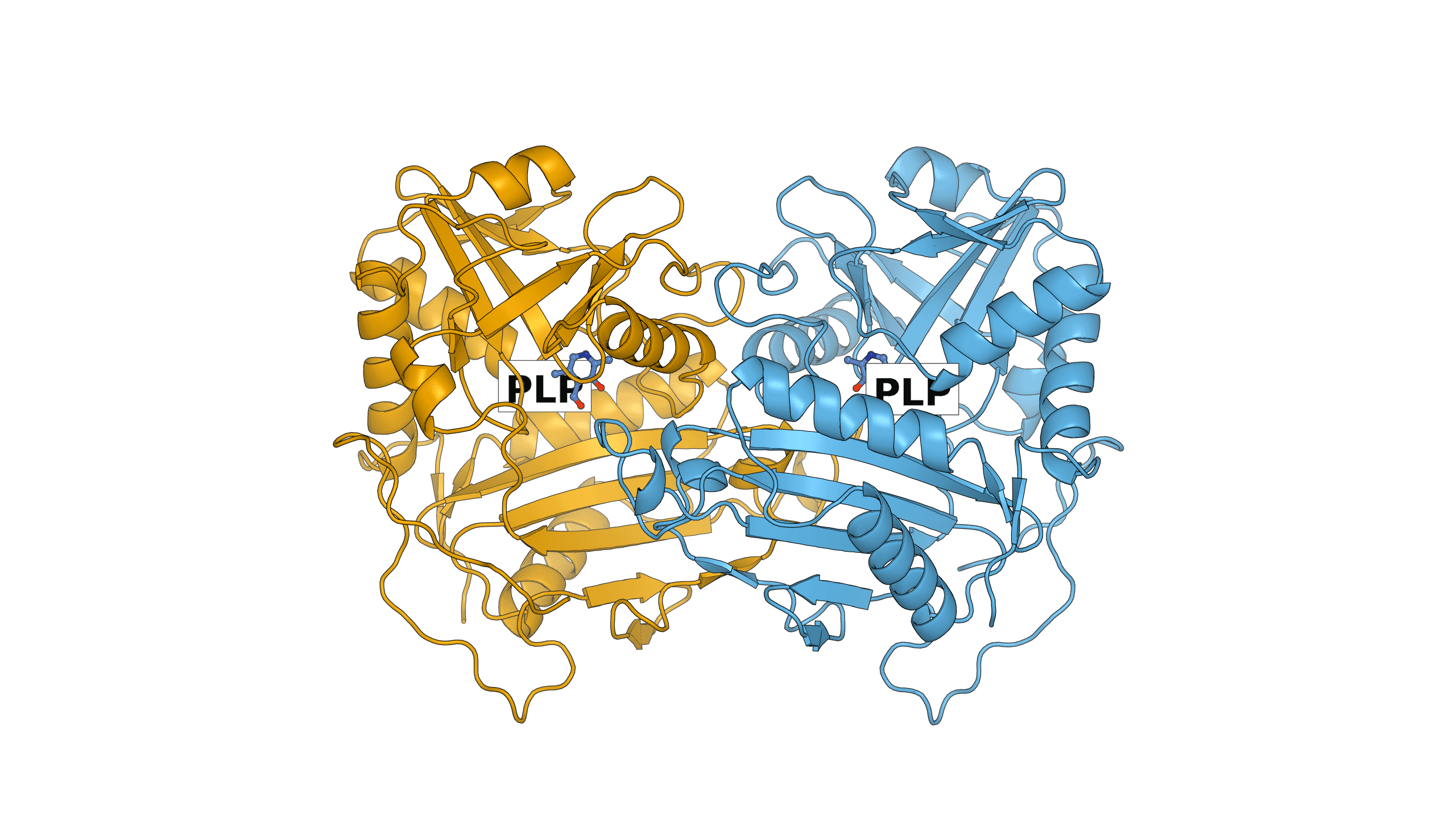
Fig. 1 3D structure of an engineered transaminase: the product of fitness improvement
Transaminases (aminotransferases) use pyridoxal 5′-phosphate (PLP) as a cofactor to catalyze the reversible transfer of an amino group between an amino donor and a carbonyl acceptor, making them key enzymes for chiral-amine synthesis. Chiral amines are essential building blocks for pharmaceuticals, agrochemicals, and fine chemicals. However, natural transaminases often have narrow substrate scope, limited activity, or insufficient stereoselectivity and stability for industrial production. Transaminase directed evolution is precisely the approach that turns a "less-than-ideal" natural enzyme into an industrially useful biocatalyst, step by step.
Why Transaminase Directed Evolution Matters
Conventional chemical routes to chiral amines often rely on metal catalysis or chiral resolution, which can be costly, generate waste, and be difficult to control for enantiomeric excess (e.e.). Enzymatic synthesis uses water as the medium, operates under mild conditions, and offers high stereoselectivity, producing high-purity chiral amines under mild, green conditions.
But an enzyme's "natural performance" is not necessarily its "industrial performance": it can be inhibited at high substrate concentrations, face unfavorable reaction equilibria, be unstable in organic co-solvents, or lack sufficient enantioselectivity. These are exactly the problems transaminase directed evolution is designed to solve. As a core branch of protein engineering, directed evolution can be implemented even without a complete understanding of the enzyme structure, which makes it especially suited to cases where the natural enzyme is far from ideal.
A well-known milestone is the enzymatic route to sitagliptin (used to treat type 2 diabetes): through multiple rounds of directed evolution, researchers converted a natural transaminase (ATA-117) into a variant that accepts a bulky substrate and exhibits high enantioselectivity, replacing an energy-intensive chemical route. This case shows that directed evolution can move "an enzyme that is unimpressive in the lab" to "an enzyme that is scalable in industry."
Principles and Molecular Basis of Transaminase Directed Evolution

Fig. 2 Transaminase active site: PLP cofactor and catalytic lysine
Understanding the molecular mechanism of transaminases is the foundation for designing efficient screens and rational mutations.
• PLP cofactor: PLP forms an "internal aldimine" with a conserved active-site lysine via a Schiff base, a key intermediate in transamination.
• Transamination cycle: The amino donor forms an "external aldimine" with PLP; after deamination the PLP is converted to pyridoxamine 5′-phosphate (PMP), donating the amino group to a carbonyl acceptor to form the chiral amine product and regenerate PLP.
• Substrate-specificity pocket: Whether and how a substrate enters the active site, and its binding orientation, determine reaction activity and stereoselectivity. Active-site pocket residues are therefore prime hotspots for directed evolution.
Directed evolution therefore often introduces mutations around the active site and its backbone/flexible loops: reshaping the pocket size and shape to accommodate new substrates, enhancing preference for a specific enantiomer, and improving thermostability and tolerance to pH/co-solvents. The synergistic effects of multiple mutations frequently produce larger jumps in performance than single-point mutations.
How to Assay and Screen Evolution-Enhanced Transaminases
The success of directed evolution depends largely on whether one can rapidly and accurately distinguish good variants from bad ones. Common transaminase screening strategies include:
• Colorimetric/fluorometric assays: quantify absorption or fluorescence changes from the amino donor or product for 96/384-well high-throughput detection.
• Coupled-enzyme assays: couple a dehydrogenase or similar enzyme to convert the transamination into a readable absorbance signal, improving signal-to-noise.
• Direct selectivity measurement: use a chiral stationary phase or chiral derivatization to resolve enantiomers and directly evaluate e.e.
• Process-stress screening: screen under process-relevant conditions — high temperature, high substrate concentration, organic co-solvent — to eliminate variants that "look good in the lab but fail in the plant."
A key principle: the closer the screening conditions are to the final process conditions, the more likely a screened variant will actually be usable. Otherwise, "false positives" are common.
Workflow and Process Control of Transaminase Directed Evolution

Fig. 3 Directed-evolution closed loop: diversify, screen, model, iterate
A complete transaminase directed-evolution workflow typically includes the following stages:
1. Diversification: error-prone PCR, saturation mutagenesis, and DNA shuffling create mutant libraries; rational/semi-rational design can also introduce targeted mutations.
2. Expression: transform the library into a host (e.g., E. coli) and express the variant collection.
3. High-throughput screening: evaluate variants against target properties (activity, enantioselectivity, stability).
4. Ranking and iteration: select improved variants as templates for the next round, cycling through "mutate → screen → re-mutate."
5. AI / active learning: train a fitness model on existing data, predict beneficial mutations, and intelligently design the next library, sharply reducing screening burden so "dry-lab" work guides "wet-lab" work.
Process-level considerations include substrate/product inhibition, equilibrium shifting (e.g., using isopropylamine as an amino donor and removing the acetone by-product), thermostability and pH window, co-solvent tolerance, and mixing/mass transfer during scale-up. These factors often determine whether a high "lab activity" translates into a high "plant yield."
How MatwingsVenus®(protein agent)Empowers Transaminase Directed Evolution
Transaminase directed evolution is a highly coupled "wet-lab + dry-lab" engineering effort. MatwingsVenus®(晓鹜®)connects data, AI models, and wet-lab capabilities through its dry-wet closed-loop platform:
• AI-driven enzyme engineering: combine sequence/structure data with active learning to predict beneficial mutations and shrink library size, making every round of screening "smarter."
• Expert Center: protein-engineering, fermentation, and process experts collaborate to define screening strategy, reaction conditions, and scale-up paths.
• Wet-lab support: covering cloning, expression, high-throughput screening, and activity validation to form a "predict → validate → re-iterate" loop.
With this closed loop, transaminase directed evolution can move from "empirical trial and error" to "data-driven" and bring candidate enzymes to a usable state faster.
Related Products & Services
• Wet-Lab Services: [/en/products/wet-lab](/en/products/wet-lab)
• Expert Center: [/en/products/expert-center](/en/products/expert-center)
• Dry-Wet Closed-Loop Platform: [/en/dry-wet-closed-loop-platform](/en/dry-wet-closed-loop-platform)
FAQ
What is transaminase directed evolution?
Transaminase directed evolution is a protein-engineering method that introduces mutations into a transaminase gene and iteratively screens for improved variants, thereby enhancing activity, enantioselectivity, stability, and other properties.
What properties does transaminase directed evolution typically improve?
It primarily targets catalytic activity, broadened substrate scope, enantioselectivity (e.e.), thermostability, tolerance to pH and organic co-solvents, and tolerance to high substrate/product concentrations.
How are successful transaminase variants screened?
High-throughput screening typically uses colorimetric/fluorometric assays, coupled-enzyme assays, or chiral detection; the key is to keep screening conditions close to the final process conditions to avoid false positives.
How does directed evolution differ from rational design?
Rational design relies on understanding structure and mechanism to introduce targeted mutations; directed evolution does not require complete mechanistic understanding, using random/semi-rational mutation plus screening to approach the optimum. In practice, the two are often combined as semi-rational design.
What compounds can transaminase directed evolution target?
It is mainly used to synthesize chiral-amine intermediates across pharmaceuticals, agrochemicals, and fine chemicals; a typical example is the sitagliptin intermediate and related chiral drug building blocks.
What is the role of AI in transaminase directed evolution?
AI/active learning uses existing experimental data to train a fitness model, predict beneficial mutations, and design the next library intelligently, thereby reducing screening effort, improving iteration efficiency, and forming a dry-wet closed loop.
How can one start transaminase directed evolution in the lab?
Choose a suitable template enzyme and screening method, begin with a small mutant library, optimize expression and screening conditions first, then expand the number of rounds; consider adding process-stress screening tied to the target conditions.
Summary
Transaminase directed evolution converts "natural enzymes" into "industrial enzymes," and its core is a closed loop of diversity generation → high-throughput screening → AI/active-learning iteration. Understanding the PLP mechanism and active site, designing process-relevant high-throughput screens, and combining AI modeling to cut trial-and-error cost are the keys to success. With the MatwingsVenus®(晓鹜®)dry-wet closed-loop platform and expert support, transaminase directed evolution can move faster from "candidate enzyme" to "useful industrial catalyst."
【One-sentence takeaway】
Transaminase directed evolution uses an iterative closed loop of mutate → screen → model → re-mutate to convert a niche natural enzyme into a high-activity, high-enantioselectivity industrial biocatalyst.