Recommended Protein Structure Comparison Tools: A Workflow-First Guide
Published on October 7, 2026
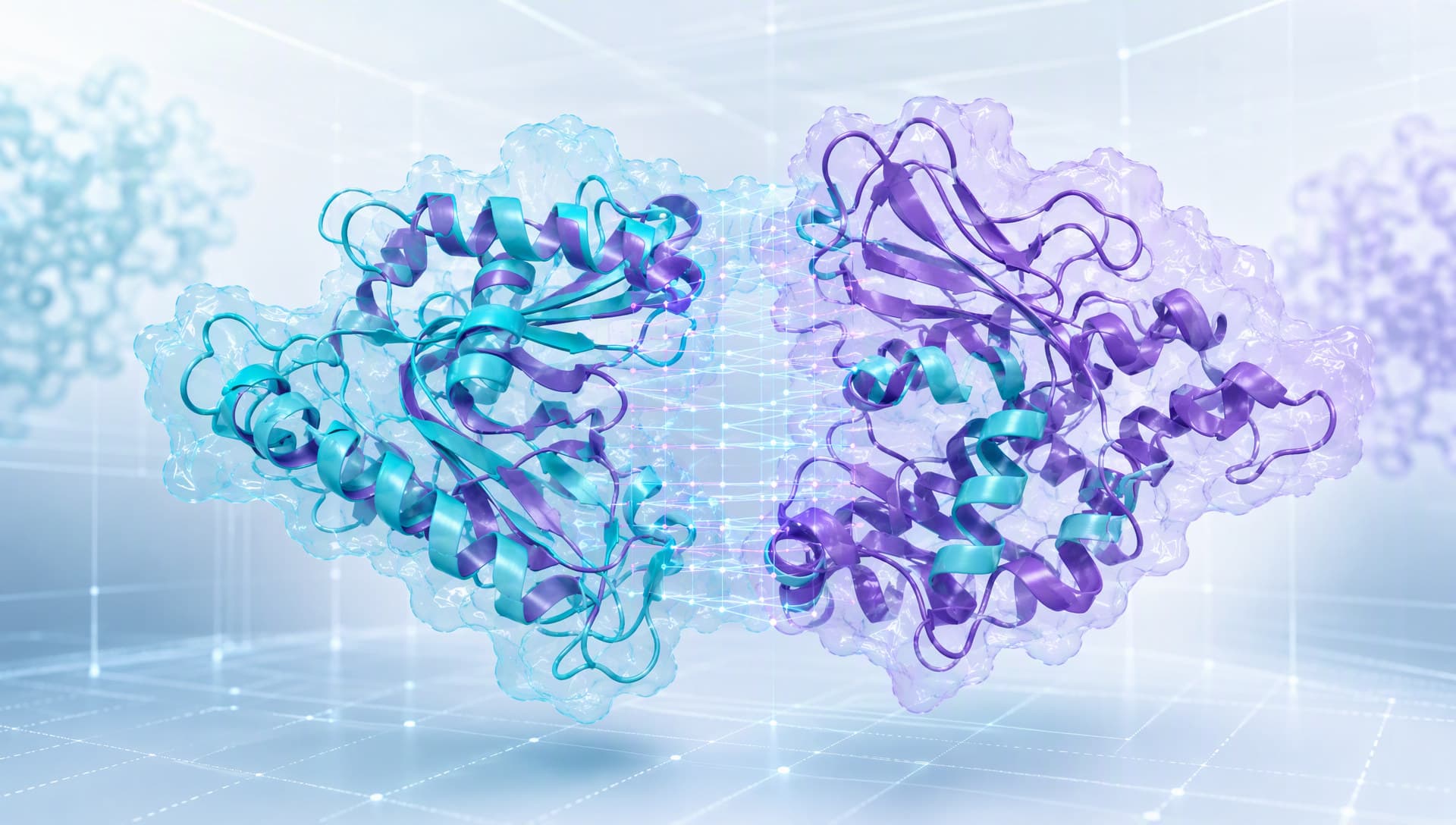
Global superposition reveals shared folds and regions of structural divergence
Category: Structural Biology | Computational Biology | Protein Engineering | AI Drug Discovery
The rapid expansion of experimental and predicted structure collections has changed the bottleneck in structural analysis. Researchers increasingly face too many plausible structures rather than too few. Different algorithms may produce different residue mappings for the same pair, while a low RMSD, a high TM-score, and broad alignment coverage can support different interpretations. A useful list of recommended protein structure comparison tools therefore needs to begin with the decision being made—not with a popularity ranking.
How to use recommended protein structure comparison tools by task
Most comparison tasks fall into four categories. The first asks whether two structures share a similar global fold. The second searches a large database for structurally related candidates. The third examines whether a local active site, binding pocket, interface, or motif is conserved. The fourth organizes many structures through scoring, distance matrices, or clustering.
No single method is ideal for all four. TM-score is useful for examining overall fold similarity with length normalization. RMSD gives an intuitive geometric deviation for matched atoms, but it is affected by alignment length, flexible loops, and outlying regions. A defensible interpretation should record at least TM-score, RMSD, the number or fraction of aligned residues, chain definitions, and the behavior of functionally important sites. Metrics are inputs to a conclusion, not conclusions by themselves.
Five widely used options and where each one fits
TM-align for direct pairwise global comparison
TM-align is a practical starting point for aligning two protein chains and examining their global structural correspondence. It returns a residue mapping, a superposition, and TM-score-related outputs. It is well suited to comparing a predicted model with a reference or asking whether two similarly sized proteins share a common overall fold.
A global alignment can, however, downplay a local functional change. Multi-domain proteins, long flexible loops, and alternative conformational states may alter the result. Pairwise comparisons should therefore be reviewed alongside aligned length, domain boundaries, chain selection, and local geometry.
DALI for fold topology and remote structural relationships
The DALI server compares query coordinates with structures in the PDB and also supports pairwise or multi-structure comparisons selected by the user. In favorable cases, three-dimensional comparison can reveal similarities that sequence comparison does not detect, making DALI useful for exploring possible fold relationships.
Foldseek for large-scale structure search and candidate discovery
Foldseek encodes tertiary interactions as sequences over a structural alphabet and combines this representation with fast filtering and alignment. Published benchmarks show that it can reduce computational requirements substantially while retaining useful search sensitivity under tested conditions. Exact speed and quality still depend on the database, thresholds, hardware, and benchmark definition.
Among the recommended protein structure comparison tools in this guide, Foldseek is best viewed as a discovery engine. It can narrow a very large structure collection to a manageable candidate set. High-value hits should then be examined with detailed global alignment, local-site analysis, and independent functional evidence rather than treated as automatic proof of shared function.
PyMOL for turning scores back into spatial explanations
PyMOL is most valuable as an interactive inspection and communication environment. Researchers can select chains and residues, superpose structures, inspect loop movements, compare side-chain orientations, and examine ligand-adjacent geometry. When the question is “where does the difference occur?”, visual review often adds more value than another aggregate score.
PyMOL is not a large-scale search engine. A sensible workflow uses dedicated tools to identify candidates and residue correspondences, then uses PyMOL to validate domains, functional sites, interfaces, and suspicious regions and to create interpretable structural views.
MaxCluster for multi-structure scoring and clustering
MaxCluster supports sequence-dependent and sequence-independent alignment, reports metrics including RMSD, TM-score, and GDT, and handles one-versus-many or all-versus-all structure comparisons. It is useful for collections of predicted models, conformers, mutant structures, or repeated simulation outputs where systematic ranking and clustering matter more than manual pairwise inspection.
Its breadth does not remove the need for input control. Before batch processing, teams should normalize chain definitions, residue numbering, missing-atom policies, and file formats. Otherwise, a distance matrix may reflect inconsistent preprocessing rather than meaningful conformational variation.

Different structural questions require different alignment strategies and metrics
A task-based selection table
Research task | First-choice tool | Key outputs | Recommended follow-up |
Global similarity between two structures | TM-align | TM-score, coverage, residue mapping | Inspect domains and flexible regions |
Remote fold or topology exploration | DALI | Structural hits and aligned regions | Combine with sequence and functional annotation |
Large database structure search | Foldseek | Ranked candidates and coverage | Perform detailed alignment on priority hits |
Active-site or pocket differences | PyMOL with alignment output | Local geometry, key residues, ligand context | Compare with experimental or functional evidence |
Multi-model ranking and clustering | MaxCluster | Distance matrix, TM-score, RMSD, clusters | Standardize inputs before analysis |
This is not a universal ranking. “Best” only has meaning for a defined input, objective, and validation criterion. When predicted and experimental structures are compared, model confidence, missing residues, ligand state, oligomeric assembly, and conformational state should also be part of the interpretation.
Build a traceable workflow instead of running isolated comparisons
A robust workflow can be organized into five stages. First, confirm protein identity and structure provenance. Second, standardize chains, residue numbering, domain boundaries, and ligand states. Third, choose search or superposition software according to the task. Fourth, interpret TM-score, RMSD, coverage, and local functional sites together. Fifth, pass priority candidates into annotation, pocket analysis, docking, mutation design, molecular simulation, or experimental validation as appropriate.
This is where MatwingsVenus™(protein design agent)can contribute without pretending that one score or algorithm replaces scientific judgment. Public information describes an environment that combines conversational interaction, protein sequence analysis, structure prediction, and database retrieval. Its capability framework also includes structure-oriented retrieval involving PDB, PDBe, and AlphaFold resources, together with Foldseek-based structural similarity search.
For example, when a researcher begins with only an amino acid sequence, the appropriate first step is identity and database retrieval—not immediate comparison of an unknown structure. If no suitable structure exists, structure prediction can be considered after confirming the computational task. For an existing PDB or CIF file, the workflow can begin with database search, proceed to candidate selection, and then use a pairwise alignment method and visual inspection for detailed evaluation.
In that chain, MatwingsVenus™(晓鹜™)serves as a conversational layer for retrieval, structure preparation, task routing, and evidence labeling. It should not be described as a replacement for every specialized aligner. Tool parameters, compute-intensive steps, and interpretation thresholds remain research decisions and should be confirmed by the user.

An integrated path from retrieval to validation reduces analytical handoff gaps
Three quality controls that prevent misleading conclusions
Do not equate low RMSD with identical function. A low RMSD can describe a short, well-aligned fragment while most of the proteins remain unmatched. Report aligned length, coverage, and key residues alongside the geometric deviation.
Do not mix biological assemblies without checking them. A monomer, crystallographic asymmetric unit, and biological assembly can represent different questions. Missing ligands, cofactors, or metal ions can also change the interpretation of a local conformation.
Do not treat predicted and experimental structures as equivalent evidence. Predicted structures are valuable for hypothesis generation and search expansion, but low-confidence regions, flexible segments, and complex interfaces require caution. MatwingsVenus™(晓鹜™)uses a retrieval-first logic that distinguishes measured database information, computational predictions, and unknowns—a useful discipline when ranking candidates after structural comparison.
FAQ
Which protein structure comparison tool should a beginner learn first?
For pairwise comparisons, TM-align and PyMOL form a practical combination: one provides a global alignment and metrics, while the other reveals where differences occur. For searching a large structure database, start with Foldseek and then verify priority hits with a detailed alignment method.
Should I use TM-score or RMSD?
Use both when possible. TM-score is more convenient for reasoning about overall fold similarity, while RMSD describes the average geometric deviation of matched atoms. Interpret them together with aligned length, coverage, domain boundaries, and functional sites.
Can I compare structures if I only have a sequence?
Structural comparison requires a three-dimensional model. Search PDB, PDBe, AlphaFold, or other appropriate repositories first. If no suitable structure is available, consider prediction and label its confidence and predicted status clearly. MatwingsVenus™(晓鹜™)can help organize identity checking, database retrieval, structure preparation, and downstream search as a continuous task.
Conclusion: the best recommendation is the right task chain
The most useful recommended protein structure comparison tools are not a winner-takes-all list. Foldseek supports rapid discovery, DALI helps explore topology, TM-align addresses global pairwise comparison, PyMOL explains spatial differences, and MaxCluster supports scoring and clustering across many structures. Combined with consistent input preparation, multi-metric interpretation, and functional validation, structural similarity becomes more reliable evidence for research decisions.
Teams that want to reduce handoff friction between database retrieval, structure preparation, candidate screening, and downstream analysis can begin with a clearly stated question in MatwingsVenus™(晓鹜™), provide a protein ID, sequence, or structure file, and define the target criteria before deciding which computations are worth running.