
Metagenomic Functional Screening of Enzymes: How to Find Unknown New Enzymes?
Published on October 27, 2026
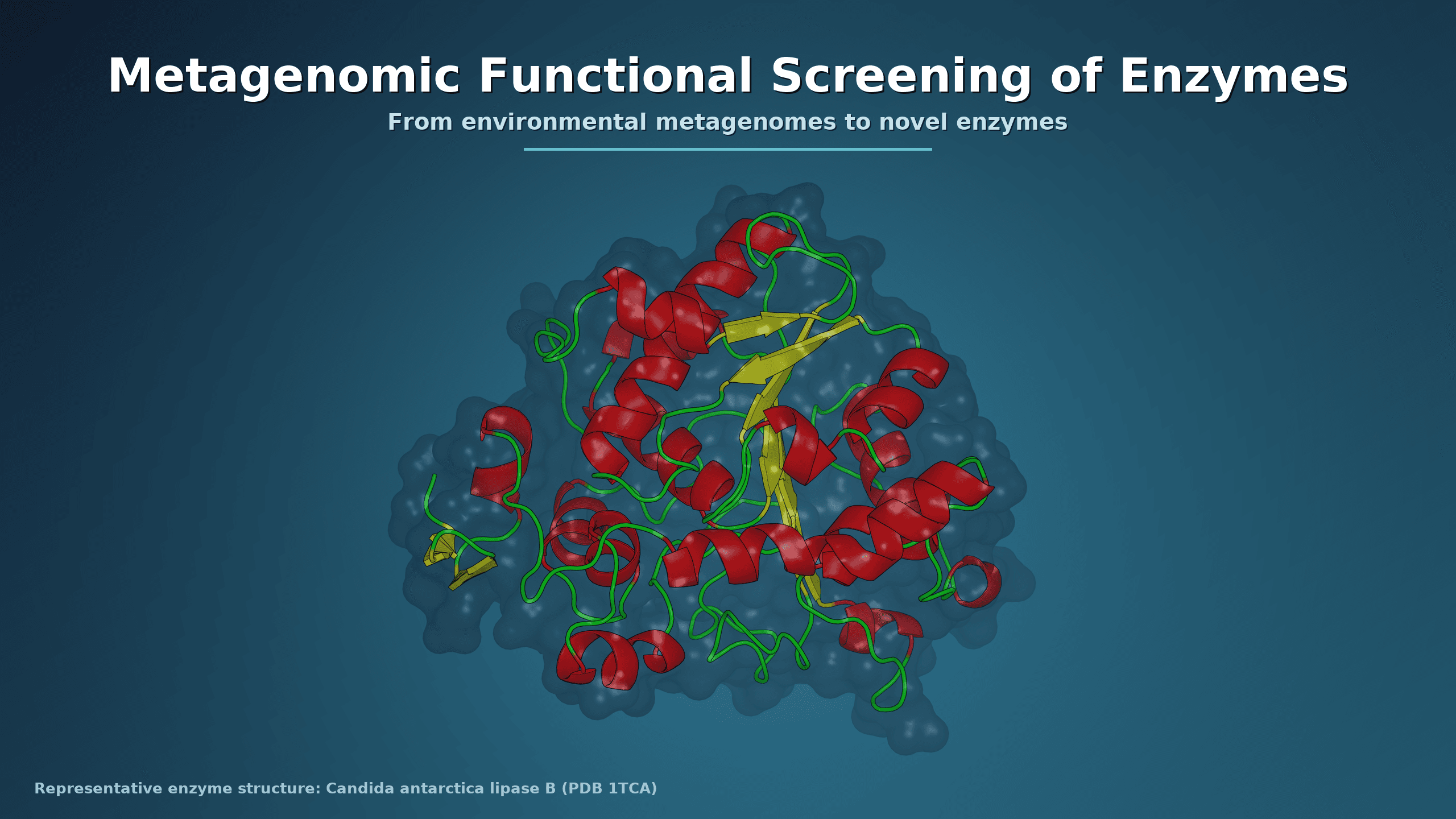
Figure 1 | metagenomic functional screening of enzymes: from environmental samples to novel enzymes
Most of the microbes on Earth still cannot be cultured in the laboratory. Traditional enzyme discovery either depends on culturable strains or uses sequence homology to known enzymes to "fish" for similar genes — both routes leave a huge pool of hidden new enzymes locked inside genomes. Metagenomic functional screening of enzymes offers a path around the culturing and homology limits: build a gene library from an environmental metagenome and use activity itself as the selection criterion, literally "trying out" functional enzymes in an expression host, one clone at a time.
Why Do We Need Metagenomic Functional Screening of Enzymes?
· The cultivation limit: most environmental microbes cannot be isolated in pure culture, so strain-based methods cover only a narrow slice.
· The sequence-homology limit: primers or probes designed from known enzymes can only find sequences that "look like" existing ones, missing enzymes with truly novel folds and families.
· What a metagenome is: the metagenome is the sum of all microbial genomes in an environmental sample. It requires no cultivation and preserves, as a "sequence pool," the untapped enzyme potential.
Functional screening combines that sequence pool with an activity check: it never assumes the sequence resembles a known enzyme; it looks for genes that genuinely catalyze a reaction.
Principle and Mechanism of Metagenomic Functional Screening
The core logic is function- (activity-) driven, not sequence- (homology-) driven. The workflow:
1. Sample & DNA extraction — extract total metagenomic DNA from soil, marine, gut, compost, or other environmental samples.
2. Library construction — fragment the metagenomic DNA, ligate into an expression vector, and transform a host (commonly E. coli) to build the metagenomic library.
3. Induced expression — express the cloned proteins on media containing the target substrate.
4. Activity readout — active clones are recognized by readable signals such as clear zones, color, or fluorescence.
5. Hit recovery — recover the corresponding plasmids, sequence them, and identify the new enzyme.
By comparison, sequence-driven discovery uses primers/probes to find homologs and is biased toward known families. Function-driven discovery tests activity directly and can find sequence-novel enzymes, but throughput is more limited and it is sensitive to host expression capacity and substrate readability.

Figure 2 | Mechanism comparison: function-driven vs sequence-driven enzyme discovery
Assay Design and Host / Vector Selection for Functional Screening
Assay signal type depends on the target enzyme class:
· Esterases / lipases: clear zones or chromogenic substrates.
· Glycosidases: chromogenic / fluorogenic glycoside substrates.
· Proteases: substrate degradation forming clear zones or fluorescence.
· Oxidoreductases: coupled chromogenic / fluorogenic reactions.
Host selection: E. coli is the workhorse — fast and easy to handle. For enzymes requiring glycosylation, special folding, or cofactors, eukaryotic or Gram-positive hosts such as yeast or Bacillus subtilis can improve soluble expression.
Vector design keys: a strong promoter for expression level; a signal peptide to direct secretion (useful for extracellular activity detection); fusion tags for detection and purification; and attention to background activity and host toxicity.
Process Controls for Library Construction, Expression and High-Throughput Screening
· Library quality: fragment size matched to the vector system, intact inserts, and a balance between coverage and redundancy.
· Expression conditions: inducer concentration, temperature and time need optimization to avoid inclusion bodies, toxic expression and leaky expression.
· Substrate choice: balance enzyme specificity against signal readability; run multiple substrates in parallel when needed.
· False-positive control: include empty-vector, no-substrate and no-induction controls; remove false positives by repeat assays, re-screening, thresholds and statistics; confirm by independent experiments.
· Scale-up: automated liquid handlers combined with microplates / plates, balancing throughput against cost.

Figure 3 | Metagenomic functional screening workflow and key control points
How Does MatwingsVenus® (protein design agent) Empower Metagenomic Functional Screening?
Screening is only the first step — candidate enzymes usually need further characterization and engineering before they can be applied. MatwingsVenus® (晓鹜®) closes this "last mile" with a dry-wet closed-loop platform:
· Wet lab: expression, purification, activity and stability measurements for the hits, giving real, usable experimental data.
· Dry lab: sequence–structure–property prediction and AI modeling to estimate properties and developability of the candidates.
· Closed-loop iteration: guided by real activity assays, use directed evolution / protein engineering (e.g., VenusREM, VenusPrime) for single- and multi-point optimization of activity and stability — forming a "functional screening → engineering → application" loop.
Related products / services:
· [Wet-Lab Platform](/zh/products/wet-lab)
· [Expert Center](/zh/products/expert-center)
· [Dry-Wet Closed-Loop Platform](/zh/dry-wet-closed-loop-platform)
FAQ
How is metagenomic functional screening of enzymes different from traditional enzyme discovery?
Traditional methods depend on culturable strains or known homologous sequences; functional screening does not assume sequence homology and uses enzyme activity as the criterion, so it can find sequence-novel enzymes from unculturable microbes.
What types of enzymes can functional screening find?
In principle, any enzyme whose substrate is readable and which can be expressed in a host. Common targets include esterases/lipases, glycosidases, proteases, oxidoreductases and lyases; real coverage is constrained by the available substrate library and the host expression range.
Does functional screening require culturing the target microbe?
No. It builds a metagenomic DNA library and screens it in a controllable expression host (e.g., E. coli), so it can access microbes that are traditionally "unculturable."
How are false positives controlled in functional screening?
By using empty-vector, no-substrate and no-induction controls, combined with repeat assays, re-screening, threshold and statistical judgment; final hits are verified by independent experiments.
Is functional screening suitable for large-scale industrialization?
Library construction and automated high-throughput screening can be scaled. The challenges are throughput, host expressibility and substrate choice; typically the candidate enzymes are engineered by sequence analysis and directed evolution before scale-up.
How does MatwingsVenus® help enzymes after functional screening?
MatwingsVenus® provides a dry-wet closed-loop platform combining wet-lab characterization with AI prediction, characterizing activity and stability of hits, then iteratively optimizing them through directed evolution / protein engineering toward industrial application.
Summary
Metagenomic functional screening of enzymes replaces "sequence" with "function" as the selection criterion, opening the door to unculturable microbes and novel sequences. Combined with high-throughput assays, host engineering and an AI closed loop, it efficiently turns "active" sequences into industrializable enzymes. MatwingsVenus® (晓鹜®) bridges functional screening and engineering seamlessly through its dry-wet closed-loop platform, accelerating new enzymes from the lab to the production line.
【One-Sentence Conclusion】
Metagenomic functional screening of enzymes uses function rather than sequence as the selection criterion, enabling targeted recovery of novel enzymes from unculturable microbes — a key engine of enzyme discovery and industrial enzyme engineering.