
How Does Glycosyltransferase Mining Empower Industrial Biocatalysis?
Published on November 1, 2026
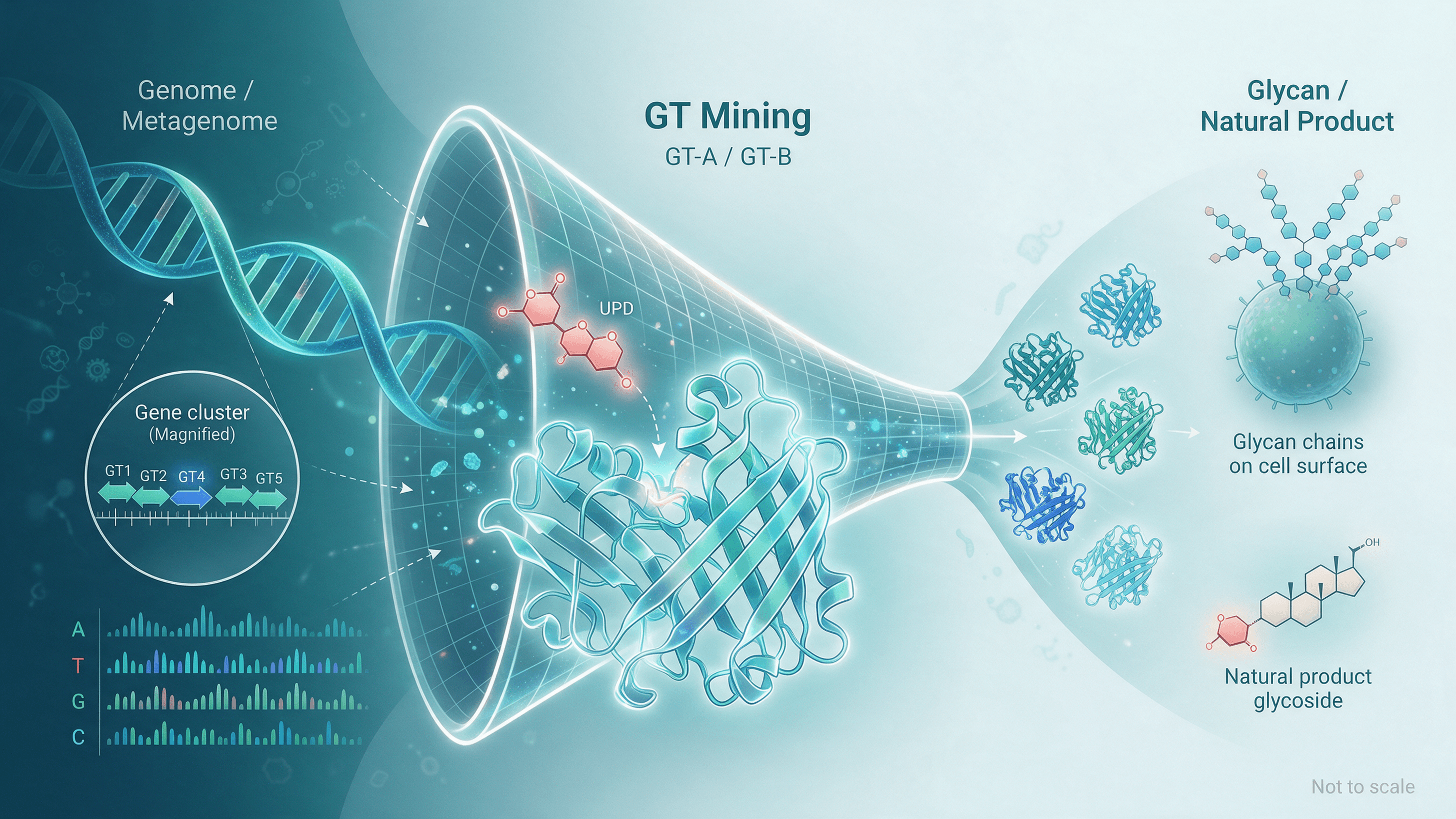
Figure 1. Concept panorama of glycosyltransferase mining
Glycosyltransferases (GTs) are nature's "sugar-adding" enzymes: they transfer a glycosyl group from an activated sugar donor (usually nucleotide sugars such as UDP-glucose or UDP-galactose) to an acceptor such as a protein, lipid, natural product, or carbohydrate, forming a glycosidic bond. Glycosylation is one of the most abundant modifications in nature, appearing across antibody Fc glycoforms, cell-surface glycans, and natural-product glycosides. As genomic, metagenomic, and AI-based structural data grow explosively, "glycosyltransferase mining" — efficiently pinpointing target enzymes from vast sequence and structure data — has become a pivotal, bridging step in enzyme engineering and industrial biocatalysis. This article unpacks glycosyltransferase mining across mechanism, structure, screening, and process.
Background & Mechanism: Why Adding Sugar Matters — and Why It Is Hard
Glycosylation matters almost everywhere. In pharma, antibody Fc glycoform dictates effector function and half-life. In natural products, glycosylation is often the switch for activity and druggability — think saponins, flavonoid glycosides, and steviol glycosides. In food and ingredients, oligosaccharides and glycoside sweeteners keep growing in demand. The shared need is to find glycosyltransferases that transfer sugars precisely, efficiently, and at scale.
Yet engineering GTs is hard. Natural GTs often suffer from low solubility, limited expression, tight substrate specificity, and costly, hard-to-regenerate nucleotide-sugar donors. That makes mining the first step: whether we can quickly find an enzyme with high activity, good stability, and accurate specificity from a huge candidate pool directly determines the feasibility and cost of downstream processing.
Principle & Structure: How GT-A and GT-B Folds Shape Catalysis
In the CAZy (Carbohydrate-Active enZYmes) database, glycosyltransferases are sorted into dozens of sequence families (now well over 90, still expanding). Within a family, the catalytic mechanism (inverting or retaining) is usually conserved, so family membership offers a strong prior for mechanism and substrate preference.
Structurally, GTs mainly adopt two classic folds: the GT-A fold, made of two dissimilar domains — one binding the nucleotide-sugar donor and one binding the acceptor; and the GT-B fold, built from two similar Rossmann-like subdomains. During catalysis, the UDP-sugar donor, assisted by a divalent metal ion (commonly Mn²⁺/Mg²⁺), transfers the sugar onto a receptor hydroxyl. Depending on the change at the anomeric carbon, the product can be inverting (β) or retaining (α) — a distinction that matters greatly for product configuration and downstream use.

Figure 2. Glycosyltransferase fold and active-site mechanism
Assay & Selection: How to Tell Whether a Mined Enzyme Is a Good One
Mining yields candidate enzymes, which must then be validated with reliable activity assays. Common strategies include coupled detection of UDP release (e.g., luciferase-coupled assays), fluorescently labeled substrates, and direct LC/MS detection of the glycoside product. From there, measure kinetic parameters (K_m, k_cat, k_cat/K_m), substrate specificity, regio-/stereoselectivity, and thermal stability. Aligning candidates with known family members at sequence and structure level, combined with biochemical data, greatly improves the efficiency and confidence of selection.
Conditions & Process: The Scalable Path from Enzyme to Product
Once a good enzyme is in hand, process conditions decide success. Key parameters include reaction pH and temperature, divalent metal cofactor concentration, donor type and concentration, donor regeneration systems (e.g., in situ regeneration of UDP-glucose with sucrose synthase), co-solvents and substrate feeding, and enzyme immobilization/engineering to improve stability and reusability. Typically the project iterates within a closed loop of "mining → validation → fermentation → process optimization → product" before laboratory hits become a scalable production pipeline.

Figure 3. The full closed loop of glycosyltransferase "mining → validation → fermentation → process optimization → product"
How MatwingsVenus®(protein design agent)Empowers Glycosyltransferase Mining
MatwingsVenus® combines "dry lab" and "wet lab" to provide end-to-end support for glycosyltransferase mining: sequence/structure analysis plus AI-assisted mining sharpens the candidate pool, then professional molecular-biology and biocatalysis experiments handle expression, activity validation, and process-condition exploration, transforming sequence data into evaluable and scalable biocatalysis capability. For specific products, service scope, and data, please refer to our official website.
Related Products / Services
· Wet-lab services: candidate enzyme expression, activity validation, and process verification → [wet-lab](/zh/products/wet-lab)
· Expert center: enzyme-mining and enzyme-engineering consultation → [expert-center](/zh/products/expert-center)
· Dry-wet closed-loop platform: an AI/structure-mining plus wet-lab-validation closed-loop workflow → [dry-wet-closed-loop-platform](/zh/dry-wet-closed-loop-platform)
FAQ
How does glycosyltransferase mining differ from general enzyme mining?
The value lies in specificity and regio-/stereoselectivity. Because the position and configuration of the added sugar often determine product activity, GT mining must additionally evaluate the type and position of the glycosidic bond formed, on top of the usual activity and stability screening.
How are GT families divided?
CAZy assigns glycosyltransferases into dozens of sequence families by sequence similarity (now well over 90, still expanding). The catalytic mechanism (inverting or retaining) is usually conserved within a family, providing a prior for mechanism and substrate preference.
What is the practical impact of inverting versus retaining mechanism?
It determines the anomeric configuration of the product, which affects downstream function. Choose an inverting GT when a β-glycoside is needed, and a retaining GT when an α-glycoside is required; family membership is often a quick starting point.
How do I decide whether a candidate glycosyltransferase is scalable?
First assess activity and specificity (k_cat/K_m, selectivity), then soluble expression and thermal stability, and finally combine donor cost and regeneration systems with the process window (pH/temperature/metal ions).
What if the mined enzyme is not active enough?
Engineer the candidate (directed evolution or rational design) to improve activity, stability, and substrate tolerance; alternatively expand the mining scope, add structural information, or re-iterate the screening strategy.
Can glycosyltransferase mining be done without wet-lab work?
Not recommended. Dry-lab (sequence/structure/AI mining) sharply narrows the candidate pool, but real activity, specificity, and stability must be verified in the wet lab — dry-wet combination is the reliable route.
Do I need to prepare my own sequence data?
Not necessarily. Public genome, metagenome, and structure databases already provide large candidate sets; if you have proprietary strains or sequences, you can run a more focused, targeted mining on that basis.
Conclusion
Glycosyltransferase mining is the bridge from data to capability. With CAZy families as the skeleton, GT-A/GT-B folds and inverting/retaining mechanisms as the mechanistic basis, and activity assay/selection plus process optimization as the execution path, it ultimately lands as scalable glycosylation/biocatalysis. MatwingsVenus®(晓鹜®)supports researchers and companies along this same path, in a dry-wet closed loop, to find the target glycosyltransferase faster and more reliably.
【One-line Conclusion】
Glycosyltransferase mining = systematically identifying sugar-transferring enzymes from genomes, metagenomes, and structural/AI data, then converting them via activity screening and process optimization into scalable glycosylation/biocatalysis capability.