GLP-1(9-37) Explained: Molecular Identity, Production, and Quality Control
Published on September 19, 2026
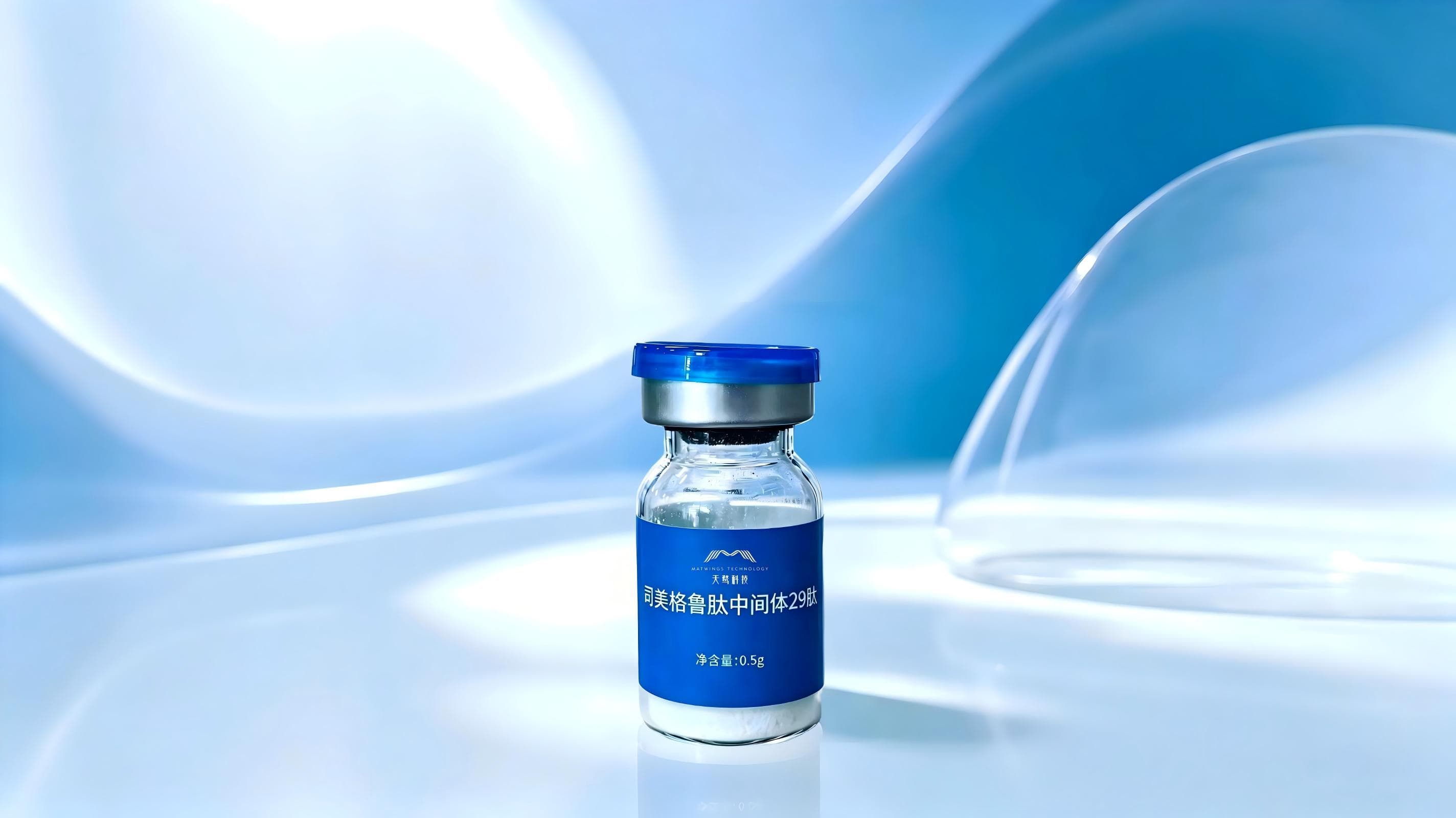
What GLP-1(9-37) Means in a Semaglutide Manufacturing Context
The same peptide notation can appear in physiological research, analytical discussions, and manufacturing workflows. This article focuses on the 29-residue main-chain building block used in semaglutide production and commonly described as a P29 intermediate. Its process role is to connect recombinant production with subsequent structural modification and polishing.
The “9–37” notation describes segment boundaries, while “29-peptide” describes residue count. Neither is a complete material specification. A development record should also state the actual sequence, theoretical molecular mass, N- and C-terminal states, counterion or salt form, water basis, and intended use. If the construct includes a specific Arg34 design, that feature should be stated explicitly.
This distinction matters because samples with similar names may behave differently during dissolution, cleavage, chromatography, or the next reaction. Terminal variants, salt burden, assay convention, and impurity controls can all change process fit. Material identity must therefore be linked to a defined task rather than inferred from a short label.
Manufacturability is part of that identity. Precursor stability, cleavage-site exposure, terminal fidelity, adsorption, and oxidation sensitivity all affect the route. A useful technical definition combines molecular structure with process behavior.

GLP-1(9-37) shown as a 29-residue main-chain intermediate linked to recombinant precursor design
Why Recombinant Production Often Begins with a Fusion Precursor
A short peptide expressed directly in a microbial host may be unstable, susceptible to degradation, or difficult to recover. A fusion precursor temporarily attaches the target segment to a more manageable carrier and later releases it through an engineered junction. Expression and final structural requirements can then be optimized as related but separate stages.
High expression alone is not enough. The fusion partner affects host burden, solubility, and early recovery, while the linker controls access to the cleavage site and the accuracy of the released terminus. A strong gel band may still lead to a costly route if cleavage is slow or creates several neighboring peptide species.
A more informative screening sequence begins with the required intermediate boundaries, followed by fusion and cleavage-tool selection. Construct evaluation should track intact precursor, soluble fraction, volumetric yield, and a small-scale cleavage curve. Together, these measures better predict recoverable target than expression titer alone.
Fermentation conditions can also reshape the impurity profile. Temperature, pH, dissolved oxygen, and induction timing may alter truncation and host-derived burden. Before cleavage, the material should be clarified and exchanged into a compatible buffer, with precursor state assessed for its effect on site exposure.
GLP-1(9-37) Cleavage Workflow Depends on the Engineered Junction
A protease is not a universal pair of scissors. Route design should first define the precursor junction, the required product terminus, and any vulnerable sequence within the target region. These conditions determine whether release will be selective, controllable, and compatible with downstream purification.
MATWINGS MALL offers recombinant Kex2 protease expressed in Pichia pastoris with a His tag. Its product description covers paired basic recognition sites including Arg-Arg, Lys-Arg, and Pro-Arg, a pH range of 7.0–9.0, an optimal temperature of 37°C, and use in recombinant GLP-1 and other peptide preparation. The actual precursor still requires project-specific testing of enzyme-to-substrate ratio, time, temperature, and ionic conditions.
When the first cleavage leaves C-terminal basic residues, terminal trimming may be evaluated. Recombinant carboxypeptidase B from MATWINGS MALL is described for removing C-terminal lysine, arginine, and other basic residues in GLP-1-related and recombinant peptide workflows. Free arginine, lysine, and chelators such as EDTA may affect activity, so buffer compatibility should be checked before combining steps.
For a fusion precursor carrying a DDDDK junction, recombinant enterokinase from MATWINGS MALL can be evaluated for cleavage after the lysine residue. Its suitability depends on construct design and the response of the target region. Time-course sampling should track uncleaved, partially cleaved, and possible side-cleavage products before a reaction endpoint is selected.
Reaction termination is part of route design. Cooling, buffer adjustment, enzyme removal, or rapid transfer to the next purification step may be useful, depending on the system. A mature process needs a repeatable endpoint window, not merely a high conversion result from one experiment.

A 29-peptide precursor illustrating enzyme recognition boundaries and cleavage-route selection for scale-up
Peptide Purification Should Resolve Large Differences Before Close Variants
A cleavage mixture contains more than the target peptide. Uncleaved precursor, fusion partner, protease, the 29-residue product, truncated fragments, terminal variants, and host-derived components may coexist. The purification sequence should address the largest physicochemical differences first, then resolve closely related peptide impurities.
Early steps can exploit size, charge, or hydrophobicity differences to reduce protein and process burden. Intermediate purification concentrates the target fraction. Final polishing then addresses deletion sequences, oxidized species, isomers, and terminal heterogeneity. Ion exchange, reversed-phase chromatography, or another mode should be selected from measured retention behavior and sample stability.
A single fraction with high area purity does not prove that the route is optimal. A narrow pool may lose too much target, while a broad pool may carry neighboring impurities forward. A mass balance that tracks target recovery and critical impurity movement provides a stronger basis for optimizing load, gradient, temperature, and pooling boundaries.
Sample conditions also affect separation. Concentration can change aggregation or adsorption, salts and organic modifiers influence peak shape, and long holds may increase oxidation or deamidation. Purification should therefore be designed together with sample preparation, hold time, and the next reaction.
GLP-1(9-37) Quality Control Separates Identity, Purity, and Assay
An analytical strategy should answer four questions: Is the target molecule correct? How much target is present per unit mass? Which related impurities are present? Are lots acceptably consistent? No single test answers all four, so identity, assay, purity, and process-related attributes should be evaluated separately.
HPLC can describe the main peak and related-peak distribution, but area-normalized purity is not the same as assay. Water, salts, and components without equivalent detector response can create a gap. Input calculations should use a calibrated assay and state whether results are reported on an as-is, anhydrous, or salt-free basis.
Mass spectrometry can support molecular-mass confirmation and the investigation of some structural changes. Peptide mapping or sequence-oriented analysis may strengthen identity testing when needed. Impurities are easier to interpret when grouped by origin: truncation or incorrect processing during expression, incomplete or excessive cleavage during release, and oxidation, deamidation, aggregation, or adsorption during purification and storage.
The method itself must be fit for purpose. Specificity, linearity, precision, quantitation capability, recovery, and sample stability affect whether results can support trending or lot release. Critical neighboring peaks should also demonstrate adequate resolution under the defined conditions.

A main-chain peptide quality network connecting chromatographic purification, mass analysis, and lot consistency
Scale-Up Focuses on Predictable Process Behavior, Not Parameter Copying
Bench-scale parameters should not be multiplied by volume and transferred unchanged. Mixing, mass transfer, addition, cooling, transfer, and chromatography loading take longer at manufacturing scale. Local pH gradients and extended holds may change cleavage kinetics or impurity formation. Time-sensitive operations need defined sampling points and allowable hold ranges.
Lot consistency can be assessed by linking process and quality data. Intact precursor, cleavage-conversion curves, target recovery, critical impurity ratios, and reconstitution behavior can be trended together. A shift can then be traced toward expression, enzyme lot, reaction conditions, or purification.
Changes in enzyme lot, precursor construct, or equipment scale should be bridged. A bridge study should compare kinetics, yield, and impurity profile—not final purity alone. This demonstrates whether the established operating range still applies.
Cost should also be evaluated across the workflow. Expression titer, enzyme use, chromatography media, buffer volume, analytical cycle time, equipment occupancy, and failure risk all contribute to the cost per gram of qualified intermediate. A high isolated titer does not automatically define the most economical route.
How Development and Procurement Teams Can Check Process Fit
Start with the full sequence, theoretical molecular mass, terminal state, and intended use. Then compare analytical conventions, assay basis, typical impurities, packaging, and storage conditions. If the material will enter a defined modification step, reconstitution buffer, residual salts, and allowable hold time should be included in a compatibility study.
Enzymatic tools should be evaluated on the actual precursor or a representative substrate rather than selected from general activity alone. Intermediate material should likewise be tested in the downstream reaction that defines its purpose. Technical discussions are more useful when framed as input, process control, output, and next decision.
For public scientific communication, the topic is best presented as a molecular and manufacturing concept. The intermediate should not be described as a finished product for direct use, and the article should avoid individual health claims. A complete but restrained title, vertical subject focus, and images that match the text improve readability without relying on exaggerated language.
The development value of GLP-1(9-37) comes from a closed chain: defined structural boundaries, a rational precursor, explainable cleavage, traceable purification, and reproducible analysis. Each isolated metric should be interpreted within that chain.
FAQ
Are GLP-1(9-37) and the P29 intermediate the same concept?
In a semaglutide manufacturing context, both terms commonly point to a 29-residue main-chain building block. A real specification still needs the complete sequence, terminal state, counterion, assay basis, and intended grade. Similar shorthand does not make materials from different routes automatically interchangeable.
Why is a fusion precursor used for the 29-peptide?
A short peptide may be unstable or vulnerable to host degradation. Fusion expression can improve production and recovery but creates requirements for junction design and selective release. Construct assessment should include precursor integrity, cleavability, terminal accuracy, and downstream purification burden rather than titer alone.
How are Kex2 and enterokinase selected for peptide release?
Selection follows the junction sequence and required terminus. Paired basic sites may support Kex2, while a DDDDK junction may support enterokinase. If C-terminal basic residues remain, carboxypeptidase B trimming may be considered. The real substrate profile must confirm the route.
Why can peptide purification require several stages?
The precursor, fusion partner, and protease differ substantially from the target, while truncations, oxidation products, and terminal variants are much closer. Removing dissimilar components first and close variants later reduces the burden on high-resolution polishing. Recovery and impurity clearance must be assessed together.
Does HPLC main-peak purity equal peptide assay?
No. Area percentage describes relative detector response under a defined method. Water, salts, and differently responding components are not fully represented. Material input should use a calibrated assay and clearly state whether values are reported on an as-is, anhydrous, or salt-free basis.
Which data matter most before process scale-up?
Prioritize time-sensitive operations, mixing and mass-transfer effects, cleavage kinetics, critical impurity growth, and allowable hold ranges. Bridge studies should compare conversion curves, yield, and impurity profiles across enzyme lots, precursor changes, or equipment scales.