Protein Engineering:CH1 Affinity Ligand Engineering for Fab Purification
Published on September 6, 2026
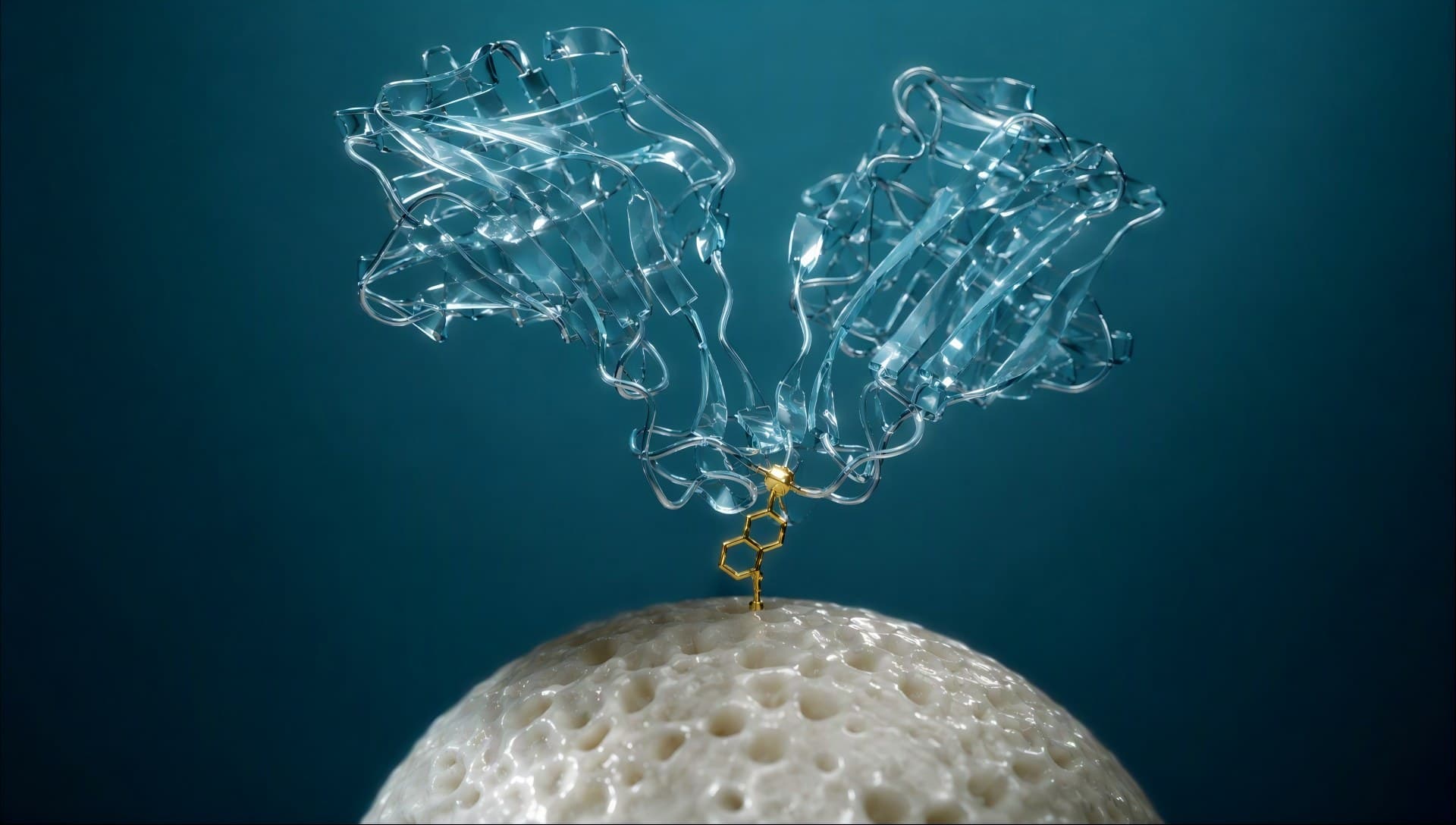
Figure 1 | Selectivity begins at the ligand–CH1 interface, but useful process performance emerges from the complete ligand–matrix–process system.
CH1 Affinity Ligand: From Domain Recognition to Process Selectivity
An affinity medium is not a single material. It combines a porous support, spacer or linkage, immobilization chemistry, and a recognition ligand. The support supplies mechanical strength and transport space. The spacer controls how far the recognition molecule extends from the surface. Coupling chemistry affects orientation and usable fraction, while the ligand defines which molecular feature is recognized and under which conditions.
CH1 is the first constant domain of an immunoglobulin heavy chain. A typical Fab contains a complete light chain and the VH–CH1 portion of the heavy chain. F(ab’)2 retains two Fab-like arms. By contrast, a conventional scFv is formed mainly from VH and VL, and a VHH is generally a heavy-chain variable domain; neither normally offers a CH1 capture site. “Antibody fragment purification” is therefore too broad a selection criterion. The first gate is whether an accessible CH1 domain is actually present.
Public product documentation describes one CH1-specific medium that uses an approximately 13 kDa llama heavy-chain antibody fragment as the recognition molecule, immobilized on epoxide-activated agarose to recognize the CH1 domain of human IgG. This is a concrete ligand architecture, not a universal definition. Another CH1 ligand may use a different binder, linkage, or support and should be characterized on its own terms.
Five Engineering Variables at the Recognition Interface
Ligand Origin and Fold Stability
Affinity ligands may originate from natural binding proteins, antibody fragments, single-domain binders, peptides, or engineered scaffolds. A CH1-directed binder must preserve its fold through expression, purification, immobilization, storage, and repeated chromatography cycles. Strong binding in free solution does not guarantee high utility after coupling because the attachment site can overlap the binding surface or constrain required conformational movement.
Development should distinguish soluble biophysical binding, static binding on an immobilized surface, and dynamic performance in a packed bed. Only the third directly addresses process capture; the first two are candidate-selection and mechanism tools.
Epitope Accessibility and Molecular Architecture
The presence of CH1 in a sequence does not guarantee that the relevant epitope is exposed. Fab, F(ab’)2, intact IgG, and multispecific antibodies arrange their domains differently. Linkers, fusions, local aggregation, or incorrect assembly can create steric shielding. Every protein engineering change can alter how the target enters a pore, approaches the ligand, and forms single- or multivalent contacts.
A ligand selected using one standard Fab should not automatically be assigned to every program. The actual development molecule should be tested, with parental antibodies, fragments, aggregates, or mispaired products included when they are relevant to the separation question.
Affinity, Off-Rate, and Elutability
High affinity can support capture at low target concentration, but an interaction that is too strong may require harsh elution and increase aggregation, fragmentation, or activity loss. For preparative chromatography, the most useful binder is not necessarily the tightest binder. It must capture reliably under loading conditions, release reversibly under product-compatible conditions, and recover after cleaning.
Candidate ranking should therefore include capacity, elution peak width, recovery, and product quality. A soluble equilibrium constant alone does not capture pore transport, surface avidity, or dissociation kinetics in a packed bed.
Species, Subclass, and Light-Chain Scope
One documented medium binds human Fab, F(ab’)2, and all four human IgG subclasses and states that recognition is independent of kappa or lambda light-chain type. This is useful for Fc-free antibody fragment purification because the entry criterion is not a light-chain subtype. It remains a product-specific scope and should not be extended to nonhuman antibodies, every engineered subclass, or every CH1 binder.
Stability and Manufacturability
A process ligand must also meet requirements for expression yield, purification consistency, coupling reproducibility, storage, cleaning tolerance, and controlled leachage. Protein engineering of the ligand must be evaluated together with the support and operating conditions. Improving thermal stability while reducing epitope access, or increasing chemical resistance while forcing damaging elution, does not produce a useful medium.

Figure 2 | Ligand density is not an isolated variable: spacer length, orientation, pore size, and target dimensions jointly determine accessible sites and transport.
CH1 Affinity Ligand Immobilization: Why More Is Not Always Better
Immobilization turns a soluble binder into a chromatographic material, but it introduces new trade-offs. Insufficient density limits available sites per unit volume. Excess density can create crowding, block pore entrances, increase multivalent retention, and make elution more difficult. For intact antibodies and complex bispecific formats, pore diffusion and steric exclusion may become limiting before intrinsic affinity does.
Orientation matters as well. Random coupling can immobilize a fraction of molecules in unfavorable poses. Site-directed coupling can present the binding surface more consistently but increases molecular-design and process-control requirements. A spacer that is too short may bury the binder near the support; one that is too long can increase flexibility, nonspecific contact, or local ligand clustering. Coupling yield, total density, and functional capacity should be measured as separate quantities.
The support determines whether ligand engineering becomes practical process performance. Particle size influences efficiency and pressure. Pore size affects target entry. Cross-linking affects rigidity and cleaning compatibility. Surface chemistry influences nonspecific adsorption. A documented product uses approximately 65 µm epoxide-activated agarose and reports a dynamic binding capacity near 19 g polyclonal human Fab per liter under the stated conditions of 10% breakthrough and two-minute residence time. Those numbers illustrate condition-linked reporting; they are not default values for another ligand or matrix.
A useful development matrix records ligand lot, coupling density, target concentration, residence time, feed viscosity, temperature, breakthrough criterion, pressure drop, and elution recovery. This framework helps distinguish an insufficient recognition interface from restricted pore transport or inadequate contact time.
Binding, Elution, and Cleaning Define Ligand Quality
A ligand ultimately has to survive a cyclic process. During loading, the target should bind within an acceptable pH and conductivity region while nonspecific retention of host proteins, free light chains, and feed components remains controlled. During washing, weakly retained impurities should leave without premature target loss. During elution, the interaction must reverse under conditions compatible with product quality.
Acidic elution is common in antibody affinity chromatography, but low-pH tolerance varies among Fab and engineered antibody formats. Peak shape, recovery, aggregation, fragmentation, and antigen-binding activity should be evaluated together. A sharp UV peak can conceal quality loss. Buffer composition, column volumes, and flow recommendations in a product manual are starting points tied to that medium and sample, not universal standards.
Cleaning and regeneration determine whether the ligand remains useful over time. Host-cell material, lipid, nucleic acid, and aggregates can occupy pores and binding sites. Aggressive cleaning may unfold the binder or damage the linkage. Process development must balance soil removal, residual capacity, selectivity, ligand leachage, and cycle consistency. One high-recovery run cannot replace cycling data for a medium intended for scale-up.
This is why CH1-selective ligand evaluation must span scales: the molecular interface determines recognition, the particle controls immobilization and transport, the column controls flow and pressure, and the process controls elution and cleaning. Strength in one layer does not automatically compensate for weakness in another.
Applications Are Moving from Fab Capture to Differential Recognition
The most direct use of a CH1-directed binder is Fab and F(ab’)2 capture, particularly when the target lacks Fc. Affinity ligands directed to CH1, kappa, or lambda domains can also provide tag-free capture options for fragment-based bispecific antibodies, but the correct route depends on the domains retained in the construct. Molecular design and downstream purification are therefore increasingly connected: the domains preserved upstream determine the affinity handles available downstream.
A more advanced opportunity is differential recognition rather than simple bind-or-not-bind behavior. A 2024 study reported that two CH1-specific media bound different human monoclonal antibodies with different strengths. In one asymmetric bispecific case, process optimization produced potential separation between the desired heterodimer and homodimer by-products. This supports molecule-specific screening, not a platform-wide promise. Every program needs its own parental, heterodimer, and homodimer controls.
Three development trends follow from this logic. First, sequence and structural information can guide recognition-surface engineering while balancing coverage and dissociation kinetics. Second, controlled orientation and density can increase the functional fraction of ligand without creating excessive steric restriction. Third, ligand, support, and buffer system can be co-optimized instead of treating chromatography conditions as an afterthought. The key question is expanding from “can it capture?” to “can it release gently, distinguish close variants, and operate consistently across cycles?”
How MatwingsVenus™(晓鹜™)Supports Ligand–Process Co-Development
CH1 Affinity Ligand development spans literature evidence, target sequences, domain annotation, candidate binders, support choices, and wet-lab conditions. MatwingsVenus™(晓鹜™) Deep Research can organize information on CH1 recognition, published media, compatible formats, and process boundaries while separating product instructions, peer-reviewed findings, and hypotheses.
For a defined target, MatwingsVenus™(晓鹜™) protein database queries can verify sequence, species, domain organization, and available structural records. Results taken from authoritative database or experimental literature records are labeled Measured. If those sources do not cover a required attribute, protein function prediction can generate Predicted-level hypotheses only after identity confirmation, retrieval-first review, and user approval; questions with neither evidence nor an approved prediction remain Unknown. The platform cannot convert Predicted into measured affinity or replace ligand expression, coupling, small-column screening, or scale-up.
The task-to-output-to-next-step chain is explicit:
Input: target and candidate-ligand sequences, species/subclass, molecular format, support, and process constraints
Output: evidence-graded target cards, risk sites, ligand-screening dimensions, and prioritized small-column conditions
Next experiment: verify soluble binding, immobilization, real-feed chromatography, and cycling stability
MatwingsVenus™(晓鹜™) narrows the experimental space by removing clearly domain-mismatched directions, preserving weakly evidenced questions as Unknown, and converting testable hypotheses into measurable experiments. Final decisions still require dynamic binding, recovery, purity, aggregation, activity, pressure, cleaning, and cycling data.

Figure 3 | Ligand development is a closed loop from evidence and sequence to immobilization, small-column testing, and critical quality attributes.
Conclusion
A CH1 Affinity Ligand must be understood separately from the finished affinity medium. Ligand origin sets baseline recognition; orientation and density determine usable sites; pore architecture determines access; and elution and cleaning determine whether the system is reversible and durable. For Fab, F(ab’)2, and complex antibodies, useful performance is not isolated high affinity but the combined ability to capture, release, discriminate, and scale within a defined molecular scope. Evidence-led candidate selection, testing with the real feed, and cycle-based engineering are what turn CH1 recognition into a reliable antibody fragment purification process.