
Cellulase Mining & Engineering: From Sequence Discovery to Process Scale-up
Published on October 28, 2026
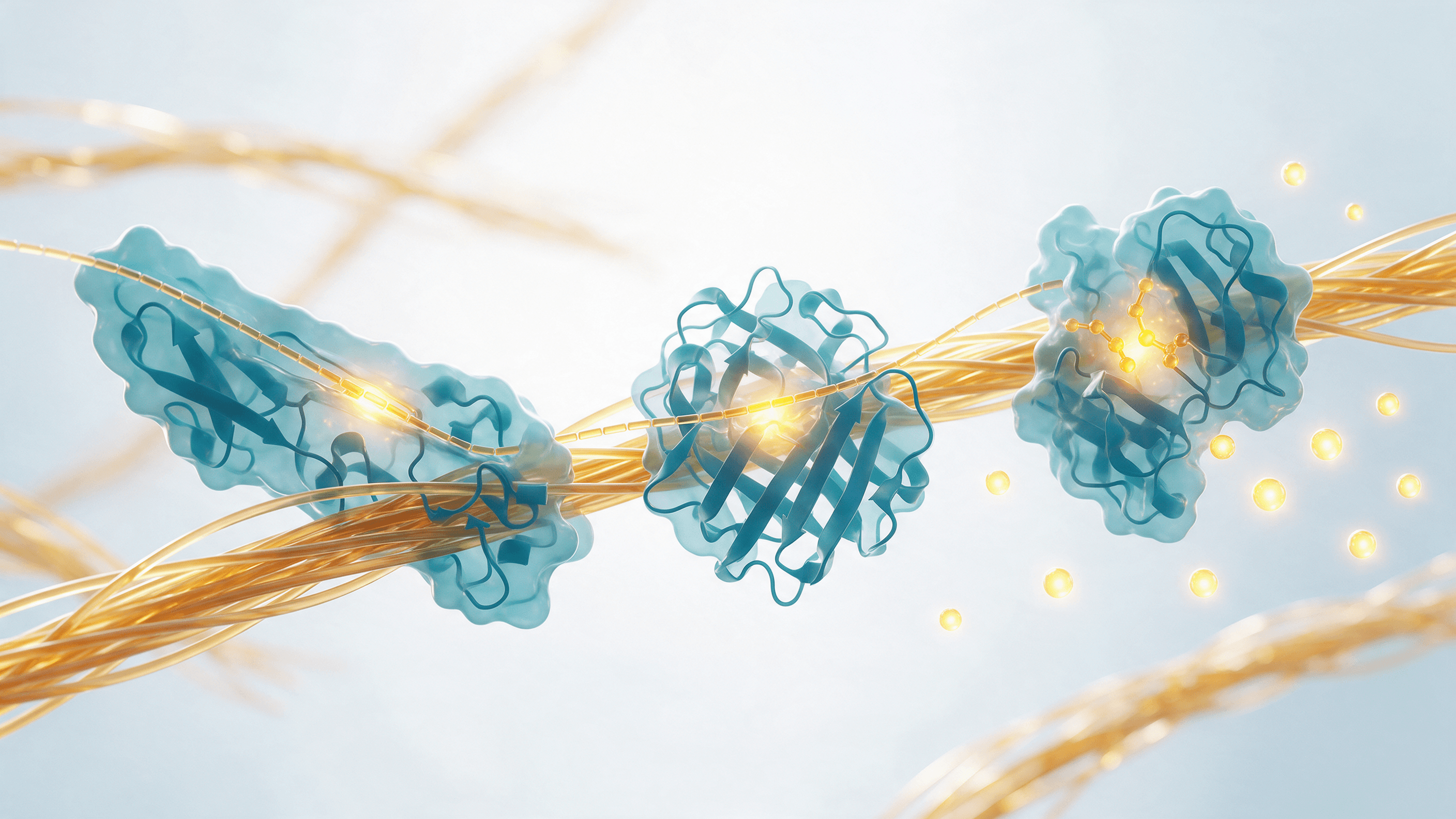
Fig. 1 | Concept panorama of a cellulase cocktail synergistically degrading a cellulose fibre
Cellulases are glycoside hydrolases that cleave the β-1,4-glycosidic bonds of cellulose into cellobiose and glucose, and they are key enzymes in lignocellulosic biorefining, textiles, food, feed and detergents. A cellulase is not a single protein but a synergistic multi-enzyme system of endoglucanase (EG), cellobiohydrolase (CBH) and β-glucosidase (BGL). Historically, cellulases were screened from fungi such as Trichoderma reesei and Penicillium; today, with the spread of sequencing, metagenomics and 3D structural data, cellulase mining and engineering have entered a data-driven, AI-in-the-loop stage.
Why Are Cellulases Central to Biorefining and Biomanufacturing?
Cellulose is the most abundant renewable polysaccharide in nature. Biorefining converts lignocellulosic feedstocks such as straw, corn cobs and wood chips into fermentable sugars, then into biofuels and bio-based chemicals. Compared with harsh acid/high-temperature routes, enzymatic hydrolysis is mild, green and low-carbon, making it a core step in sustainable manufacturing.
Cellulases still face real bottlenecks: native cellulose is highly crystalline, the lignin barrier blocks enzyme access, enzyme cost and dosage are high, and accumulated cellobiose inhibits CBH. These are exactly the targets that mining and engineering aim to overcome.
Cellulase Family Structures and Synergistic Catalytic Mechanism
Cellulases are classified into glycoside hydrolase (GH) families, commonly GH5, GH6, GH7, GH9 and GH12. In the GH7 cellobiohydrolase, the catalytic domain adopts a β-jelly-roll fold with a ~40–50 Å active-site tunnel; a single cellulose chain threads in from the reducing end and is cleaved processively, releasing cellobiose. In T. reesei Cel7A, the nucleophile Glu212 and the acid/base Glu217 make up the key catalytic pair.
By contrast, the endoglucanase (EG) active site is an open groove or cleft that randomly cleaves internal bonds in amorphous regions, while β-glucosidase (BGL) hydrolyses cellobiose into two glucose molecules, relieving the strong product inhibition of CBH. Together they form an endo-exo-to-glucose cascade.
Most fungal cellulases are modular: the catalytic domain (CD) is linked by a flexible linker to a carbohydrate-binding module (CBM). The CBM anchors the enzyme to the cellulose surface, and the linker provides flexibility to improve initiation.

Fig. 2 | Catalytic domain of the GH7 cellobiohydrolase
How Are Cellulases Assayed and Selected?
Activity is commonly measured by filter-paper units (FPU) for total cellulase, with the DNS reducing-sugar method for total sugar; pNPC (p-nitrophenyl β-D-cellobioside) resolves cellobiohydrolase (CBH) activity and pNPG (p-nitrophenyl β-D-glucopyranoside) resolves β-glucosidase (BGL) activity, while endoglucanase (EG) activity is typically assayed on CMC-Na (carboxymethylcellulose) substrate and can also be tracked by viscosity loss or turbidity.On the engineering side, the time to 80% glucan conversion or the enzyme loading per unit substrate is a key industrial metric.
Selection must match the feedstock and operating conditions: pure cellulose and lignocellulose differ in recalcitrance, and pH, temperature, inhibitor tolerance, CBM affinity and thermal stability all matter. Applications often optimise the EG : CBH : BGL ratio synergistically (the exact ratio must be verified for the specific substrate and process).
Hydrolysis Conditions and Process Control
Conversion depends on temperature, pH, substrate concentration and solids loading, enzyme dosage, mixing/shear, pretreatment and inhibitors (phenolics, lignin derivatives). Fungal cellulases typically have optima near 45–60 °C and pH 4.5–6.0, varying by strain, family and application.
Product inhibition is a key control point: CBH is strongly inhibited by cellobiose, so sufficient BGL, or continuous sugar removal/feeding, is needed. Shear should be controlled to avoid enzyme inactivation and desorption, and pretreatments such as dilute acid, steam explosion or alkali/ammonia reduce lignin and crystallinity barriers.

Fig. 3 | Closed-loop cellulase pipeline from mining, screening and engineering to process and glucose product
How MatwingsVenus® Empowers Cellulase Mining and Engineering
Building a dry-wet closed loop is key to improving cellulase development efficiency: mine candidates in a sequence-, structure- and data-driven way, then apply AI-based single-point scanning and multi-point epistatic modelling, and finally feed wet-lab activity assays and process validation back into the model.
On the mining side, candidates can be functionally anchored by GH family, catalytic site and CBM features across sequence databases, metagenomes and 3D structures. On the engineering side, single-point scanning, multi-point design and AI-driven directed evolution can be applied to the existing sequence to co-optimise activity, thermostability, pH optimum and product-inhibition tolerance.
When off-the-shelf enzyme cocktails cannot match your feedstock and operating conditions, MatwingsVenus® (晓鹜®) offers custom enzyme development: around your cellulose feedstock, target product, pH/temperature window, inhibitor tolerance and downstream process, we move from candidate mining, AI design and wet-lab validation to process scale-up and manufacturing support, delivering truly tailored cellulases.
Related services (deep links)
Wet-lab platform
Protein expert center
Dry-wet closed-loop platform
Frequently Asked Questions (FAQ)
1. What are cellulases and what do they do?
Cellulases are glycoside hydrolases that cleave the β-1,4-glycosidic bonds of cellulose into cellobiose and glucose; they are core enzymes in biorefining, textiles, food and detergents.
2. What types of cellulase are there?
The main types are endoglucanase (EG), cellobiohydrolase (CBH) and β-glucosidase (BGL), which work together in an endo-exo-to-glucose cascade.
3. How is cellulase activity measured?
Total activity is commonly measured by filter-paper units (FPU) with the DNS reducing-sugar assay, pNPC resolves cellobiohydrolase (CBH) activity, pNPG resolves β-glucosidase (BGL) activity, and endoglucanase (EG) activity is typically assayed on CMC-Na; the time to 80% glucan conversion is a key engineering metric.
4. How are cellulases engineered for better performance?
Rational design, directed evolution or AI-guided multi-point mutations can be applied to optimise activity, thermostability, pH optimum and product-inhibition tolerance, with wet-lab assays closing the loop.
5. Which process factors affect cellulase hydrolysis efficiency?
Temperature, pH, substrate concentration and solids loading, enzyme dosage, mixing/shear, pretreatment and inhibitors such as lignin and phenolics all significantly affect hydrolysis efficiency.
6. Why are cellulases relatively costly?
Enzyme production and substrate costs are high, and the low efficiency caused by cellulose crystallinity and the lignin barrier raises unit cost; mining highly active, stable, inhibitor-tolerant enzymes and optimising the process are key to cost reduction.
7. How does MatwingsVenus® help mine and engineer cellulases?
Through a dry-wet closed loop, it links sequence/structure data mining, AI protein design and wet-lab activity validation to help lock in candidate enzymes faster and push them toward process scale-up.
Summary
Cellulases are key enzyme tools for biorefining and biomanufacturing; their catalytic mechanism (the GH7 tunnel-driven processive hydrolysis, the EG open-groove endo-cleavage and BGL relieving product inhibition) shapes the process route, and the mining-engineering-scale-up loop is becoming the main line for cutting enzyme cost and raising conversion efficiency.