
Arabinofuranosidase Performance Metrics and Selection Guide
Published on November 2, 2026
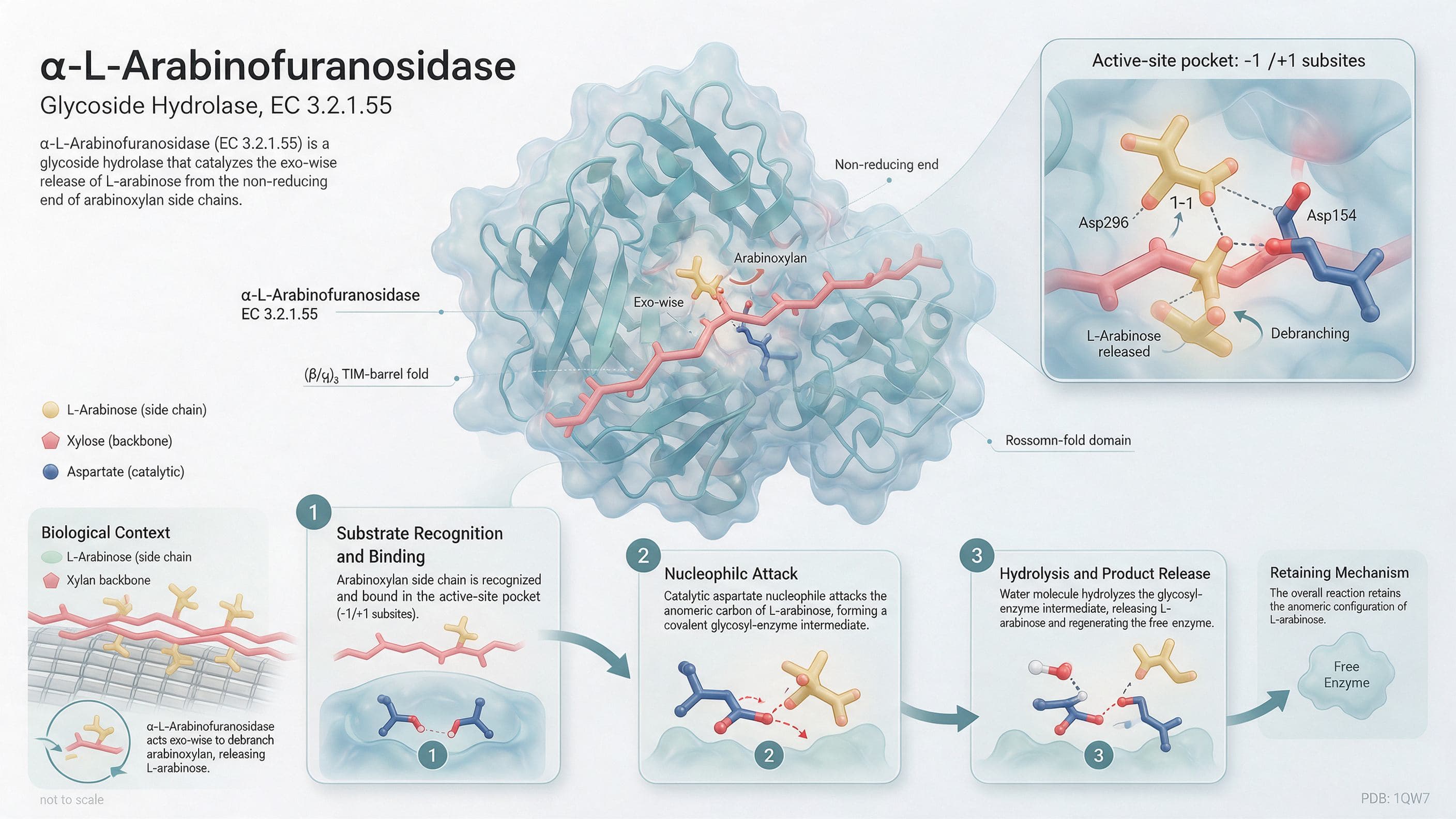
figure1. Overview of α-L-arabinofuranosidase and its substrate complex
Category:A Enzymes & Proteolysis (in-depth mechanism + process control) | G Applications & Scenarios (biomass conversion, food, feed)
1. What Arabinofuranosidase Is: Starting from Hemicellulose Debranching
Choosing a high-activity arabinofuranosidase does not guarantee successful debranching. The more common failure is a specificity mismatch: a feedstock dominated by double-substituted branches but an enzyme that only cuts mono-substituted sites, or a candidate that looks good in a small screen but inactivates quickly in the real feedstock and process window. The root cause is often treating a single activity value as the only selection criterion.
1.1 Definition and Role: An Exo-acting Glycoside Hydrolase
Arabinofuranosidase (ABF), formally α-L-arabinofuranosidase, has the enzyme number EC 3.2.1.55. It removes terminal α-L-arabinofuranose (Araf) residues one by one from the non-reducing end of plant polysaccharides. This is an exo-wise cleavage acting on α-1,5, α-1,2 or α-1,3 arabinofuranosidic linkages.
Its main substrates are arabinoxylan in hemicellulose, together with arabinan and arabinogalactan. Peeling off terminal arabinose residues exposes the masked backbone and gives xylanases and xylosidases an accessible surface. This is why ABF is often called the debranching helper in biomass degradation.
To understand ABF, first remember that it belongs to the glycoside hydrolase (GH) class. GH enzymes hydrolyze glycosidic bonds, and ABF is the branch that targets arabinofuranosidic bonds specifically. Family membership, catalytic mechanism and structural layout directly determine its substrate preference and industrial value.
1.2 Why It Matters: Biomass, Food and Feed Sequences
In biomass conversion, ABF works with endoxylanase and β-xylosidase. Xylanase alone struggles to fully degrade highly branched arabinoxylan; arabinose side branches must be removed first so the backbone can be cut more easily. Once the branches are removed, the product yields more fermentable sugars and arabinoxylo-oligosaccharides (AXOS), a common prebiotic candidate.
In food and brewing, ABF is used in grain processing and baking to tune soluble dietary fiber, viscosity and flavor. In juice and wine making, it controls cloudiness and sediment caused by arabinose side chains by releasing the arabinosyl part of cell walls. In animal feed, it degrades non-starch polysaccharides to improve nutrient accessibility.
Different applications change the selection criteria. You look not only at activity but at which linkage it cuts and how stable it stays across the process window. This leads to the families and mechanisms discussed next.
2. Families and Mechanisms: Retaining versus Inverting
2.1 GH51 Retaining: The Koshland Double-Displacement Mechanism
In the CAZy classification, ABF mostly falls into GH2, GH3, GH43, GH51, GH54 and GH62. Among these, GH51 is the most typical retaining enzyme. It follows the classic Koshland double-displacement mechanism: a catalytic nucleophile first attacks the glycosidic bond while an acid-base residue donates a proton, forming a covalent intermediate; water then enters and releases the product. Across these steps the anomeric configuration is retained.
For GH51, the catalytic nucleophile is usually an aspartate (Asp) and the acid-base residue a glutamate (Glu). These two residues clamp the active site, and any movement disturbs catalysis. Because the configuration is retained, this enzyme may also perform transglycosylation under certain conditions, transferring arabinose to another acceptor. That is an opportunity in oligosaccharide synthesis but a side reaction to control when you only want pure hydrolysis.

figure2. GH51 retaining Koshland double-displacement mechanism
2.2 GH43 Inverting and GH62 Specialized Enzymes
Unlike GH51, most GH43 enzymes are inverting. The inverting mechanism involves a single nucleophilic attack, with water attacking from the opposite side, flipping the anomeric configuration. GH43 often has a five-bladed β-propeller domain and a relatively open substrate-binding channel. Side reactions are generally fewer, but it relies more on precise anchoring of the sugar ring by the subsite -1/+1.
GH62 is more specialized. It hydrolyzes arabinose side branches on arabinoxylan but barely touches arabinan or arabinogalactan. Many GH62 enzymes carry a carbohydrate-binding module 13 (CBM13) at the N terminus, which helps them bind the xylan backbone and guide the catalytic domain precisely to the branch site. This backbone-recognizing trait makes GH62 valuable when you need precise debranching without disturbing other polysaccharides.
2.3 Positional Specificity: C2, C3 or Double Substitution
Arabinose side branches on arabinoxylan do not all sit at the same place. Some attach at the C2 position of xylose, some at C3, and some give double substitution at both C2 and C3 on the same xylose. Different GH families show preferences. In general, GH43 handles double-substituted xylose well, while GH51, GH54 and GH62 prefer C2 or C3 mono-substituted sites.
Positional specificity sets the selectivity of an ABF. If your raw material is dominated by double-substituted branches but your enzyme only recognizes mono-substituted sites, even a high specific activity may give poor debranching. This is why you should profile the substrate sugar composition before selection rather than only reading a single activity value.
3. Performance Indicator System: From Assay to Selection
3.1 Core Indicators: Specific Activity, Km, kcat and Optimal Conditions
The most useful indicators are specific activity, the Michaelis constant Km, the turnover number kcat, kcat/Km as catalytic efficiency, plus optimal pH and temperature.
l Specific activity reflects the catalytic rate per unit of active enzyme;
l Km reflects substrate affinity;
l kcat reflects how many substrate molecules one active site handles per second;
l kcat/Km combines both into a common measure of overall catalytic efficiency.
These indicators are not isolated numbers. A higher Km may mean sluggish performance at low substrate concentrations; a high optimal temperature with poor thermostability may not win in long batch reactions. Read these indicators together with the target process rather than picking the single highest value. When kinetic parameters come from literature or measurements, record whether they are measured, predicted or to be verified.
3.2 Assay Methods: pNP Chromogenic Substrate and Natural Substrate
The standard reference assay uses p-nitrophenyl-α-L-arabinofuranoside (pNP-α-L-arabinofuranoside, CAS 6892-58-6). Hydrolysis releases p-nitrophenol, which develops a color under alkaline conditions for quantification by spectrophotometry. This method is fast and repeatable, ideal for high-throughput screening, but it only answers whether a candidate has arabinofuranosidase activity.
What determines real value is natural-substrate assay. Put the candidate into real arabinoxylan, arabinan or the actual feedstock and observe arabinose release, product profile and degree of debranching. Some candidates shine on pNP substrate but suffer from accessibility, viscosity or side reactions in real high-branch feedstocks. Assay in two stages: de-risk with the chromogenic substrate, then decide with the natural substrate.
3.3 Stability: Heat, pH and the Process Window
In industry, activity is often not the first bottleneck; stability is. ABF stability is not a single temperature value but how long it holds under conditions consistent with the process. Examine residual activity after pre-incubation, the inactivation rate during long reaction times, the pH tolerance range, and the effects of metal ions, salts and organic solvents.
A common trap is a very high optimal temperature with rapid inactivation at the target temperature. Optimal temperature only describes the catalytic peak, not the enzyme lifetime. The right test is a time course at the target process conditions. If a candidate decays quickly in the real matrix, even a high apparent initial rate loses to a slower but stable enzyme that lasts the whole run. If stability comes from prediction, mark it as predicted and keep it separate from measurements.

figure3. Industrial application process flow for arabinofuranosidase
4. Selection Logic Driven by Indicator Needs
4.1 Choose the GH Family by Substrate and Positional Specificity
First determine the feedstock sugar profile. If the target is highly branched arabinoxylan, especially with double-substituted sites, favor the GH43 direction. If the feedstock has mostly C2 or C3 mono-substitution and you want high selectivity, compare GH51, GH54 and GH62. Settling which linkage to cut before discussing activity avoids costly rework from a wrong direction.
4.2 Choose Thermostability and pH Profile by the Process Window
Then examine process constraints. Low-temperature, long hydrolysis fermentation processes should emphasize low-temperature activity and long-term holding; high-temperature, short processes should prioritize thermostability and tolerance to equipment heating and cooling. Align the pH profile with the real formulation, such as grain slurry, juice or feed pH. The more specific the process window, the more accurate the candidate ranking.
4.3 When to Move to Custom Development
If the following recur, a standard commercial enzyme may be insufficient.
l First, the feedstock branching pattern is unusual and existing enzymes do not match the positional specificity.
l Second, the process temperature, pH or ionic environment exceeds commercial tolerance.
l Third, the downstream has strict requirements on side reactions or product profile, needing a targeted pathway to be suppressed or guided.
In these cases, do not keep adding enzyme; consider targeted custom development.
5. How MATWINGS MALL Products and Custom Services Land
5.1 How Custom Tool Enzymes Match Substrate Specificity and Process
When a standardized finished enzyme cannot meet differentiated needs, MATWINGS MALL custom tool enzyme development can design around your real substrate and process window. The value is not selling a fixed parameter but treating substrate specificity, positional specificity, stability and scalability as adjustable variables that fit a specific R&D task.
This complements standard-product procurement. Standard products suit quick validation and routine scenarios; custom development suits projects where standards fail or requirements are higher. Either way, keep natural-substrate assay and sugar profiling as the basis for judgment rather than concluding from a single activity value.
5.2 Service Chain from Mining and Directed Evolution to the Dry-Wet Loop
Custom development usually starts with candidate discovery. MATWINGS MALL can mine natural candidates from large-scale real-label protein data, selecting ABF candidates with the right family, domain architecture and potential position. To further boost activity or stability, enter directed evolution, combining computation with automated wet-lab steps to form a design, verify and iterate dry-wet closed loop.
The service chain runs in roughly four steps.
l Candidate screening establishes family and substrate preference;
l design work targets the active site or stability bottleneck;
l expression and purification yield soluble, active material;
l performance validation confirms with real substrate and the target process conditions.
Keep parent controls, positive controls and real-substrate assays at every step. Computation narrows the range; wet-lab results draw the conclusion.
5.3 Next Action and the Value You Gain
If you are plagued by high-activity enzymes that do not match the substrate, or stability that cannot cover the process window, request a custom tool enzyme project at MATWINGS MALL, specifying the feedstock sugar profile, target process window and desired indicators. The technical team organizes candidate development and validation around it. What you gain is not just an enzyme but an enzyme solution that connects to production constraints. MATWINGS MALL also provides an expert center and a dry-wet loop platform for further consultation or later scale-up and validation.
6. Frequently Asked Questions
6.1 What Is the Difference Between Arabinofuranosidase and Xylanase?
Arabinofuranosidase specifically cuts terminal arabinofuranosyl groups, while xylanase hydrolyzes the xylose backbone. They are often used together: ABF debranches first, xylanase cuts the backbone, and β-xylosidase releases xylose. Their roles differ and they cannot replace each other.
6.2 How Is Arabinofuranosidase Activity Measured?
The reference method uses p-nitrophenyl-α-L-arabinofuranoside (pNP-Ara) as a chromogenic substrate and detects released p-nitrophenol. After screening, use real arabinoxylan or the actual feedstock to measure arabinose release, product profile and debranching to confirm process fit.
6.3 How Do You Choose Between GH51, GH43 and GH62?
Choose by substrate and positional specificity. GH43 tends to handle double-substituted xylose, while GH51 and GH62 prefer C2 or C3 mono-substituted sites. Combine the feedstock sugar profile and target product to decide the family, then compare optimal pH, temperature and stability.
6.4 How Can Arabinofuranosidase Thermostability Be Improved?
Through engineering. Common approaches reinforce flexible regions, optimize disulfides and charge networks, or optimize the sequence against a thermostable homologous template. The key is to improve stability and catalytic efficiency together, and to validate under the target process conditions rather than measuring only residual activity after a heat challenge.
6.5 What Can MATWINGS MALL Offer When a Standard Product Does Not Fit?
It can offer custom tool enzyme development, designing and validating around substrate specificity, positional specificity and process stability. It can also organize candidates with natural mining, directed evolution and a dry-wet loop, and connect to follow-up tasks at the expert center.
7. Summary and Selection Advice
Choosing an arabinofuranosidase is essentially replacing "highest activity" with "best task fit." First confirm it belongs to the correct GH family and can debranch at the target positional specificity; then judge with specific activity, Km, kcat, optimal pH and temperature, and stability; finally validate with the real substrate. When a standard product cannot satisfy the task, MATWINGS MALL custom tool enzyme services can develop around substrate and process, closing the loop among computational screening, wet-lab results and production constraints. The benchmark is always repeatable measured evidence, not one isolated number.
8. MATWINGS MALL Product Zone and More Industry Insights
MATWINGS MALL Product Zone: Around glycoside hydrolase R&D and processing, MATWINGS MALL offers custom tool enzyme development, natural candidate mining, directed evolution and dry-wet loop validation, connecting to high-expression strain construction, fermentation, purification and staged scale-up. If you are evaluating arabinofuranosidase selection or a custom plan, start a consultation at the expert center for substrate-specificity and process-window advice.
More Industry Insights: Explore the MATWINGS MALL knowledge center and news section for the latest in enzymology, protein engineering and bioprocessing.