Anti-CH1 Affinity Resin: Scope, Failure Modes, and Recovery
Published on September 6, 2026
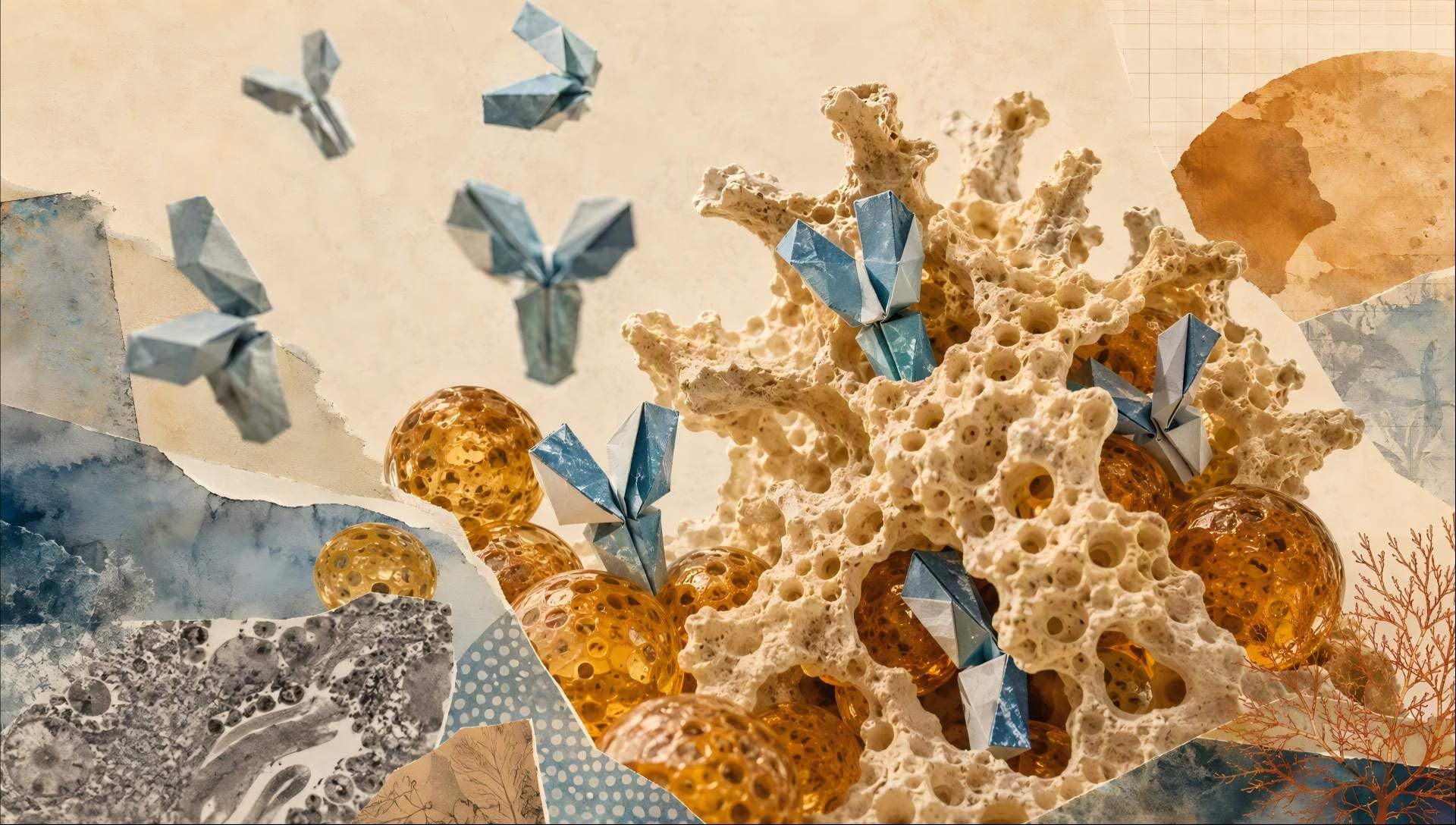
Figure 1 | An anti-CH1 ligand recognizes the heavy-chain CH1 domain; the label “antibody fragment” alone does not establish compatibility.
Anti-CH1 Affinity Resin Starts with Target Identity
“Anti-CH1” describes the ligand’s recognition direction. It does not mean that the medium binds every antibody, fragment, or species. A typical Fab retains VH and CH1, and F(ab’)2 contains two Fab-like arms, so both can provide a structural basis for CH1-directed screening. A conventional scFv consists mainly of VH and VL, while a VHH is generally a heavy-chain variable domain; these formats normally lack CH1.
A second misconception is treating the scope of one product as a property of the entire category. Specific media are designed for human Fab, F(ab’)2, and human IgG and may cover different light-chain types. That scope cannot be assumed for every ligand, species, subclass, or engineered construct. Fusions, truncations, linkers, and domain rearrangements used in protein engineering can also affect whether CH1 remains accessible.
Before selecting a buffer, create a molecular identity card: sequence, domain boundaries, species, subclass, light-chain type, fusion elements, expression format, and major assembly state. Without this information, an apparent capacity problem may actually be a construct-identity problem.

Figure 2 | Separating binding, flow-through, wash, and elution into distinct observation windows reveals where target loss occurs.
Four Failure Signals and What They Mean
Signal 1: Most Target Appears in Flow-Through
Confirm that the expressed construct contains intact CH1 and that its species falls within the ligand’s stated scope. If those conditions are met, examine feed pH, conductivity, target concentration, load, and contact time. Misassembly, degradation, or precipitation can also make CH1 inaccessible. Increasing load before checking target state usually magnifies the loss.
Signal 2: Binding Occurs, but Target Leaks During Washing
This pattern suggests weak retention or an overly stringent wash. Individual antibodies can interact differently with CH1-specific media under the same nominal conditions. Within the supplier-permitted range, narrow changes in pH and salt can be explored while early and late wash fractions are analyzed separately.
Signal 3: The Elution Peak Looks Good, but Recovery Is Low
Peak shape is not mass balance. Product may remain on the column, aggregate during acidic exposure, adsorb to containers, or be underestimated by the analytical method. Evaluate total recovery together with size-exclusion aggregation, electrophoretic integrity, and binding activity. If low pH is damaging, shorten exposure, neutralize promptly, or evaluate another supplier-permitted condition.
Signal 4: Purity Improves, but a Critical Impurity Co-Elutes
Affinity capture mainly addresses selective retention; it does not necessarily resolve every difference in size, charge, hydrophobicity, or assembly. Fab and F(ab’)2 in an IgG digest both contain CH1. Bispecific heterodimers and homodimers may also be closely related. Select an orthogonal polishing mechanism from the impurity’s properties rather than indefinitely increasing wash stringency.
Opportunity and Limits in Bispecific and Engineered Formats
Published research indicates that CH1-specific media can bind different human antibodies with different strengths. In selected asymmetric bispecific programs, optimization may turn that difference into a window between the desired heterodimer and homodimer by-products. This is a useful biological research hypothesis, not a universal one-step clearance claim.
A defensible experiment includes the desired heterodimer and both parental or homodimer controls. Retention, peak shape, recovery, and resolution should be compared under conditions that preserve aggregation, integrity, and activity. If the binding difference is too small, the medium may still support process-impurity capture, while mispaired-product clearance is assigned to a more suitable polishing step.
The same caution applies to new protein engineering formats. Domain rearrangement can change spatial access to CH1 even when the sequence is present. Computational models can frame hypotheses, but they cannot replace real feed, real by-products, and physical chromatograms.
Using MatwingsVenus™(晓鹜™)to Shorten the Life of a Wrong Hypothesis
The scientific products presented through the MatwingsVenus™(晓鹜™) storefront can support the information-diagnosis stage of purification development. Deep Research can organize evidence about CH1 recognition, species scope, buffer constraints, and reported applications while keeping general mechanism separate from product-specific instructions and case-level findings.
When researchers provide a protein name, database identifier, or sequence, MatwingsVenus™(晓鹜™) protein database queries can help verify identity, sequence, and domain information. For an engineered biological research construct, this can clarify whether CH1 is retained and which structural uncertainties should be tested first.
If authoritative records do not answer the question, MatwingsVenus™(晓鹜™) protein function prediction can generate testable functional hypotheses only after identity confirmation, retrieval-first review, and user approval. Outputs should distinguish Measured, Predicted, and Unknown and should be converted into small-column questions rather than resin-performance promises.
The concrete task chain is input → output → next step: provide the target and failure context, receive an evidence-graded diagnostic checklist, and then verify the prioritized hypotheses with a real small-column experiment.
Task: diagnose an anti-CH1 capture failure before changing the process
Input: target sequence, molecular format, species, feed composition, and observed failure
Output: an evidence-graded target card, causal hypotheses, and a prioritized diagnostic checklist
Next experiment: test the real feed and close the loop with recovery, purity, aggregation, and activity

Figure 3 | Digital tools narrow the hypothesis space; chromatography and orthogonal analytics provide the final evidence.
FAQ
1. Can Anti-CH1 Affinity Resin purify every Fab?
No. The Fab must present an accessible CH1 domain, and its species and class must fall within the ligand’s scope. Engineered substitutions or fusions can also alter performance.
2. Can it directly purify scFv or VHH?
Conventional scFv and VHH formats normally lack CH1 and are generally incompatible with this recognition mechanism. A special fusion that deliberately adds CH1 requires construct-specific evaluation.
3. Does kappa or lambda light-chain type affect binding?
The intended recognition site is on heavy-chain CH1, but light-chain independence is a product-specific claim. Evidence for one ligand should not be generalized to every anti-CH1 medium.
4. Why do different antibodies show different retention under the same conditions?
CH1 sequence context, domain arrangement, and epitope accessibility can differ among molecules. Treat the difference as a testable observation and investigate it with gradients, controls, and orthogonal analytics before blaming resin lot variation.
5. Can this step remove bispecific homodimers in one operation?
It can be screened for that purpose, but success depends on exploitable binding differences between the desired heterodimer and its by-products. A single published case does not establish platform-wide performance.
6. What is the minimum analytical panel for development?
Track target distribution in flow-through, wash, and eluate, then assess total recovery, purity, aggregation, integrity, and functional activity. The main peak alone can hide loss or degradation.
Conclusion
Anti-CH1 Affinity Resin creates a domain-directed capture option for human CH1-containing fragments and complex formats, but the same domain, species, and molecule dependence defines its limits. Starting from failure signals—identity, loss location, elution damage, and co-eluting impurities—is more informative than copying a buffer recipe. MatwingsVenus™(晓鹜™) can organize evidence and narrow the hypothesis space for protein engineering and biological research, while real chromatography and quality data must determine the final process decision.