Anti-CH1 Affinity Ligand: A Practical Selection Guide
Published on September 7, 2026
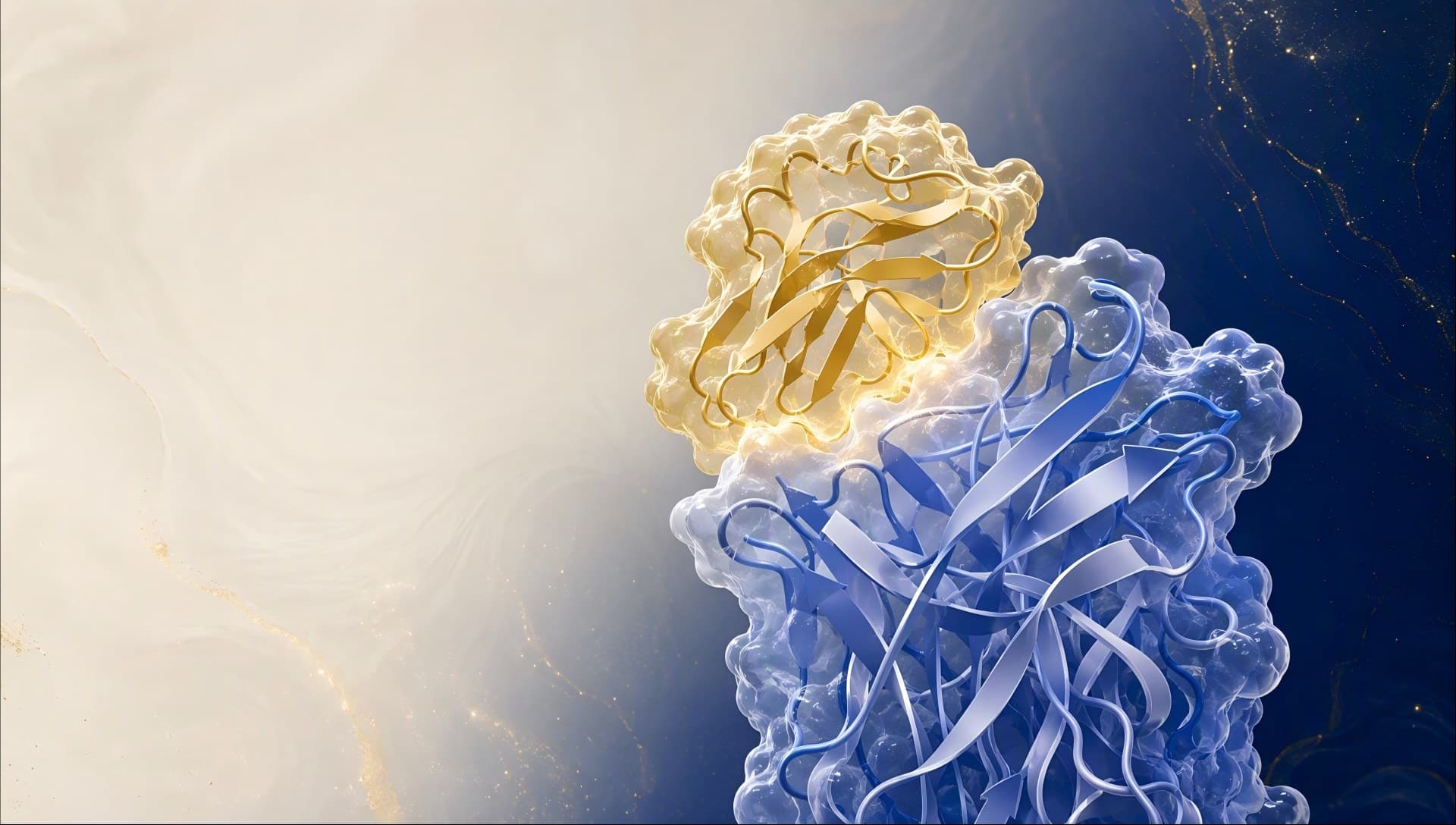
Why antibody fragments need a different capture decision
An Anti-CH1 Affinity Ligand is relevant because Fab and F(ab’)2 retain antigen-binding function but lack an intact Fc region. Because the conventional Protein A capture route primarily relies on Fc recognition, a platform process designed for a full-length IgG cannot simply be transferred to these fragments. Yet “Fc-free” should not be converted into the absolute claim that every Protein A or Protein G medium is incapable of any interaction under all conditions. Binding can depend on the ligand, antibody subclass, sequence, and molecular format. The defensible process-development question is therefore not “Which resin is normally used?” but “Which accessible structural feature does this molecule actually present?”
A Fab contains VH, VL, CH1, and CL domains, whereas an F(ab’)2 generally joins two Fab-like arms through the hinge region. If a target retains a correctly folded and accessible CH1 domain, CH1-directed capture becomes a plausible screening route. An Anti-CH1 Affinity Ligand shifts the recognition site from Fc or a light-chain variable region to CH1, creating an alternative for Fab fragment purification, F(ab’)2 purification, and selected complex antibody formats.
What an Anti-CH1 Affinity Ligand is—and is not
An Anti-CH1 Affinity Ligand is a binding molecule engineered or selected to recognize the first constant domain of an immunoglobulin heavy chain. In an affinity medium, the ligand is immobilized on a porous support. CH1-containing molecules are retained as feed passes through the bed and are subsequently eluted by changing pH or buffer composition.
One publicly documented CH1-XL medium illustrates a specific implementation. Its product sheet describes an approximately 13 kDa llama heavy-chain antibody fragment immobilized on an epoxy-activated agarose support . This example shows how a compact single-domain binder can be converted into a chromatography ligand, but neither the molecular mass nor the coupling chemistry defines the entire product class. Other media may use different ligand scaffolds, supports, pores, or immobilization strategies.
Compared with the typical Fc-binding mechanism of Protein A, a CH1 route asks whether the target contains accessible CH1. Compared with Protein L and other light-chain-directed approaches, it does not use a kappa variable region as the sole recognition entry point. This distinction leads to three practical questions: Does the product contain CH1? Is that domain correctly folded and exposed? Do relevant impurities also contain a bindable CH1 domain? A product name becomes useful only after all three questions are addressed.

Conceptual pore-level binding in a CH1 affinity medium
Evaluate advantages together with their boundaries
Light-chain independence is product-specific evidence
The instructions for one CH1-XL medium state that it recognizes human IgG1 through IgG4 independently of kappa or lambda light-chain type . That property can be valuable when a development portfolio includes both kappa- and lambda-containing human Fab molecules, because the capture platform need not be built around only one light-chain family. The statement must, however, remain attached to that medium and its documented scope. It should not be extrapolated automatically to every Anti-CH1 Affinity Ligand, non-human antibodies, engineered subclasses, or heavily modified fragments.
Correctly assembled Fab may be separated from free light chain
Recombinant Fab expression can produce excess light chain, incomplete assemblies, and light-chain dimers. The same product document states that the specified medium does not co-purify overexpressed free light chain or light-chain dimers during Fab production . This behavior is consistent with CH1-directed recognition, but it remains a product claim that requires confirmation with the actual feed. Flow-through, wash, and eluate fractions should be examined by orthogonal methods such as SDS-PAGE, size-exclusion chromatography, capillary electrophoresis, or mass spectrometry. “Selective capture” should never be rewritten as “every feed reaches final purity in one step.”
Capacity and mild elution are conditional, not universal
For the documented medium, the reported dynamic binding capacity is 19 g of polyclonal human Fab per liter of resin at 10% breakthrough and a two-minute residence time . The same instructions provide starting conditions that include equilibration at pH 7.0–7.5, elution at pH 4.0, and linear velocities of 50–200 cm/h . These values are useful for an initial design of experiments, not as cross-product guarantees. Feed concentration, Fab pI, aggregation tendency, host-cell impurities, residence time, bed geometry, and analytical definitions can all shift observed capacity and recovery. Acid-sensitive products may require faster neutralization, shorter exposure, or an alternative elution screen.
A meaningful resin assessment therefore combines recovery, host-cell protein clearance, free-chain removal, aggregate change, ligand leakage, pressure behavior, cleanability, and capacity retention over cycles. A single static-capacity value or one high-purity chromatogram cannot establish scale-up readiness.
Where CH1-directed capture is most useful
Recombinant Fab from clarified culture
This is the most direct use case. When sequence review confirms a human CH1 domain, clarified feed can be screened for binding on a small column. Flow-through analysis reveals insufficient capacity, weak interaction, or an inaccessible epitope. A controlled pH or buffer screen can then compare recovery, aggregate formation, and retained antigen binding. Serum-containing or otherwise complex feeds still require assessment of turbidity, lipid load, proteolysis, and nonspecific adsorption; ligand selectivity does not eliminate feed-preparation risks.
Fab and F(ab’)2 from IgG digestion
An IgG digest may contain the target fragment, residual intact IgG, Fc-related fragments, enzyme, and partially cleaved intermediates. An Anti-CH1 Affinity Ligand can capture CH1-containing species, but that also means residual intact IgG may bind. Ion exchange, size exclusion, mixed-mode chromatography, or another polishing operation may still be needed to resolve species with similar size or charge.
An F(ab’)2 contains two Fab-like arms and retains CH1, providing a mechanistic basis for binding. Its larger, bivalent architecture can nevertheless alter apparent avidity, pore transport, and elution behavior. Fab conditions are reasonable starting points, but capacity, recovery, peak shape, and activity should be re-established for F(ab’)2 rather than assumed to transfer.
Bispecific and asymmetric antibodies
Affinity ligands directed at CH1, kappa, or lambda domains can support purification strategies for fragment-based bispecific antibodies that lack Fc . For CH1-containing asymmetric constructs, a recent study found molecule-dependent differences in the binding strength of human antibodies to two CH1-specific media. Under optimized conditions, one asymmetric bispecific case showed potential for resolving heterodimeric product from homodimeric by-products . This finding does not mean that a medium inherently “does not bind the homodimer,” nor does it establish a universal bispecific platform. The opportunity lies in a differential-binding window that must be demonstrated with the intended molecule and defined impurity controls.
Formats that are poor first candidates
A conventional scFv contains VH and VL but not CH1, and a VHH also generally lacks CH1. These formats are therefore not direct first candidates for CH1-directed capture. Non-human antibodies, fusion proteins in which CH1 is sterically shielded, and extensively engineered constructs require binding screens before process commitment. Similar domain labels do not guarantee equivalent epitope accessibility.
A five-step selection and validation framework
1. Verify sequence and architecture. Confirm that the heavy-chain fragment includes the intended CH1 boundaries. Record humanization, mutations, fusion partners, disulfide changes, and whether the product is Fab, F(ab’)2, intact IgG, or an asymmetric construct.
2. Match the documented scope. Review species coverage, IgG subclass, light-chain dependence, recommended buffers, pressure limits, and cleaning compatibility for each candidate. Any molecular class absent from the documentation should be treated as unknown and tested rather than inferred.
3. Screen with representative feed. Use small columns, multiple load levels, and at least two residence times. Collect load, flow-through, wash, and eluate fractions. Capacity results should specify the breakthrough definition, while elution studies should measure recovery, aggregation, and function together.
4. Close the quality-attribute loop. In addition to product purity, monitor host-cell proteins, DNA, residual protease, free light chain, aggregates, ligand leakage, and relevant charge variants. Retain an antigen-binding or other functional assay so that an intact elution peak is not mistaken for intact biological activity.
5. Demonstrate cycling and scale-up feasibility. Track pressure, peak shape, recovery, and retained capacity over repeated cycles. Confirm that cleaning removes carryover without damaging the ligand or product-contact system. The decision to adopt an Anti-CH1 Affinity Ligand should reflect total process yield, polishing burden, robustness, and cost per batch—not only the appearance of a single chromatogram.
MatwingsVenus™(晓鹜™)platform workflow for ligand engineering and selection
Affinity-ligand engineering involves multiple objectives, including binding, specificity, expression, stability, and compatibility with cleaning conditions. MatwingsVenus™(晓鹜™)can organize a research chain that begins with deep research into CH1 biology, known ligand strategies, and process evidence. Protein database queries can then verify sequences, domain boundaries, and species context, turning “the target probably contains CH1” into a traceable question.
For candidate assessment, MatwingsVenus™(晓鹜™)can organize protein function prediction as a hypothesis-generating step. Predicted outputs should be explicitly labeled as Predicted and kept separate from Measured literature findings and internal experiments. An unidentified sequence should be resolved before downstream analysis, and computationally intensive work should proceed after user confirmation. This workflow can prioritize candidates and define experiments, but it does not replace SPR or BLI measurements, chromatography runs, ligand-leakage assays, or cycling studies.
During procurement, published specifications for candidate media can be organized in MatwingsVenus™(晓鹜™) as an evidence-based comparison. Missing information—species scope, capacity test conditions, CIP compatibility, or lot documentation—should become a supplier question rather than an assumed capability. The platform can structure the evidence and unresolved questions; the final process conclusion must come from qualified documentation and representative-feed experiments.

AI-assisted evidence and experimental workflow for CH1 ligand development
FAQ
Can an Anti-CH1 Affinity Ligand purify every Fab?
No. A Fab normally contains CH1, but binding can still depend on species, subclass, sequence variation, folding, and epitope accessibility. Even when a product document covers human IgG1–4, the intended Fab should be verified in a small-column binding and recovery study.
How does it differ from Protein L?
Protein L generally recognizes selected kappa light-chain variable-region families, whereas a CH1 ligand targets the first constant domain of the heavy chain. Protein L suitability therefore depends on the light-chain sequence family; CH1-media suitability depends on the presence and accessibility of CH1. Neither route is universally superior.
Can Fab conditions be transferred directly to F(ab’)2?
They can be used as a screening starting point, but not as validated conditions. The bivalent architecture, larger size, and transport behavior of F(ab’)2 can alter apparent binding and elution. Capacity, aggregation, recovery, and function should be re-established.
Is pH 4.0 a fixed elution condition?
No. It is a starting example from one specific product document . A practical project should screen a limited pH and buffer-composition range and control acid exposure, temperature, and neutralization speed according to product sensitivity.
Why may polishing still be required after affinity capture?
Affinity selectivity is not equivalent to final drug-substance purity. Residual intact IgG, CH1-containing misassemblies, aggregates, or charge variants may co-elute. Polishing addresses quality attributes that the affinity step cannot fully resolve.
What evidence is needed before scale-up?
At minimum, compare dynamic capacity, recovery, impurity clearance, biological activity, pressure, ligand leakage, and multi-cycle stability with representative feed. Scale-up is justified only after those results are reproducible and compatible with equipment, cleaning, economics, and downstream requirements.
Conclusion
An Anti-CH1 Affinity Ligand creates a rational capture option for Fab, F(ab’)2, and selected complex antibodies that retain an accessible CH1 domain. Its value is not captured by phrases such as “universal fragment purification.” It depends on molecular architecture, species scope, feed composition, and a verified operating window. A robust program starts with sequence and domain confirmation, proceeds through small-column selectivity and capacity studies, and ends with polishing, cycling, and scale-up evidence. AI can accelerate evidence synthesis and candidate analysis, but reproducible experiments with clearly stated conditions remain the foundation of a defensible purification process.