
Alkaline Phosphatase: The Biological "Phosphate Scissors" in Molecular Cloning and Diagnostics
Published on November 9, 2026
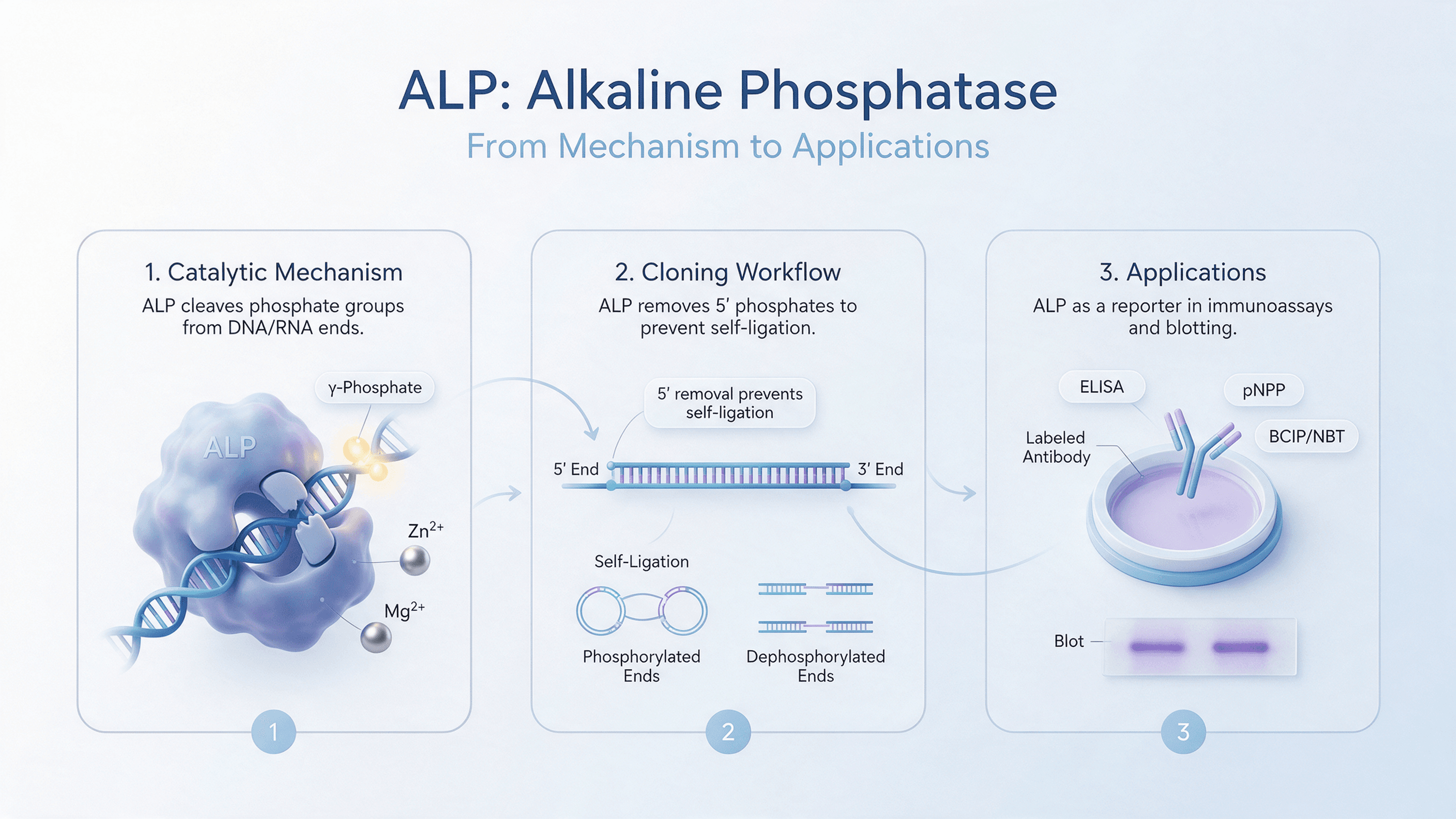
figure1. Overview of alkaline phosphatase from mechanism to applications
1. Starting with the "Scissors": What Alkaline Phosphatase Does
Alkaline phosphatase is essentially a "phosphate scissors" that targets phosphate groups on molecules and removes them in alkaline conditions. The simplest problem it solves is this: some molecules stick to themselves when they carry a phosphate, which blocks joining; removing the phosphate fixes the issue.
1.1 A plain-language analogy: peeling the sealing tape on a parcel
Imagine DNA ends you want to join, each covered by a layer of "sealing tape," which is the phosphate group. If you do not peel it off, the two ends of the vector glue back to themselves (self-ligation), leaving no room for the insert. Alkaline phosphatase acts like a dedicated parcel-knife that peels the phosphate seal off both vector ends so they cannot close on their own and must wait for the insert to ligate. That is its most classic value in gene cloning.
1.2 Standard definition and class
The standard definition: Alkaline Phosphatase (ALP; EC 3.1.3.1) belongs to the phosphomonoester hydrolases, catalyzing the hydrolysis of phosphomonoesters to release inorganic phosphate (Pi). The word "alkaline" refers to its highest activity at alkaline pH. In vivo it participates in phosphate metabolism; in research and detection it is used as a dephosphorylation tool or a signal-amplifying reporter.

figure2. Zinc and magnesium cofactor catalysis of alkaline phosphatase
2. Mechanism: A Two-Metal "Scissors" with Zinc and Magnesium
The catalytic core of alkaline phosphatase relies on metal ions in the active site, especially zinc ions (Zn2+) acting as a Lewis acid to assist substrate hydrolysis, with magnesium (Mg2+) stabilizing and modulating the process. Without these ions the "scissors" largely stop working.
2.1 A plain-language cycle
Picture alkaline phosphatase as a "scissors with a clamp." The substrate phosphate is first captured in the active site, where zinc grips the phosphate oxygen and helps a water molecule launch a nucleophilic attack, hydrolyzing the phosphate group. The enzyme itself is not consumed and returns to its original state, so one enzyme can repeatedly "cut" many substrate molecules.
2.2 Professional mechanism and structural points
At the professional level, the active site typically contains two zinc ions and one magnesium ion. Zinc acts as a Lewis acid, polarizing the phosphoester bond and lowering the hydrolysis barrier; magnesium participates in bridging and conformational stability. Optimum pH generally falls near 9–10, differing slightly by source (mammalian, bacterial, shrimp). The products are inorganic phosphate (Pi) and dephosphorylated substrate. Chelators strongly inhibit the enzyme: EDTA chelates metal ions and inactivates activity.
2.3 Understanding snag: why it prefers "alkaline"
A common snag is why the optimum is alkaline rather than neutral or acidic. This relates to the protonation state of phosphate and the metal–water system. In alkaline conditions water more readily forms the nucleophilic hydroxide species, and this class of enzyme uses hydroxide as the attacking reagent, so alkaline pH favors catalysis. Understanding this explains why reaction buffers should keep alkaline pH and sufficient magnesium and zinc.
3. Mainstream Sources and Technical Route Comparison
Commercial alkaline phosphatase mainly falls into calf-intestinal (CIP), recombinant (rAP), shrimp (SAP) and bacterial (BAP) classes, differing in heat-lability, specific activity, storage and application. When choosing, first ask whether heat-inactivation is needed, then decide the source.
3.1 Calf-intestinal alkaline phosphatase (CIP): classic but not heat-labile
Calf Intestinal Alkaline Phosphatase (CIP/CIAP) is the classic molecular-cloning dephosphorylation tool, purified from calf intestinal mucosa. It removes 5' phosphate from DNA, RNA and nucleotides. Its strengths are high activity and mature supply; its weakness is poor heat tolerance, so it cannot be inactivated simply by heating — reaction cleanup requires phenol extraction or column purification, or it will interfere with downstream ligation or digestion. Improved heat-labile variants (e.g. Quick CIP) address this shortcoming.
3.2 Recombinant alkaline phosphatase (rAP): stable batches and convenience
Recombinant Alkaline Phosphatase (rAP) is produced via genetic engineering, so the source and process can be standardized, giving better batch consistency and supply-chain control. It is often engineered to be heat-labile and is fully inactivated after short heating around 65°C, eliminating tedious cleanup and suiting high-throughput cloning workflows. Compared with CIP it often offers better specific activity and workflow convenience.
3.3 Shrimp alkaline phosphatase (SAP) and bacterial alkaline phosphatase (BAP)
Shrimp Alkaline Phosphatase (SAP) is also a heat-labile dephosphorylation enzyme, inactivated by brief heating for easy handling. Bacterial Alkaline Phosphatase (BAP) comes from bacteria, offering high thermal stability and strong activity, but it is hard to heat-inactivate and requires phenol extraction, normally reserved for high-intensity processing. Together SAP and BAP complement each other on convenience versus strength.
4. Key Influencing Factors and Constraints
For stable activity, consider five dimensions simultaneously — pH, metal ions, temperature, substrate and detergent compatibility. Losing control of any one can derail the result.
4.1 pH and buffer
Reactions run in mildly alkaline buffer with pH roughly 9–10. Buffer type (e.g. Tris, glycine) must be compatible with both enzyme and substrate; pH too high or too low depresses activity.
4.2 Metal ions and chelators
Zn2+ and Mg2+ are essential cofactors. Avoid excess chelators such as high EDTA that bind these metals. Conversely, sometimes Mg2+ should be added to buffer to restore or stabilize activity.
4.3 Temperature and inactivation strategy
Heat tolerance varies widely by source. Heat-labile types (Quick CIP, SAP, rAP) resist heat poorly, so heating inactivates them; heat-stable types (BAP) need stronger termination.
4.4 Substrate matching
Substrates include pNPP (quantitative colorimetric) and BCIP/NBT (blot development). Match the substrate to the application: pNPP for activity quantification, BCIP/NBT for color localization.
4.5 Understanding snag: why "inactivation" is the key selection issue
Many users overlook how to quickly terminate the reaction. If the enzyme cannot be inactivated under mild conditions, downstream ligation, digestion or detection suffers. So the heat-labile, easy-to-inactivate property is precisely why modern molecular cloning increasingly replaces traditional CIP.
5. System Adaptation: From Molecular Cloning to Immunodetection
Across different systems alkaline phosphatase plays the same role — removing phosphate or amplifying signal — but substrate, buffer and termination strategies differ.
5.1 Molecular cloning
In vector construction, digest a vector with a restriction enzyme to linearize it, then use ALP to remove 5' phosphates. The dephosphorylated vector cannot self-ligate but will ligate to a phosphorylated insert, notably raising recombinant yield. Steps usually include digestion, dephosphorylation, inactivation (or purification), ligation and transformation.
5.2 Immunoassay and blotting
In ELISA and immunoblotting, ALP is conjugated to antibodies as a reporter. After adding pNPP or BCIP/NBT substrate, the enzyme removes phosphate, generating color or precipitate to quantify or localize the target. Compared with horseradish peroxidase (HRP), ALP color systems (especially BCIP/NBT) differ in sensitivity and stability; choice depends on platform and readout.
6. Industrialization Bottlenecks and Optimization
Scaling from lab to industry, challenges concentrate on batch consistency, purification yield and activity stability; optimization routes are recombinant expression, immobilization and process standardization.
6.1 Lab, pilot and industrial differences
Lab scale focuses on activity and substrate matching; pilot scale introduces fermentation expression and purification-process validation; industrial scale shifts to cost, batch consistency, supply-chain stability and regulatory compliance. Metrics differ by phase, so selection and process parameters need separate calibration.
6.2 Common issues and countermeasures
Common issues: large activity batch-to-batch fluctuation for natural sources, unstable specific activity after expression, metal cofactor loss during purification, and insufficient thermal stability causing storage and shipping loss. Countermeasures include recombinant sources with fixed expression and purification processes, maintaining metal ions in buffers, and developing immobilized or lyophilized formulations to enhance storage/transport stability.
6.3 Understanding snag: why "specific activity" matters more than "units"
Many procurement teams look only at "units," but units do not reflect purity or batch consistency. What really drives industrial decisions is specific activity (activity per mg protein) and batch coefficient of variation. Higher, more stable specific activity means less material for the same capacity and more controllable process.

figure3. Alkaline phosphatase selection flowchart
7. Selection: Which Alkaline Phosphatase to Choose
The selection priority is "decide inactivation strategy first, then source, then specification and consistency."
• For routine molecular cloning with a simple workflow, prefer heat-labile types (Quick CIP-class, rAP, SAP) that inactivate on heating.
• For high-activity, high-intensity processing where purification is acceptable, choose heat-stable sources such as BAP.
• For detection, colorimetry or reporter quantification, focus on substrate matching and batch-specific activity stability.
• In all cases, request specific activity, purity, batch-consistency statements and quality-control parameters such as endotoxin.
8. MATWINGS MALL Custom Tool Enzyme Solutions
MATWINGS MALL offers custom development for alkaline phosphatase, focusing on system adaptation and batch consistency rather than only selling standard stock.
8.1 Why custom development is needed
In peptide, nucleic acid or complex sample systems, off-the-shelf enzymes often cannot balance buffer compatibility, metal-ion tolerance and specific activity. When existing products fail to fit your system, custom development can tailor the source, inactivation strategy and substrate adaptation to the scenario, avoiding an enzyme that "does not work in your hands."
8.2 Focus of custom development
l Source and expression: recombinant, controllable sourcing, improved batch consistency.
l Inactivation strategy: heat-labile or heat-stable options matched to the workflow.
l Metal cofactors and buffer compatibility: optimized for specific buffers and substrates.
l Specific activity and purity: aligned with industrial release criteria.
8.3 From lab to industrialization
MATWINGS MALL helps you calibrate process parameters gradually across lab, pilot and industrial phases, turning "usable enzyme" into "scalable, batch-stable enzyme," with verification support for your scenario.
For tailored alkaline phosphatase screening or custom development, visit the MATWINGS MALL product page and expert center to discuss a scenario-fit solution.
9. Frequently Asked Questions (FAQ)
9.1 What is the difference between alkaline and acid phosphatase?
Alkaline phosphatase is most active at alkaline pH, while acid phosphatase (e.g. prostatic acid phosphatase) is most active at acidic pH. Their optimum pH, substrates and physiological roles differ, so they cannot be used interchangeably.
9.2 Why does my vector still fail to ligate after adding alkaline phosphatase?
Common causes are incomplete inactivation, insufficient dephosphorylation time, or low activity from missing zinc and magnesium. Check reaction pH, supplement metal ions, and make sure to fully inactivate or purify afterward.
9.3 Which should I choose, CIP or recombinant alkaline phosphatase (rAP)?
If you want a simple workflow, prefer heat-labile rAP or Quick CIP and inactivate by heating; if you prefer the traditional route and accept phenol extraction, use CIP. The core trade-off is convenience versus maturity.
9.4 What are the typical optimum reaction conditions?
They vary by source; most have optimum pH near 9–10 and require Zn2+ and Mg2+. In practice, follow the manufacturer's buffer and temperature instructions.
9.5 Can alkaline phosphatase be used in clinical testing?
Yes. Serum or body-fluid ALP activity measurement is a common clinical marker, often referenced in hepatobiliary and bone-metabolism evaluations. ALP isoenzyme testing can help localize tissue origin.
Conclusion: Put the "Scissors" to Good Use
Alkaline phosphatase focuses on one task — trimming phosphate — yet it runs through molecular cloning, immunodetection and clinical diagnostics. Understanding its dependence on zinc and magnesium, its alkaline optimum, and the common "heat-inactivation" selection fork helps avoid pitfalls in both experiments and processes.