Dialogue is R&D: How a Protein Innovation Platform Makes Protein Design Accessible
Published on May 18, 2026
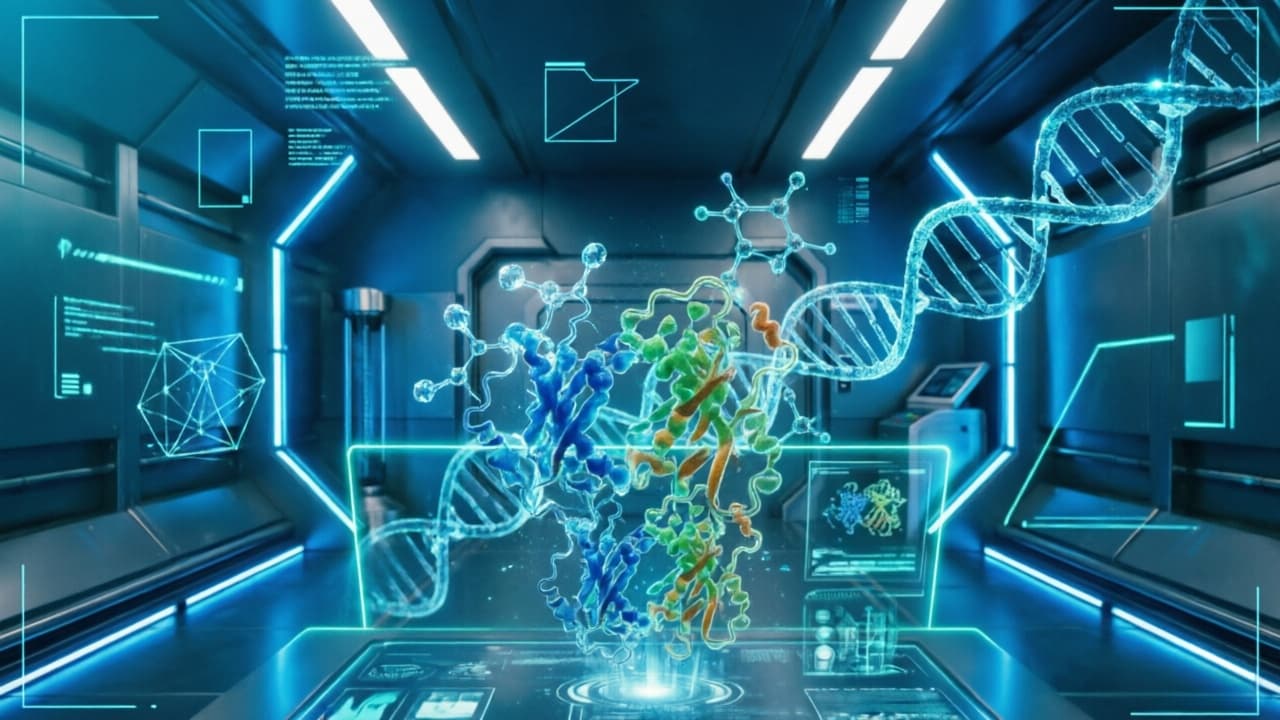
From months of wet-lab experiments to designing proteins with a single sentence, this transformation is rewriting the fundamental logic of biomanufacturing.
Proteins are the most basic 'chips' in the life sciences field—from anti-cancer antibody drugs to green biocatalysts, from artificial sweet proteins to biodegradable biomaterials, proteins are everywhere. However, designing a truly functional protein has long been a complex task that gives scientists headaches.
In the past, whether by repeatedly screening through directed evolution or relying on computational tools for simulation and design, going from concept to obtaining a usable protein molecule often required months or even years. This not only demanded expensive experimental equipment and interdisciplinary professional teams but also relied heavily on inefficient 'trial and error'—design, synthesize, test, then redesign, resynthesize, and retest.
Today, however, an AI-driven revolution is upending all of this. Protein innovation platforms, as the core vehicle of this transformation, are upgrading protein R&D from a 'craft' to a set of engineering- and scalable industrial systems.
Part.01
One sentence allows AI to run the entire process for you.

MatwingsVenus™ 晓鹜™
The so-called 'protein innovation platform' is essentially a comprehensive tool system formed by deeply integrating the predictive and generative capabilities of artificial intelligence with the actual industrial demands of protein research and development. It is no longer just an auxiliary computational software but an intelligent R&D infrastructure capable of understanding research goals, autonomously breaking down tasks, scheduling computational resources, driving experimental validation, and feeding back data into the model for iterative optimization.
A typical example is the conversational protein R&D agent MatwingsVenus™ (Xiaowu™), officially released by Shanghai Matwings Technology in April this year.
The underlying logic of MatwingsVenus™ (Xiaowu™) is to condense the complex scientific research processes that previously required multiple teams to 'hand off' tasks into a single natural language conversation. Specifically, users only need to input the task goal on the platform like a regular chat—’Help me design a new high-affinity binding protein for a certain immune regulatory target’—and the system will automatically perform a series of tasks including industry research, retrieval of billions of protein tag data, protein sequence and structure design, automated experimental validation, and even real-time expert collaboration.
This means that tasks that previously required collaboration among computational biologists, structural biologists, wet lab teams, project managers, and others can now be initiated and followed up in real-time through natural language dialogue using only a computer or mobile phone, covering the entire protein design process.
Part.02
‘Dry-Wet Closed Loop’: AI designs proteins, robots validate them for you

data flywheel feedback
The core capability that really distinguishes ™ MatwingsVenus™ from traditional protein design tools is that it breaks down the barrier between "dry experiments" (computing and AI design) and "wet experiments" (real-world experimental verification), forming a "conversational dry and wet closed loop".
In the traditional mode, after scientists complete the computational design, they need to manually organize the sequence and contact the outsourcing laboratory for synthesis and characterization, which is not only lengthy, but also very error-prone in the information transmission chain. MatwingsVenus's™ ™ approach is that after the AI completes the design, the platform directly imports the results into the plasmid ordering and experiment orchestration process through a self-built communication mechanism, automatically drives the laboratory robot to complete sample preparation, protein purification and functional detection, and finally returns the experimental data to the AI model for the next round of iterative optimization.
This is a typical "data flywheel" effect - every wet experiment feedback is making the AI model more "smart"; and each model iteration can output a higher quality design sequence, thereby continuously improving the experimental hit rate.
Part.03
Case talk: AI design protein is no longer just a matter of paper
No matter how advanced the theory is, it ultimately depends on the landing effect. The MatwingsVenus™ platform has completed the validation of several real-world projects in the field of innovative drugs ™ and synthetic biology.
In the de novo design project of the immunomodulatory receptor target, the target lacks a molecular reference for similar drugs, the surface is dominated by polar regions, lacks typical highly druggable binding hotspots, and the natural ligand already has nM-level high affinity - it is extremely difficult to design a new binding protein molecule from scratch. Relying on the MatwingsVenus™ ™ platform, Matwings Technology takes the target structure and functional requirements as inputs, and automatically completes the whole process calculation such as skeleton screening, interface design, sequence optimization, and druggability prediction by AI, and quickly outputs high-quality design sequences. In the in vitro cell activity experiments, dozens of molecules prepared by the automated experimental platform have clear cell blocking activity, and have both functional inhibition and high affinity potential.
In the field of synthetic biology, the platform has also carried out multiple rounds of iterative modification of the sweet protein Monellin. Natural Monellin is less stable and susceptible to pH, temperature, and storage conditions. MatwingsVenus™ adopted ™ the closed-loop strategy of "AI design-automated experiment-AI feedback-redesign" to optimize round by round, and finally the sweetness of multiple samples was increased by more than ten times compared with the wild type, and the heat resistance was maintained at a high range of about 75°C.
These cases reflect a signal that AI-driven protein innovation platforms are upgrading from "auxiliary research tools" to "actual output engines for protein products".
Part.04
From “Platform-Driven” to “Accessible to Everyone”
It is worth mentioning that MatwingsVenus™ (Xiaowu™) also represents an important shift in the field of protein innovation—the democratization of scientific research.
Hong Liang, founder and chief scientist of Matwings Technology, mentioned in an interview that the emergence of AI combined with automation tools is allowing certain research skills that previously required high cost and high barriers to move 'off the pedestal.' While this may eliminate some traditional positions, it is bound to inspire more individuals and small teams to pursue personalized innovation and produce more outstanding products.
This assessment is not empty talk. The MatwingsVenus™ (Xiaowu™) platform not only integrates over 200 protein design tools and the ability to search tens of billions of real labeled data, but it also introduces more than 50 platform-certified experts and over 30 specialized skills optimized by experts in various fields. Individual users can complete the entire process from design to validation on the platform in a one-stop manner without building their own computing clusters or purchasing expensive laboratory equipment—something that was almost unimaginable in the past.
Of course, for AI-designed proteins to reach true industrial application, they still need to go through a series of processes such as pilot-scale process optimization, production scale-up, and regulatory approval. But judging from the capabilities already demonstrated by platforms like MatwingsVenus™ (Xiaowu™), the intelligent R&D model of 'design is validation, validation is iteration' has already greatly shortened the path from concept to molecule.
Conclusion

The Era of Protein Innovation Pioneers
At a time when biomanufacturing is widely regarded as a key support for the 'third biotechnology revolution,' protein innovation platforms are playing an increasingly important role. It is not only a set of tools but also a completely new research and development model—using AI computing power to save the 'trial-and-error cost' of experiments, using 'conversational' interaction to lower technical barriers, and using a 'dry-wet closed loop' to accelerate product implementation.
It can be foreseen that, as more such one-stop protein innovation platforms mature, protein design, once a highly specialized 'science,' is truly becoming engineered and accessible to the public. One day in the future, designing a customized functional protein may be as simple as developing a mobile app today.
The era of being a 'creator' in protein innovation is only just beginning.