Professor Hong team at Shanghai Jiao Tong University has created a protein "toolbox" to design functional proteins using AI.
Published on April 30, 2026
CCTV News Channel's special program "Technology Driving Force" featured an interview with Professor Hong Liang of Shanghai Jiao Tong University, showcasing his team's independently developed Venus series of protein function design models.
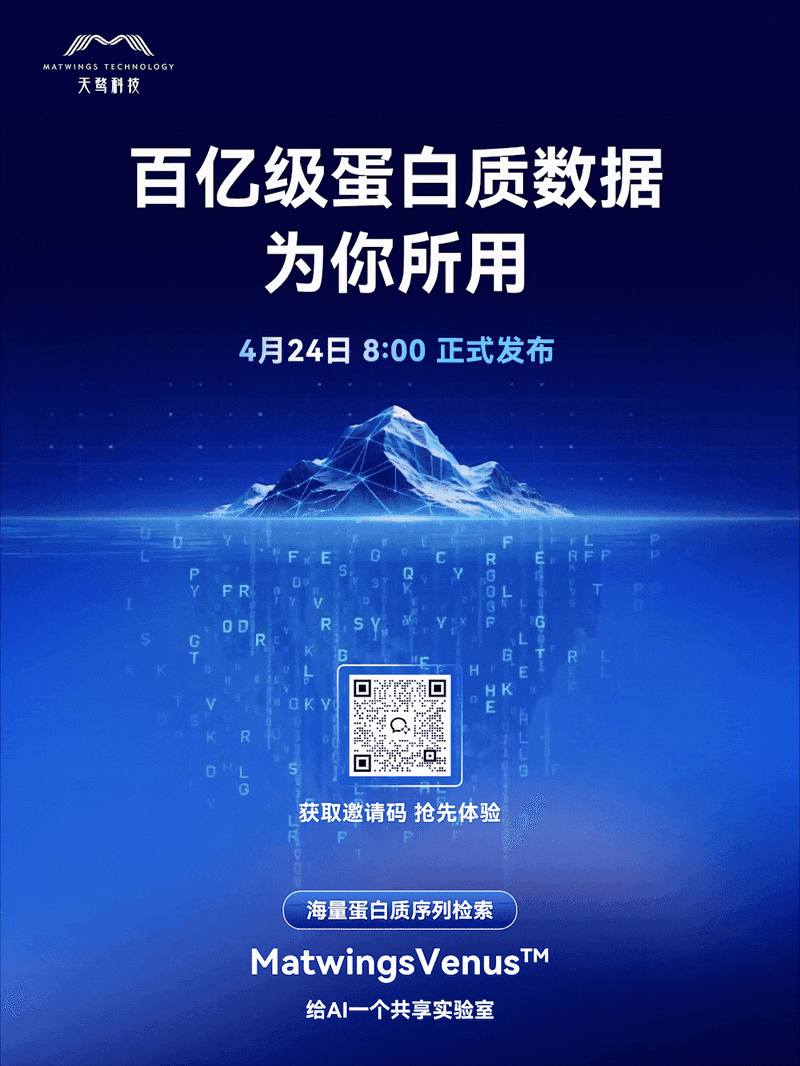
Professor Hong's team built Venus-Pod, the world's largest protein dataset, containing nearly nine billion sequences and hundreds of millions of functional labels. These sequences not only cover conventional organisms but also include proteins collected from extreme environments such as the Mariana Trench and volcanoes, demonstrating their resistance to high temperatures, pressures, and acids/alkalis. It encompasses almost all protein data in nature, serving as a "toolbox" for the Venus model to create proteins. Venus models trained on this dataset can quickly and efficiently optimize and modify proteins to meet various industrial needs.
In the CCTV interview, Professor Hong explained that the Venus series models have read a large number of protein amino acid sequence composition patterns and corresponding functional labels. It understands the characteristics of proteins resistant to strong alkalis and those resistant to high temperatures. When a common protein lacks these characteristics, the model can add the corresponding features, thereby designing the protein's function.
The Venus series of models possesses two core capabilities: first, "AI-driven enzyme discovery," which searches the world's largest protein sequence dataset for potential proteins that meet specific functional requirements, such as super-powerful proteins that are resistant to stomach acid and high temperatures; and second, "AI-driven directed evolution," which enhances and optimizes the performance of existing proteins, such as improving stability and activity. These optimized proteins have enormous application potential in biomanufacturing, pharmaceutical research and development, and industrial production.
Currently, Venus serves nearly 30 domestic and international biotechnology/pharmaceutical companies, successfully modifying and optimizing over 30 proteins, eight of which have already been industrialized. For example, an antibody that was originally prone to inactivation in highly alkaline environments during production has seen its stability improved fourfold after AI modification, saving the company tens of millions of yuan annually. Another enzyme used for the detection of acute pancreatitis has been optimized to cost only 10% of similar international products and has already achieved large-scale production at a rate of 1000 kg.