
Xylanase Mining and Engineering: From Nature to Industrial Enzymes
Published on October 28, 2026
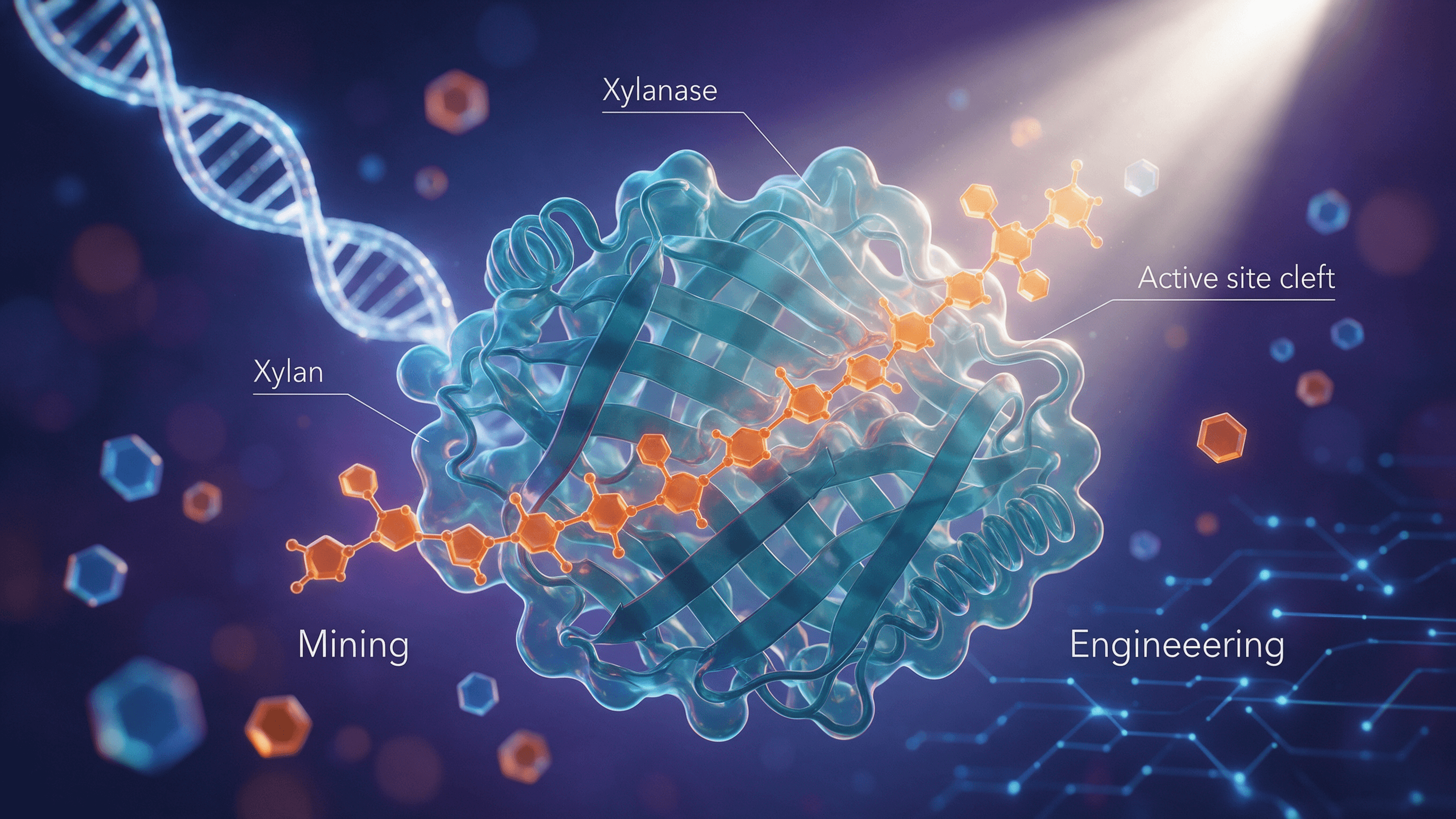
Figure 1 | xylanase mining and engineering
Xylan, the principal hemicellulose of plant cell walls, must be cleaved by a precise molecular "scissors" to become fermentable sugars, xylooligosaccharides (XOS) or high-quality fibre: the xylanase (EC 3.2.1.8, endo-1,4-β-xylanase). It specifically hydrolyses the β-1,4-xylosidic linkages of the xylan backbone and is a key industrial enzyme across pulp & paper, animal feed, food and biofuel value chains. This article follows the two threads of "mining" and "engineering": the enzyme families, the catalytic mechanism, assay and selection, and how AI-directed evolution coupled with a dry-wet closed loop turns natural enzymes into more thermostable, better-adapted, higher-activity industrial catalysts.
Background & mechanism: why xylanase is an industrial "all-rounder"
Xylan is the dominant hemicellulose in plant cell walls and is highly variable (substituted with arabinose, glucuronic acid and more), so full deconstruction requires a co-operating enzyme system. The xylanase acts on the backbone and is the central enzyme. As an O-glycoside hydrolase, xylanase (EC 3.2.1.8) cleaves β-1,4-xylosidic linkages endo-wise, producing xylooligosaccharides of varying degree of polymerisation plus xylose.
Per the CAZy (Carbohydrate-Active enZymes) database, endo-β-1,4-xylanases span several glycoside hydrolase families — GH5, GH7, GH8, GH10, GH11, GH30, GH43, GH51 and GH141; GH10 and GH11 together account for nearly 90% of characterised endoxylanases.
GH10 enzymes are mostly bacterial, adopt a TIM-barrel fold and show broad substrate specificity, often used in lignocellulose bioconversion. GH11 enzymes are smaller, adopt a "jelly-roll" (β-sandwich) fold and are more specific for xylan, serving food, feed and paper applications that require controlled modification of polysaccharide structure.
Industrial needs vary widely — thermostability, alkali tolerance, inhibitor resistance and compatibility with process pH/temperature — and naturally occurring xylanases are rarely "born" perfect. That is exactly where "mining + engineering" comes in.
Principle & structure: the retaining mechanism and the GH11 active site
Xylanase uses a retaining (double-displacement) mechanism: one catalytic glutamate acts as the nucleophile and attacks the glycosidic bond, forming a covalent glycosyl-enzyme intermediate; a second glutamate acts as the general acid/base, first protonating the leaving group and then activating a water molecule to complete hydrolysis, releasing product and regenerating the enzyme.
Take the high-resolution GH11 structure PDB 6Y0H (from the fungus Fusarium vanettenii, 1.0 Å) as an example. Its active site lies in the cleft of the jelly-roll fold, with the catalytic nucleophile Glu89 and the acid/base Glu180 located on either side (numbering per the PDB structure). Once the xylan chain enters the cleft, the two glutamates cooperate to complete hydrolysis.
Understanding the geometry and flexibility of the active site is the starting point for judging "which positions can be changed and where to change them" — the basis of structure-guided engineering.

Figure 2 | GH11 xylanase structure (PDB 6Y0H)
Assay & selection: how to evaluate and screen xylanases
Xylanase activity is commonly measured by the DNS (3,5-dinitrosalicylic acid) reducing-sugar assay: using birchwood or oat-spelt xylan as substrate, reacting at a chosen pH/temperature, then quantifying the reducing sugars released by DNS colour development and converting to enzyme activity units.
Chromogenic substrates (e.g. Remazol Brilliant Blue-xylan, AZCL-xylan) enable high-throughput screening. Industrial selection also considers the optimal pH and temperature, thermostability (e.g. T50, half-life), substrate specificity (degradation product profile) and inhibitor tolerance.
In practice, GH11 is often chosen for food, feed and paper because of its small size and high selectivity, while GH10 — broader specificity and good synergy with xylanolytic enzymes — suits bioconversion. The final choice follows the target process pH, temperature and substrate.
Assay and selection are the prerequisite for engineering: without reliable activity and stability measurement, the dry-wet loop cannot provide meaningful iterative feedback.
Conditions & process: from mining, engineering to industrial use
Mining: candidate xylanase genes are obtained by screening soil, compost and extreme environments (thermophilic/alkaliphilic microbes) and metagenomes, or by sequence (BLAST) and structure-based comparison, then assembled into a candidate library using public databases and structural resources.
Engineering targets: thermostability (longer half-life, higher reaction temperature), pH adaptability (retaining activity in alkaline pulp bleaching or acidic food processes), catalytic activity and substrate specificity, as well as inhibitor and product tolerance, to match specific process conditions.
Method: AI-directed evolution — models (e.g. VenusX functional-site prediction, VenusREM single-point scanning, VenusPrime multi-point epistasis modelling) first shortlist potentially beneficial mutations, then wet-lab expression, assay and validation confirm them, forming a closed loop of "dry-lab prediction → wet-lab validation → data feedback and retraining".
Process coupling: the final enzyme must match the process pH, temperature, substrate loading, residence time and inhibitor environment; iterative engineering yields variants that function reliably in pulp & paper, feed, food and biofuel settings.

Figure 3 | Xylanase mining and engineering workflow
How MatwingsVenus® (晓鹜®) empowers: a dry-wet closed loop for xylanase mining and engineering
MatwingsVenus®(晓鹜®)integrates "AI prediction + wet-lab validation" into a dry-wet closed loop covering mining, design and validation: VenusX for functional/active-site and engineering-map prediction, VenusREM for single-point scanning of activity/stability/expression, and VenusPrime for multi-point epistasis modelling — paired with a wet-lab platform for expression, purification and activity/stability measurement.
This closed loop rapidly converges a vast pool of natural xylanases to a few variants worth synthesising, cutting wasted synthesis and experimental rounds and dramatically accelerating the journey from "discovered" to "deployed".
If you are screening, engineering or adapting xylanases for industry, explore MatwingsVenus®(晓鹜®)services and platforms.
FAQ: common questions about xylanase mining and engineering
1. What is xylanase?
Xylanase (EC 3.2.1.8, endo-1,4-β-xylanase) specifically hydrolyses the β-1,4-xylosidic linkages of the xylan backbone and is a core enzyme in plant lignocellulose deconstruction and industrial bioconversion.
2. What is the difference between GH10 and GH11 xylanases?
GH10 enzymes are mostly bacterial, use a TIM-barrel fold and have broad substrate specificity, commonly applied to lignocellulose bioconversion. GH11 enzymes are smaller, use a jelly-roll fold and are more specific for xylan, commonly applied to food, feed and paper where controlled polysaccharide modification is needed.
3. Why "mine" new xylanases?
Natural xylanases often cannot directly satisfy industrial processes (e.g. alkaline bleaching, high-temperature hydrolysis, low-pH food processes) regarding thermostability, pH adaptation, activity and inhibitor tolerance, so bioprospecting and sequence/structure mining are used to obtain more candidates.
4. What properties are mainly improved in xylanase engineering?
Mainly thermostability, pH range, catalytic activity and substrate specificity, plus inhibitor resistance, product-feedback tolerance and compatibility with process conditions (temperature, pH, substrate).
5. How does AI accelerate xylanase mining and engineering?
AI (e.g. VenusX functional-site prediction, VenusREM single-point scanning, VenusPrime multi-point epistasis modelling) scores candidate mutations in bulk and shortlists the most promising ones, which are then confirmed by wet-lab validation, shortening iteration cycles and reducing wasted synthesis.
6. Which industries mainly use xylanase?
Pulp & paper (reduced chlorine in bleaching, higher yield), animal feed (better nutrient digestibility), food (baking, juice clarification, XOS prebiotics), biofuel/lignocellulose saccharification, and textile and detergent applications.
Summary
Xylanase mining and engineering is, at heart, about finding "seeds" in nature and then polishing them into "instruments" that match industrial processes using structural analysis, reliable assays and AI-directed evolution. The GH10/GH11 families and the double-displacement mechanism provide a clear structural and mechanistic basis; DNS and chromogenic-substrate methods provide reliable evaluation; and the "AI prediction + wet-lab validation" dry-wet loop moves mining and engineering from trial-and-error toward predictable, reusable and scalable workflows. MatwingsVenus®(晓鹜®)is ready to work with you to turn more xylanases into genuinely deployable industrial productivity.