
ProteinMPNN Protein Sequence Design: Teaching AI to Read the Protein Backbone
Published on November 3, 2026
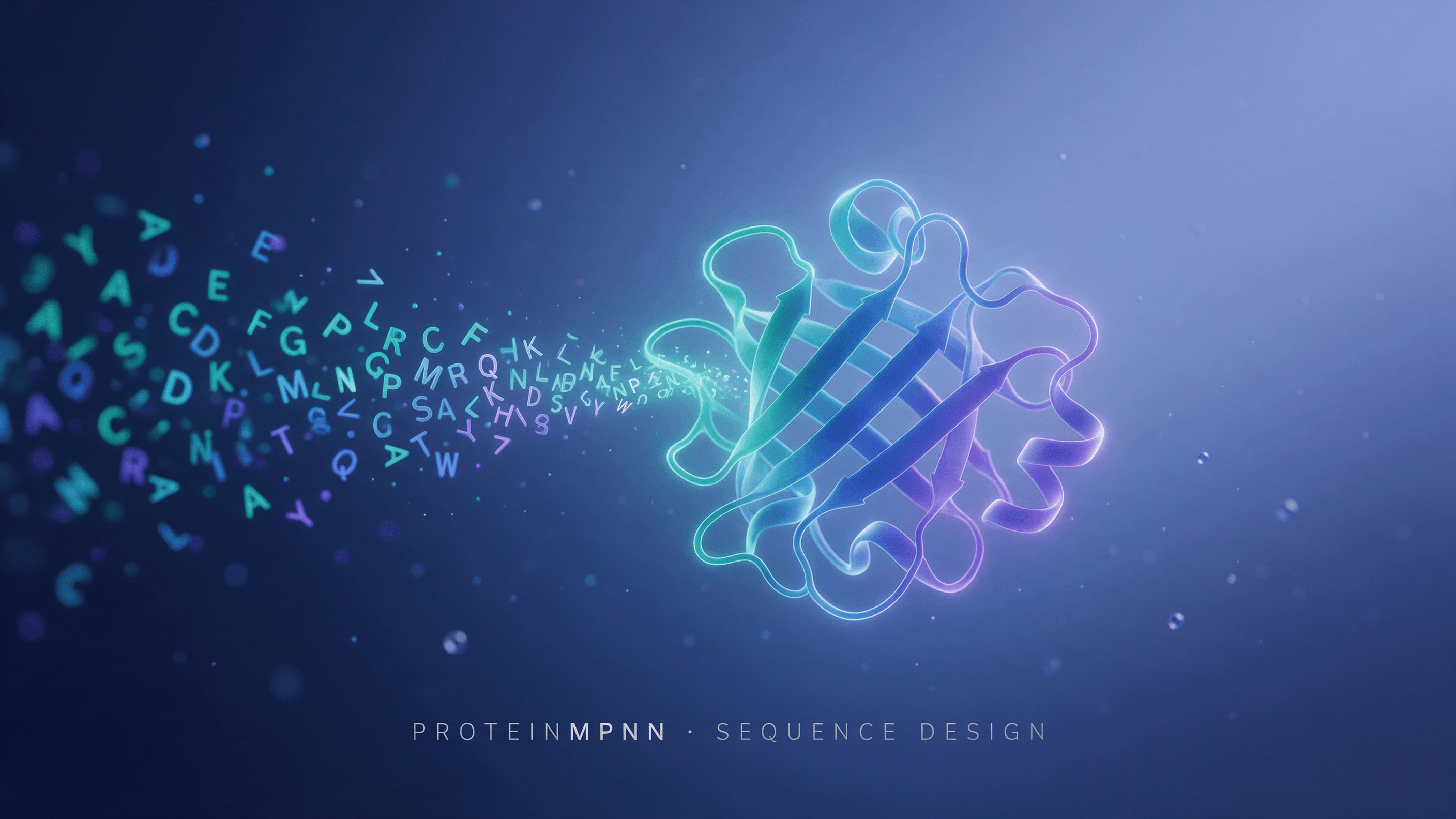
Fig 1·ProteinMPNN protein sequence design at a glance
Conventional protein sequence design relies on deep expertise and repeated trial and error: we must answer “which amino-acid sequence folds into this 3D structure, expresses well, and carries the desired function?” Deep learning now poses a more elegant question — by reversing the direction. Given a protein backbone, can an AI directly write out the sequences that fold into it? That is inverse folding, and ProteinMPNN (Protein Message Passing Neural Network) is a leading method in this direction. This article breaks down its principles, its capability limits, and how it fits into an AI closed loop for protein engineering.
1. Background / Mechanism: From Structure Prediction to Inverse Folding
Protein “sequence” and “structure” are linked by a two-way mapping problem. Structure prediction takes a sequence and predicts a structure — that is the job of AlphaFold, ESMFold and similar models. Inverse folding reverses the question: given a 3D backbone, infer amino-acid sequences that are compatible with it.
Inverse folding is hard because the answer is not unique: the same backbone can correspond to a huge number of feasible sequences, and most of them may be poorly expressed, unstable, or non-functional. The goal of sequence design is therefore not simply to “recover the native sequence” but to produce candidates with high designability — sequences that fold to the target backbone, are soluble, stable, and leave room for later functionalization. ProteinMPNN was built to address this “many solutions, multiple objectives” problem.
2. Principle / Architecture: How ProteinMPNN Works

Fig 2·ProteinMPNN inverse-folding mechanism
ProteinMPNN is a message-passing neural network (MPNN) that learns the relationship between structure and sequence as a probabilistic model. In outline:
Input is backbone geometry: each residue’s backbone atoms (N, Cα, C, O) act as nodes, with a “virtual Cβ” added to encode side-chain directionality.
Graph construction: each residue is connected to its spatial neighbors (~48 neighbors), with edge features encoding inter-atomic distances and relative pose, distinguishing intra- vs. inter-chain contacts.
Message-passing encoder: node and edge representations are updated layer by layer, letting each residue “read” its local environment.
Order-agnostic autoregressive decoding: instead of generating strictly N→C, any decoding order can be used, and arbitrary positions can be fixed as known context for more controllable designs.
Output probability distribution: a distribution over the 20 amino acids is produced per position, from which candidate sequences are sampled.
On the training side, ProteinMPNN is trained on PDB assemblies (typically limited to records with resolution better than 3.5 Å, clustered at 30% sequence identity), using native-sequence recovery as the supervision signal to learn the structure–sequence correspondence (baseline model: 3 encoder + 3 decoder layers, 128 hidden dimensions).
3. Measurement / Evaluation: How to Judge a Sequence Design
Design quality must be assessed across several dimensions, not by a single metric:
Sequence recovery: on native backbones, the literature reports ProteinMPNN at about 52%, versus about 33% for Rosetta (exact values vary by benchmark).
Key caveat: sequence recovery ≠ foldability. A single substitution can block correct folding, so high recovery is only a sign of “more native-like,” not a guarantee of success.
Computational validation: a safer route is to backfold candidate sequences with AlphaFold2-class models and compare backbone RMSD, TM-score, pLDDT against the target backbone, then filter on solubility and aggregation propensity.
Wet-lab measurement: ultimately, what matters is expression yield, solubility, oligomeric state, thermal stability, and the target activity or binding. Only by keeping computed scores strictly separate from wet-lab measurements can we avoid treating predictions as conclusions.
4. Conditions / Process: The ProteinMPNN Design Workflow

Fig 3·ProteinMPNN dry-wet closed loop in application
A typical ProteinMPNN sequence-design workflow has these stages:
Define the target backbone: a known structure, a generated backbone (from backbone generators such as RFdiffusion), or the user’s own structure.
Configure sampling: set decoding temperature, number of sequences, whether to fix positions, and desired diversity; typically output many candidate sequences on a given backbone.
Score and filter: use ProteinMPNN’s built-in sequence–structure compatibility score, then add AlphaFold2 backfolding (RMSD / pLDDT) for initial filtering.
Wet-lab validation: expression, purification, and characterization (solubility, oligomeric state, stability, activity / binding).
Iterate in a closed loop: feed wet-lab data back to refine the design strategy, forming a design–test–learn (active learning) cycle.
Points to note: the model is sensitive to crystallographic resolution; the baseline version is protein-oriented (protein–nucleic-acid and protein–ligand complexes require extended models such as LigandMPNN); and experimental success rates differ by category (for example, in a literature example 50 of 96 monomer designs reached the target oligomeric state) — all of which remind us that computational design is only a starting point, and wet-lab work plus multi-objective trade-offs matter.
5. The Role of MatwingsVenus®
MatwingsVenus® combines AI sequence design (including ProteinMPNN-class inverse-folding models) with high-throughput wet-lab experiments, data management and modeling, to build a dry-wet closed-loop platform: it shifts users from manual trial-and-error to a sustainable compute-design → experiment-verify → data-learn cycle, shortening the path from candidate to developable molecule, and cross-checking every computed result against measured data.
Related products / services:
· expert-center custom services
· dry-wet-closed-loop-platform
6. Frequently Asked Questions (FAQ)
1. What is ProteinMPNN?
ProteinMPNN is a deep-learning model based on a message-passing neural network used for protein inverse folding: given a protein backbone, it predicts amino-acid sequences that fold into it.
2. Can ProteinMPNN predict protein structure?
No. ProteinMPNN performs inverse folding (structure→sequence); structure prediction (sequence→structure) is the role of AlphaFold, ESMFold and similar models. The two are complementary.
3. Is higher sequence recovery always better?
Not necessarily. Recovery is only an indicator of “more native-like” and does not equal foldability; a single substitution can block folding, so backfolding and wet-lab data should be combined.
4. What types of proteins can ProteinMPNN design?
The literature reports coverage of monomers, cyclic oligomers, protein nanoparticles, protein–protein interfaces, and binder design, among others.
5. What input does ProteinMPNN need?
It needs the 3D coordinates of a protein backbone (typically backbone atoms, often with a virtual Cβ for side-chain direction), from a known structure, a structure prediction, or a generated backbone.
6. Can ProteinMPNN predict binding affinity?
It cannot directly output binding affinity; that requires additional scoring/modeling or experiment. Combining model scores with measured data is more reliable.
7. Does it apply to protein–nucleic-acid or protein–ligand complexes?
The baseline is protein-oriented; protein–nucleic-acid and protein–ligand complexes usually require extended models (such as LigandMPNN) or a dedicated docking / association workflow.
7. Summary
ProteinMPNN protein sequence design hands one of the most time-consuming parts of protein engineering to deep learning: it uses a message-passing network to understand backbone geometry, then an order-agnostic autoregressive decoder to emit candidate sequences, iterating with backfolding validation and wet-lab work. It does not replace structure prediction nor experiment — it works alongside them as the linchpin of a dry-wet closed loop. For teams that want to connect AI protein design with experimental verification, MatwingsVenus® offers an integrated path from computational design through wet-lab work and data learning.
