
How Does P450 Enzyme Engineering Turn Cytochrome P450 into an Efficient Biocatalyst?
Published on November 2, 2026
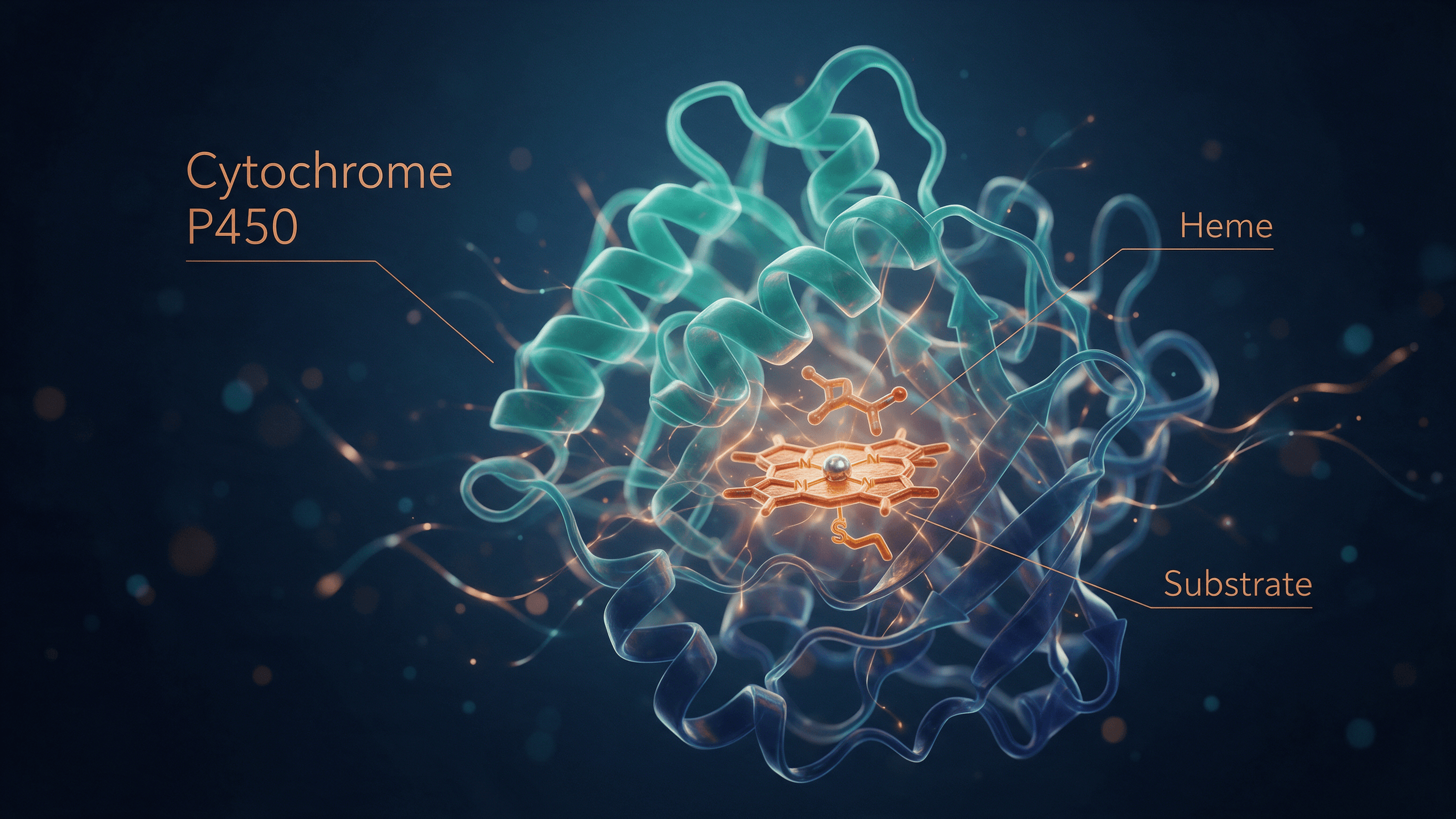
Fig. 1 P450 enzyme engineering panorama: from natural enzymes to controllable industrial biocatalysts
In nature, many “hard-to-oxidize” carbon–hydrogen bonds require extremely harsh chemical conditions to be activated. A family of enzymes named after “450 nanometres” can accomplish these oxygenation reactions under mild, ambient conditions: the cytochromes P450 (CYP).
However, native P450s are often low-activity, insufficiently stable and narrow in substrate scope, making them hard to industrialize directly. P450 enzyme engineering systematically turns these “natural enzymes” into “industrial enzymes” through modification, screening and directed evolution — and, combined with AI design, it is making this journey increasingly predictive.
1. What Is P450 and Why Do We Need Enzyme Engineering?
P450 enzymes are a superfamily of heme-containing oxidases, found in virtually all organisms, where they oxidize steroids, fatty acids and xenobiotics (drugs, toxins, environmental pollutants). They are named after the characteristic absorption band at 450 nm that appears when the reduced enzyme binds carbon monoxide (CO).
Functionally, the most common P450 reaction is monooxygenation — inserting a single oxygen atom into a C–H bond (hydroxylation) or epoxidizing a double bond. Thanks to excellent regio- and stereoselectivity, P450s are pivotal in drug metabolism, natural-product modification, steroid hydroxylation and fine-chemical synthesis. The self-sufficient P450 BM3 (CYP102A1) fuses a heme domain and a reductase domain in a single polypeptide and is the best-known engineering “model platform”.
Native P450s also have clear weaknesses: narrow substrate scope, modest catalytic efficiency and coupling efficiency, poor heterologous expression and stability, and strong dependence on NAD(P)H. To become scalable “industrial catalysts”, P450 enzyme engineering must address these bottlenecks systematically. Related products and services are linked at the end of this article.
2. Catalytic Mechanism and Structural Basis of P450
The heart of the P450 catalytic cycle is the heme iron (Fe). The resting state is Fe(III); after substrate binding, the first electron reduces it to Fe(II), which then binds molecular oxygen to give Fe(III)–O2·−/Fe(II)–O2. A second electron and a proton drive heterolytic O–O cleavage to form the powerful oxidant “Compound I” (Fe(IV)=O porphyrin radical cation). Compound I abstracts a hydrogen atom from the substrate C–H and then “returns” the oxygen to the carbon, completing hydroxylation.
A conserved cysteine thiolate (e.g. Cys357 in P450cam) acts as the axial ligand and is essential to sustain the cycle; the proximal and distal faces of the heme plane handle electron transfer and substrate binding respectively. This “heme–iron–axial ligand–substrate” architecture is where engineering actually lands.

Fig. 2 Real P450-CAM (PDB 2CPP) active site: heme iron, substrate camphor and the axial ligand Cys357
This is a real crystal structure (cytochrome P450-CAM, PDB 2CPP) active-site render: heme (orange), iron (magenta), substrate camphor (yellow), axial thiolate ligand Cys357 (red), pocket residues (grey), protein backbone (light blue).
Structural engineering usually focuses on three interfaces: the hydrophobic volume and shape of the active pocket, the entry/exit channels for substrate and product, and the docking interface with redox partners (reductases, ferredoxins). Only after genuinely understanding these elements can one choose mutation sites “with purpose” instead of scanning blindly.
3. How to Assay and Screen P450 Activity and Selectivity?
Before engineering a P450, one must first be able to “read” its activity and selectivity. Common approaches include:
· Spectroscopy: CO-difference spectra determine P450 content; substrate-dependent absorbance or fluorescence (e.g. coumarin, resorufin-type substrates) estimates activity.
· Chromatography / mass spectrometry (GC-MS, LC-MS): directly quantifies products and by-products, the main basis for judging regio-/stereoselectivity.
· Coupled-enzyme assays: infer substrate consumption from the drop in NAD(P)H absorbance at 340 nm, or via coupling to a peroxidase.
· High-throughput screening (HTS): multi-well plates with fluorescent/chromogenic substrates support rapid screening of large variant libraries.
In practice, in vivo (whole-cell, cell lysate) results are combined with in vitro (purified-enzyme kinetics) data, and metrics such as substrate specificity, product selectivity, conversion and turnover number (TON) are distinguished, so that no single parameter over-drives the decision.
Assay conditions and specific values depend heavily on the target P450, substrate and system and cannot be generalized; values here are generic method descriptions only, with the measurement as the ground truth.
4. Engineering Strategies and Key Process Conditions for P450
P450 enzyme engineering broadly splits into rational design (structure- and mechanism-based), semi-rational design (hot-spot scanning) and directed evolution (random mutagenesis plus high-throughput screening). Recently, the “AI + wet-lab” closed loop has become mainstream: AI models first predict beneficial mutations or generate candidate sequences, then library construction and HTS produce real data, which retrains the model for the next design round.

Fig. 3 AI-driven P450 engineering closed loop
Key process conditions include:
· Expression systems: E. coli and yeast (e.g. Pichia) are common hosts; codon optimization, co-expression of chaperones and reductases, membrane anchoring or solubilization are often required.
· Cofactor regeneration: P450 relies on NAD(P)H; engineering often introduces glucose dehydrogenase-based regeneration, or uses self-sufficient systems (e.g. BM3) to cut cost.
· Reaction conditions: pH, temperature, substrate concentration, organic co-solvent/two-phase systems and dissolved oxygen all affect activity and stability, and must be optimized with mass transfer and product inhibition in mind.
· Stability and scale-up: disulfide bridges, salt bridges and surface-charge tuning improve thermal stability, and the process is gradually amplified into a bioreactor.
These are generic process directions; actual values depend strongly on the specific P450 and substrate and should be based on reproducible experimental measurements.
5. How Does MatwingsVenus® Empower P450 Enzyme Engineering?
MatwingsVenus® brings the “AI design + wet-lab closed loop” into real P450 enzyme engineering work:
· AI sequence/structure design: using protein language models and structure prediction to score positions, suggest mutations and predict solubility/stability on a P450 template, cutting down blind screening.
· Dry-wet closed loop: threading “AI suggestion → wet-lab validation → data feedback → retraining” into an iterative flywheel, so each screening round keeps accumulating useful data.
· Platform-based delivery: from target P450 gene, expression and activity characterization, to variant-library construction and high-throughput screening, all can be executed on demand by the wet-lab platform and expert center.
Specific capabilities, timelines and metrics are part of the platform’s actual service content; for cooperation, please refer to official commercial information.
▍ Related Products & Services
• Wet-lab Platform /en/products/wet-lab
• Expert Center /en/products/expert-center
• Dry-Wet Closed-Loop Platform /en/dry-wet-closed-loop-platform
6. FAQ (Frequently Asked Questions)
Q1: What does P450 enzyme engineering mainly solve?
A1: It improves activity, selectivity, stability and scalability, turning a native P450 into an industrializable biocatalyst.
Q2: Why is it called “P450”?
A2: Because the reduced P450–CO complex shows a characteristic absorption band at 450 nm; the name is unrelated to its actual catalytic function.
Q3: How to choose between directed evolution and rational design?
A3: Prefer rational/semi-rational design when structural information is rich; directed evolution fits when information is limited and the sequence space is large; AI methods often serve as an “accelerator” for both.
Q4: What is the biggest bottleneck in industrializing P450?
A4: Usually cofactor (NAD(P)H) cost, heterologous expression and stability, narrow substrate scope, plus mass transfer and substrate/product inhibition on scale-up.
Q5: Can AI replace wet-lab work?
A5: No. AI reduces futile attempts and raises hit rates, but final activity, selectivity and stability must be confirmed by wet-lab measurement.
Q6: What is the advantage of a self-sufficient P450 (e.g. BM3)?
A6: It fuses the reductase and heme domains into one chain, so a single-enzyme system needs no extra reductase machinery, which is easier to engineer and scale.
Q7: How to tell whether a P450 variant is “successful”?
A7: Usually by combining activity (TON/conversion), selectivity (regio/stereo/chemical), stability (thermal/organic solvent) and scalability, rather than any single index.
7. Conclusion
P450 enzyme engineering is driven by both mechanism and engineering: only by understanding the heme–iron–substrate mechanism can the right mutation sites be chosen; only with directed evolution and an AI closed loop can better variants be found efficiently across a huge sequence space; and only then can expression, cofactor regeneration and reaction engineering turn a “better enzyme” into a “usable industrial enzyme”.
MatwingsVenus® is dedicated to closing the loop between AI design and wet-lab validation, shortening the path from a “lab protein” to a “scalable catalyst”. The frontier methods and workflows described here are generic; specific data and performance should follow measured results or official sources.
【One-Sentence Takeaway】 P450 enzyme engineering, in essence, uses directed evolution and an AI closed loop on top of a clear understanding of the heme-iron-substrate mechanism, to make the enzyme more efficient, more stable and more controllable, turning P450 from a “lab enzyme” into a scalable industrial biocatalyst.