Innovative drug development is standing at the crossroads of a paradigm shift
Published on May 27, 2026
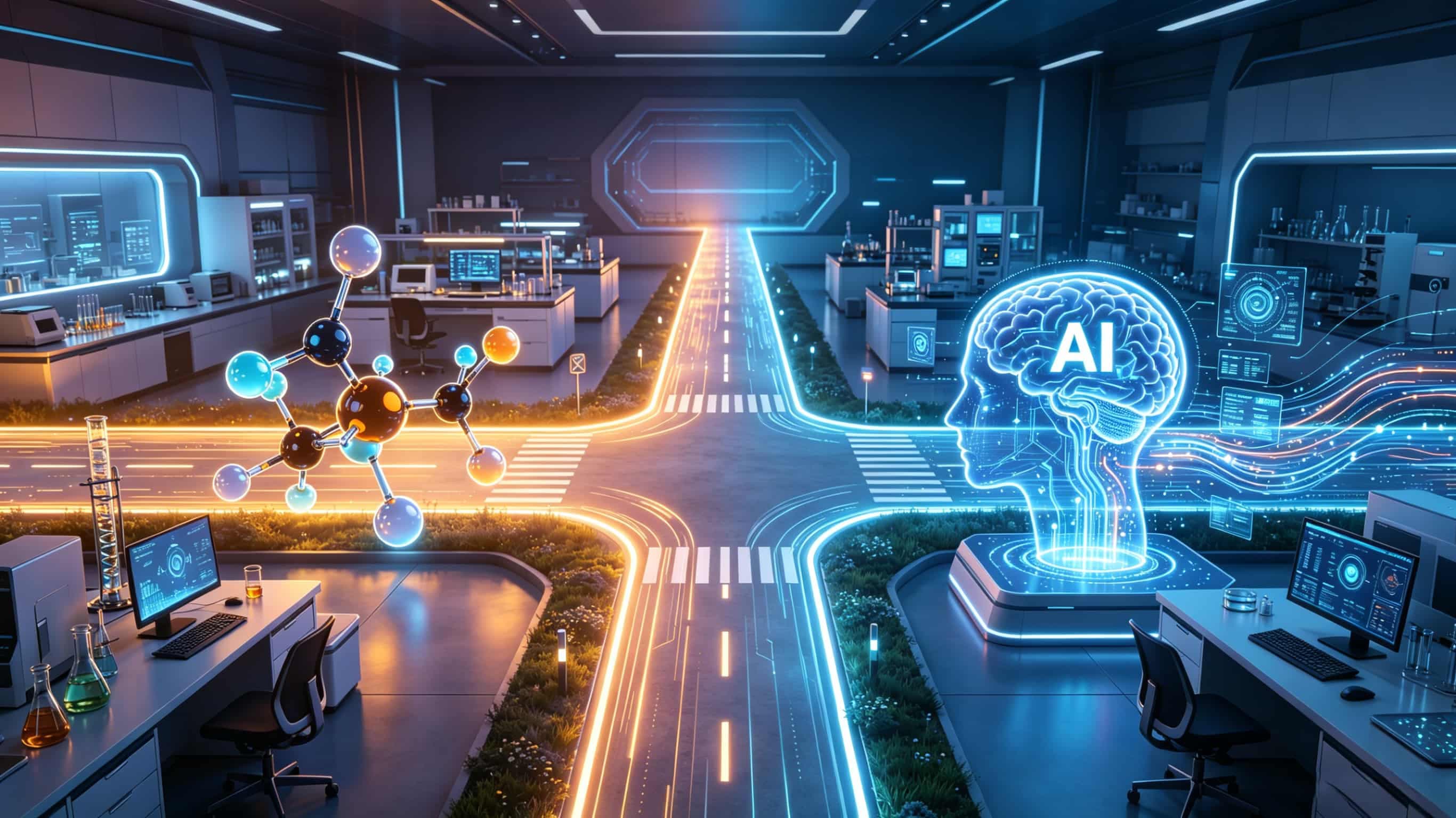
In 2026, China's innovative drug industry is undergoing a profound structural reshaping. The explosive growth of BD (Business Development) transactions is the best illustration of this. In the first quarter of 2026, the total value of innovative drug transactions in China reached $61.4 billion, accounting for nearly 70% of the global transaction volume of $88 billion. The quarterly transaction value even exceeded the total for the entire year of 2024. This is not merely a numbers game, but a 'vote with their feet' by global pharmaceutical giants on China's innovation capabilities.
However, what really deserves attention is not how high the transaction value is, but that the logic behind the transactions has changed.
From 'selling molecules' to 'selling capabilities'
Multinational pharmaceutical companies no longer treat Chinese firms as suppliers of inexpensive molecules. Among the major collaborations implemented in the first quarter, leading domestic pharmaceutical companies secured over $18 billion in platform-level deals with multinational giants, while another star innovative drug company landed nearly $9 billion in an antibody platform deal—the core subjects of these transactions are shifting from 'individual molecules' to 'technology platforms, R&D systems, and end-to-end capabilities.'
The latest KPMG China Life Sciences Industry Report corroborates this judgment: China's drug development costs are 30% to 40% lower than in the U.S. or EU, and clinical trial enrollment is 2 to 3 times faster. In the field of advanced therapies, China's advantages are even more pronounced—about 90% of global ADC licensing deals involve Chinese assets, and China accounts for roughly half of the global transactions in bispecific antibodies.
This means that China’s innovative drug sector is completing a qualitative transformation from 'following' to 'leading.' And 2026 is precisely the key year for this transformation to be tested.
AI: No longer an optional choice, but a must-have
Driving this change is another unavoidable variable—artificial intelligence, which is comprehensively reshaping the underlying logic of drug development.
According to the KPMG report, by 2025, China already had over a hundred AI pharmaceutical companies. AI's applications now cover the entire chain, from target identification, lead compound generation, and protein structure prediction to preclinical optimization, clinical development, and even commercialization execution.
However, AI-driven drug development in 2026 is facing its first major 'examination.'
The most advanced AI-designed drugs are entering Phase III key clinical trials. These data will provide, for the first time, a large-scale verification of whether AI can truly break the nearly 90% clinical failure curse in the pharmaceutical industry.
At the same time, regulatory frameworks are also being accelerated. The FDA's draft AI guidelines are expected to be officially implemented in 2026, and the high-risk provisions of the European Union's Artificial Intelligence Act will take effect in August. This means that companies using AI in key stages of drug development will face entirely new compliance requirements.
It is worth noting that at the beginning of 2026, the FDA also dropped a "bombshell": the long-standing requirement of "two adequate and well-controlled clinical trials" for drug approval was officially adjusted to a new standard of "one pivotal trial with confirmatory evidence." The FDA commissioner explicitly stated that the cost of a single pivotal trial ranges from $30 million to $150 million. Lowering the capital threshold aims to "bring down drug prices" and improve R&D efficiency.
The combination of regulatory easing and technological breakthroughs provides more opportunities for AI-assisted drug development. Industry predictions suggest that the AI drug discovery market will grow from about $5-7 billion in 2025 to $8-10 billion in 2026.
The deepest transformation: the era of "intelligent agents" in protein design.

The Age of Agents in Protein Design
Among the many scenarios where AI is permeating drug development, protein design may be the most hardcore and the most closely related to 'original innovation.'
Traditional protein design has long relied on expert experience and extensive trial-and-error experiments — a single project often requires multiple teams to work for months or even years, from literature review, patent analysis to sequence design, experimental validation, and iterative optimization, with each step heavily dependent on human effort.
By 2026, a completely new working model is emerging: 'large models, few experiments' replacing 'experience, massive trial-and-error.'
In April this year, Matwings Technology, located at 'Big Zero Bay' in Shanghai, released the conversational protein research and development AI agent MatwingsVenus™ (Xiaowu™). Users only need to describe their R&D requirements in natural language, and the system can automatically complete the entire workflow from literature review, patent search to protein sequence design, truly achieving 'what you imagine is what you get.'
The 'brain' of this system is supported by more than 200 specialized protein design tools, over 50 expert-tuned skills, and a protein database at the scale of hundreds of billions. More importantly, it does not stop at the computational level — the platform integrates AI design with automated wet lab experiments, forming a closed loop of 'design is verification, and verification is iteration.' After a user submits a design requirement, the system automatically drives robots to complete sample preparation, protein purification, and functional testing, with experimental data flowing back into the AI model for the next round of optimization.
The significance of this closed loop is that protein design has shifted from the past 'multi-team relay' sequential process to 'AI design — robotic experiment — AI iteration' parallel acceleration. For innovative drug development, what is directly shortened is the time window from target initiation to candidate molecule determination.
The platform's capabilities have already been validated in real projects. In a de novo design project targeting a certain immune-regulating receptor, Matwings Technology successfully obtained dozens of novel binder molecules with in vitro cellular blocking activity using this platform, completing the full process from scaffold screening, interface design, sequence optimization to druggability prediction.
In March this year, Matwings Technology completed over 200 million yuan in Series A financing, jointly led by China Petroleum Kunlun Capital, Shanghai Future Industry Fund, and others. The positive feedback from the capital market indicates that AI-driven full-stack protein R&D platforms are becoming the new foundation for innovative drug infrastructure.
The real test is still ahead.

Outlook for the Industry
The innovative drug industry in 2026 presents truly exciting data. But the sober voices are also worth listening to.
An increase in R&D efficiency does not guarantee R&D success. The results of Phase III clinical trials will determine whether AI technology is truly an 'accelerator' or just a 'placebo.' Some commentators point out that compounds discovered by AI do not show significant differences in advancement speed compared to traditional molecules; Phase III data may ultimately prove only a shortened R&D cycle, rather than a substantial improvement in efficacy.
Behind the celebration of going global, the financial threshold for multi-center international clinical trials remains high. A pharmaceutical executive frankly stated, 'Conducting a large Phase III trial internationally could cost around $1 billion.' This means that being ahead in molecular discovery does not equate to guaranteed commercial success.
In addition, uneven data quality, the 'black box' trust issues of AI models, and the uncertainty of regulatory frameworks are all challenges the industry needs to tackle one by one.
Nevertheless, the direction is already clear. In 2026, China’s innovative drugs are advancing on two fronts simultaneously: one is the vigorous surge of business development overseas, proving the global competitiveness of Chinese innovative molecules; the other is the fundamental model change brought by AI technology in R&D, shifting drug discovery from 'relying on the inspiration of geniuses' to 'reproducible engineering.'
The intersection of the two points to the same future: innovative drug R&D will no longer be the monopoly of a few large pharmaceutical companies but the main battlefield accessible to more participants.
The real turning point for the industry may not lie in the size of a single deal, but in every protein design, every cycle of experimental iteration, and every molecular screening moving a little faster and more accurately than the last.
This is the long-termism of innovative drug R&D.