
Generative Protein Design Platform: From Sequence to Functional Protein
Published on November 3, 2026
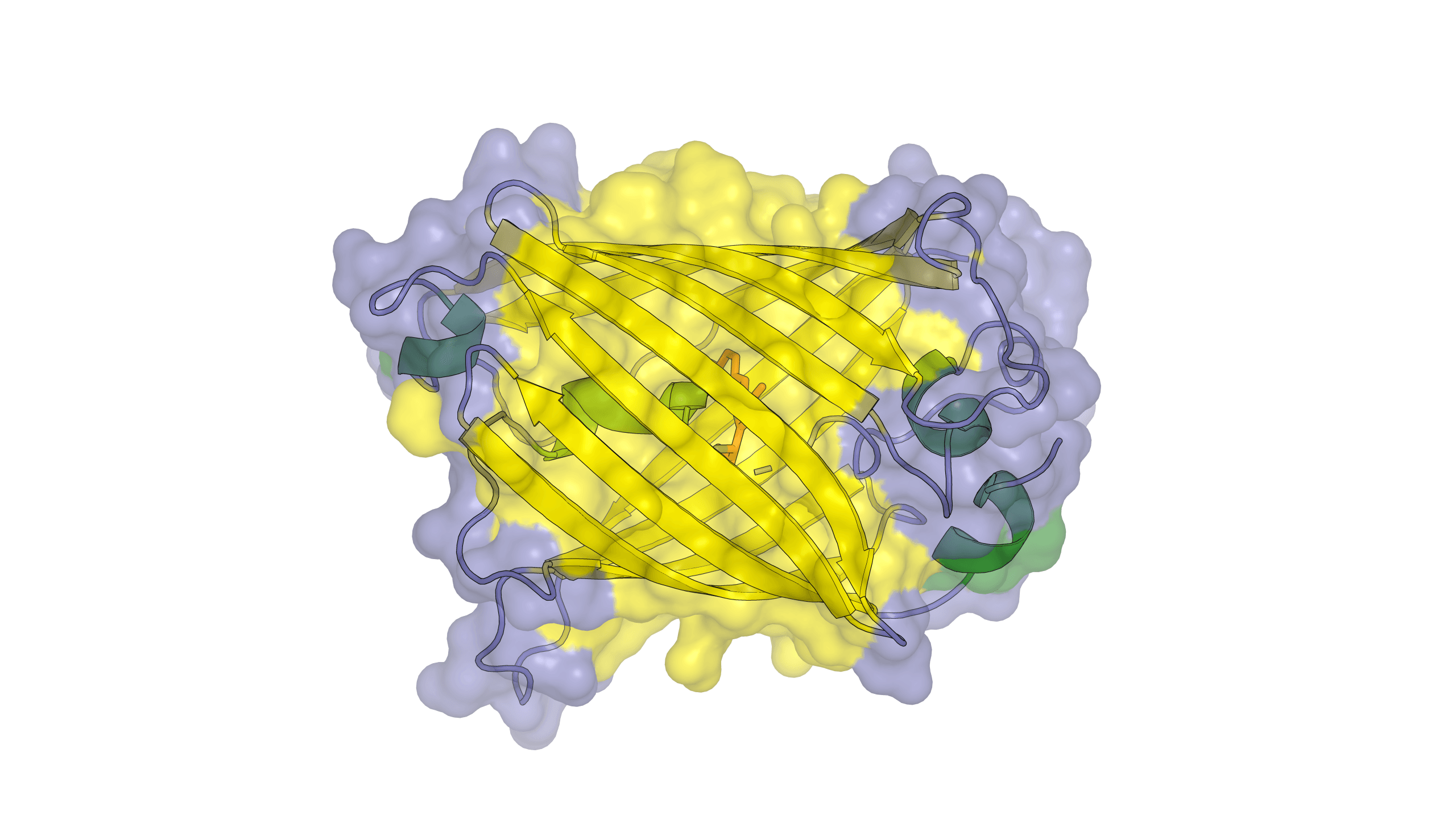
Figure 1. 3D structure of a representative functional protein
What is a Generative Protein Design Platform and how does it reshape protein development?
The discovery and engineering of functional proteins (enzymes, antibodies, binders, etc.) has long relied on directed evolution: introducing random or semi-rational mutations into a parent and screening batches by expression and assay. This works, but every round costs many wet-lab experiments, with high cost and long timelines. A generative protein design platform targets precisely this problem: reducing trial-and-error while improving hit rate. Instead of exploring sequence space mostly by chance, the model learns "which sequences/structures are more likely to show the target activity," then generates candidates, feeds back validation data, and iterates.
How generative models work: "reading" proteins in sequence and structure space
Protein function is dictated by the folded 3D structure, which is in turn dictated by the amino-acid sequence. A generative platform is usually built from two complementary model families:
1. Sequence/structure generators — such as diffusion models and autoregressive transformers, which learn the sequence–structure regularities of existing proteins and can *generate* new sequences or backbones that are rare in natural libraries, rather than merely assembling known fragments. It is like building with blocks, but the choice of blocks is constrained by energetics and function.
2. Fitness predictors — which rapidly score the large pool of generated candidates for activity, stability, solubility and other properties, ranking the most promising ones for wet-lab validation.
Together they form the "fitness landscape + active learning search path" shown in the figure: the model moves stepwise toward the peaks (optimal function), following predict → select → test → retrain, and every round uses the previous data to more precisely target the next batch of candidates, approaching the goal with fewer experiments.

Figure 2. Fitness landscape and the active learning search path
This "generate + predict" combination frees protein designers from blind screening and lets them explore a much larger sequence space within budget. Note that "generation" here reflects statistical regularities learned by a model, not experimental fact — generated results still require wet-lab confirmation.
Assay and selection: how to tell whether a generated protein is usable?
A generative model can output hundreds or thousands of candidates, but deciding which is "good" always returns to assay and selection. Selection is typically tiered:
- Level 1 — computable property screening. A fitness model rapidly sorts the large candidate pool and filters clearly infeasible sequences (poor solubility, aggregation-prone, unstable folding).
- Level 2 — structural plausibility check. Verify that the generated backbone satisfies basic physicochemical constraints (main-chain geometry, hydrophobic core, disulfides, key catalytic/binding residues), excluding candidates that are structurally implausible.
- Level 3 — expressible / measurable activity. Only candidates that stably express, fold and show the target activity advance to the next iteration.
In practice, the tiers must distinguish 【Measured】 from 【Predicted】 / 【Unknown】: computable ranking is prediction, and final activity must be experimentally determined. Any "hit rate" or "success rate" depends on the specific target and assay method and should not be stated detached from experimental context.
Conditions and workflow: how does a full dry–wet closed loop run?
Generative protein design delivers value only when the AI and the bench are connected in a loop, not merely when a batch of sequences is produced. A typical workflow:
1. DRY (AI / in silico): define target and constraints → generative design (sequence/structure) → scoring and ranking → select candidates.
2. WET (laboratory): gene synthesis and cloning → expression and purification → activity/binding assay → data collection.
3. Closed-loop feedback: wet-lab data are returned as labels to retrain the generator and predictor, and the next round begins.

Figure 3. "Dry–wet closed loop" design workflow
The key to the loop is "data feedback": without wet-lab labels, the generator degenerates into self-referential output. A usable platform therefore needs smooth data collection, annotation and retraining mechanisms, and must match experimental throughput and cost to the model's iteration speed.
How MatwingsVenus® empowers: making generative design deliverable
Within the MatwingsVenus® system, the generative protein design platform is the central link that connects "design" and "delivery" in the dry–wet closed loop. It bridges generative models, computable property prediction and experimental validation, helping users raise hit rate and shorten development cycles within a limited wet-lab budget:
- Application-oriented: translates "desired function" into generatable design tasks across enzymes, antibodies, binders and functional peptides.
- Transparent capability boundaries: presents 【Predicted】 properties separately from 【Measured】 results, never passing model output off as experimental fact.
- Configurable workflows: couples with wet-lab services and the expert center to tailor screening and validation paths per target and assay system.
Related capabilities and service entries:
- Wet-Lab Platform (https://www.matvenus.com/zh/products/wet-lab) — high-throughput expression, purification and activity assay
- Expert Center (https://www.matvenus.com/zh/products/expert-center) — target analysis, assay design and result interpretation
- Dry–Wet Closed-Loop Platform (https://www.matvenus.com/zh/dry-wet-closed-loop-platform) — integrated generative-AI and experimental-validation loop
*(Please verify the internal-link domain before going live; these are placeholder examples and avoid unverified link parameters.)*
FAQ
Can a generative protein design platform fully replace wet-lab work?
No. The generative model produces high-efficiency candidate generation and coarse ranking; final activity must be confirmed by the wet lab. Its value is reducing wasted experiments and raising hit rate, not skipping validation.
How is it different from traditional directed evolution?
Traditional directed evolution relies mainly on random/semi-rational mutation plus batch screening, which is experiment-heavy. A generative platform adds sequence/structure generation and fitness prediction, shifting exploration into the model and approaching the goal with fewer wet-lab experiments. The two are often combined.
Are generated proteins trustworthy?
Generated output reflects statistical regularities learned by a model and should be treated as 【Predicted】. It must be progressively confirmed through structural-plausibility checks, expressibility and activity assays — with measured results taking precedence.
Which protein targets is it best suited to?
In principle, proteins with clear sequence–structure–function relationships, such as enzymes, antibodies and binders. For targets lacking structure or functional data, or with highly constrained sequence space, prediction reliability drops and more wet-lab data are needed.
How much data does the platform need?
It depends on task complexity and target properties. The more complete the data (structure, activity, expression, stability labels), the more accurate the fitness model. When data are insufficient, the platform should explicitly flag 【Unknown】 and recommend more experiments rather than giving a false "definite answer."
How should one compare "success rates" between platforms?
Success rate is highly dependent on the specific target, assay method and pass criteria, and is not directly comparable across platforms. Compare whether the methods, data and validation paths are transparent, rather than comparing a single number.
Is it suitable for small teams or limited budgets?
Yes. With wet-lab and expert-center services, small teams can use generative design plus outsourced assay on demand, first shortlisting high-value candidates and then focusing validation effort.
Summary
A generative protein design platform integrates "AI generation + fitness prediction + a dry–wet closed loop" into a repeatable protein-development paradigm: it explores sequence/structure space efficiently with generative models, ranks with predictors, and feeds wet-lab data back for retraining. It does not — and should not — replace the wet lab; it directs wet-lab effort toward candidates most likely to succeed. MatwingsVenus® adheres to "transparent capability boundaries, prediction separated from measurement," offering a deliverable generative-design path for enzymes, antibodies and functional proteins.
【One-sentence takeaway】 By replacing random mutagenesis and exhaustive screening with "generative AI + a dry–wet closed loop," a generative protein design platform moves protein engineering from trial-and-error toward predictable, targeted generation.