
Deoxyribonuclease I: Molecular Scissors for Extracellular DNA
Published on November 8, 2026
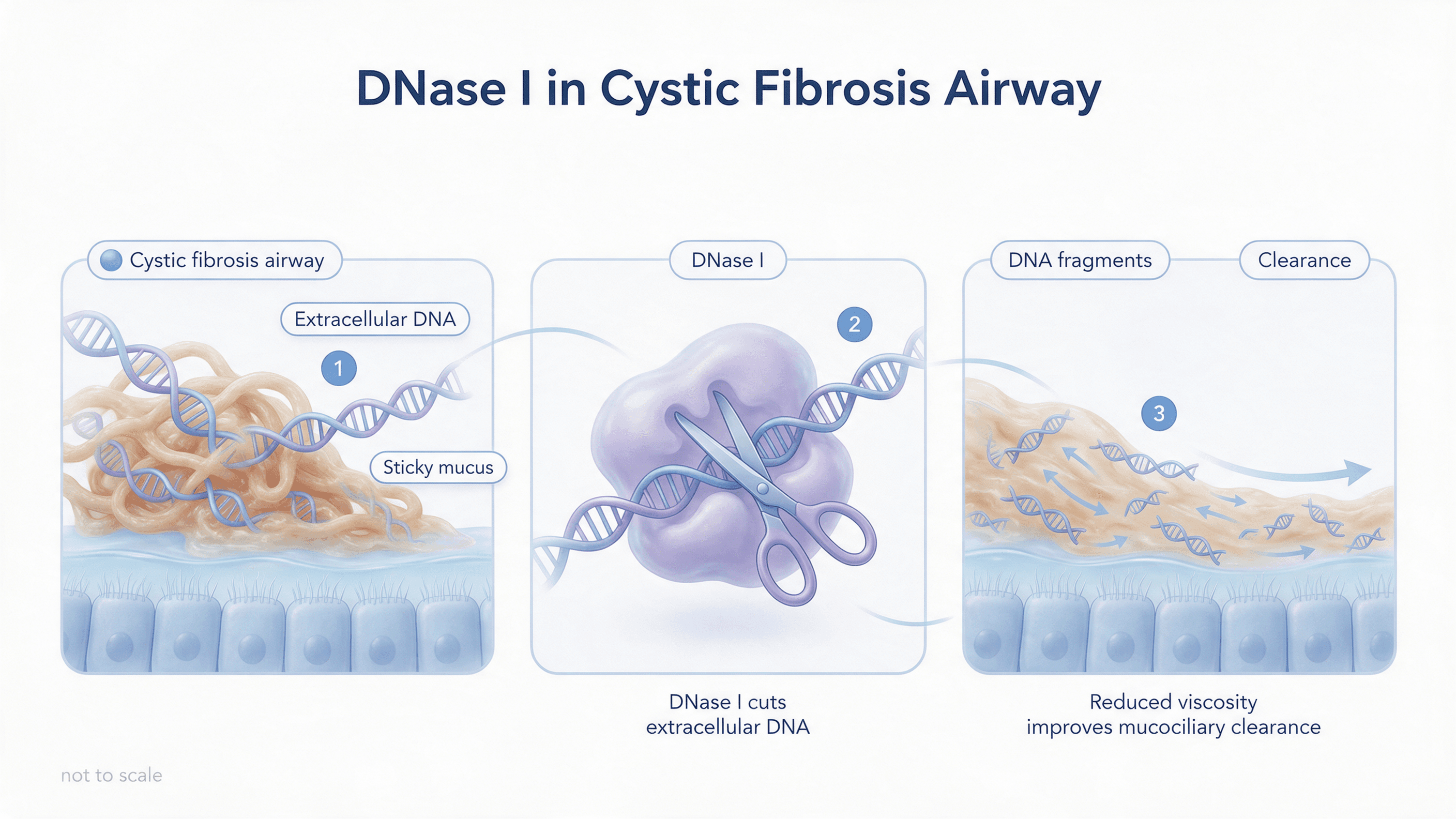
figure1. Overview of DNase I degrading airway extracellular DNA
Category: Enzymology and Enzyme Engineering (Related: Biocatalysis and Biotransformation)
· Deoxyribonuclease I acts only on DNA, not on RNA or protein, targeting the phosphodiester bonds of the double-stranded DNA backbone.
· Its activity depends heavily on divalent cations: magnesium or manganese drives catalysis, calcium stabilizes the enzyme conformation, with an optimal pH near 7.5.
· Recombinant human DNase I (dornase alfa) degrades airway extracellular DNA by nebulization and is a mainstay of cystic fibrosis mucolytic therapy, approved in 1994.
· In bioprocessing it lowers lysate viscosity and clears genomic DNA, preparing the stream for purification and detection.
· Selection should not rely on the label activity alone; combine specific activity, RNase/DNase contamination, batch consistency and buffer ion compatibility.
1. Applications and Performance Requirements
1.1 Clinical Use: A Mucolytic for Cystic Fibrosis
The best-known role of DNase I is in respiratory therapy. In cystic fibrosis, airway secretions accumulate large amounts of extracellular DNA released from dying neutrophils; these long DNA chains entangle with mucin glycoproteins, making sputum thick and sticky. Recombinant human DNase I delivered by nebulization reaches the airway directly, cutting the long DNA into small fragments, lowering viscoelasticity and restoring mucociliary clearance. According to published data, daily nebulization of 2.5 mg can improve lung function and reduce the risk of respiratory tract infections requiring intravenous antibiotics.
In plain terms, sputum is like soup thickened by long noodles; DNase I is a pair of scissors that only cuts the noodles and leaves the other ingredients alone. The core requirements here are specificity and gentleness: degrade only extracellular DNA without harming intracellular DNA or the cells themselves.
1.2 Laboratory and Industrial Use: Nucleic Acid Removal and Sample Preparation
From a bioprocessing view, DNase I delivers value through "viscosity reduction" and "nucleic acid removal." After cell lysis, genomic DNA markedly raises viscosity, interfering with centrifugation, filtration and chromatography; in nucleic acid extraction or molecular detection, residual DNA creates background. DNase I cleaves these long chains into short pieces, cleaning up the system.
Common uses span several steps:
· lowering lysate viscosity for clarification;
· removing accompanying DNA in protein purification;
· clearing template DNA before in vitro transcription or molecular detection;
· and acting as a probe or auxiliary enzyme in DNase I footprinting and nick translation.
1.3 Requirement Profile: From "Can It Cut DNA" to "Clean and Stable"
For R&D and procurement, the needs fall into three levels.
· The first is "can cut," meaning basic endonucleolytic activity;
· The second is "cuts cleanly," meaning good specificity and low nuclease contamination without introducing extra hydrolytic activity;
· The third is "cuts consistently," meaning reproducible batch-to-batch behavior within the target buffer and temperature window.
This is why the evaluation moves from a single activity unit to a complete system.
2. Mechanism of Action

figure2. Mechanism of DNase I cleaving the DNA phosphodiester bond
2.1 Catalytic Mechanism: Cutting the Phosphodiester Bond of the DNA Backbone
DNase I (EC 3.1.21.1) is an endonuclease that acts mainly on double-stranded DNA. It attacks the phosphodiester bonds of the DNA backbone, generating short fragments with 5'-phosphate ends. Because the target is the phosphate bridge between nucleotides, it does not recognize amino-acid sequences and will not cleave protein or RNA.
In simple terms, DNA is a chain of alternating deoxyribose and phosphate; DNase I makes random cuts along the chain, turning a long strand into many short pieces. Its preference for double-stranded DNA distinguishes it from nucleases that act mainly on single strands or RNA.
2.2 Cation Dependence: Magnesium Catalyzes, Calcium Stabilizes
The activity and structural integrity of DNase I depend strongly on divalent cations. Magnesium or manganese participates in catalysis, while calcium is required to maintain conformation and full activity. This tells users to provide both catalytic magnesium and stabilizing calcium in the buffer, and to be mindful that chelators such as EDTA strip metal ions and inactivate the enzyme.
2.3 Comprehension Point: Why It Cuts Extracellular but Not Intracellular DNA
This is an easily missed point. DNase I has a molecular weight near 33 kDa and can enter cells, but under physiological conditions it preferentially degrades extracellular DNA. In cystic fibrosis therapy, the real target is the extracellular DNA in the airway lumen, not intracellular DNA. This "extracellular first" property ensures therapeutic targeting and explains why nebulized administration achieves high local concentration with limited systemic exposure.
3. Technical Routes: Natural Source Versus Recombinant Expression
3.1 Source Differences
DNase I can be extracted from natural tissues such as bovine pancreas or produced by recombinant DNA technology in mammalian cells such as CHO. Natural sources are relatively cheaper but constrained by tissue origin and batch variability, and may carry other nucleases or host proteins. Recombinant human DNase I has a sequence identical to the endogenous human enzyme, with high purity and controlled batches, and is the mainstream choice for therapeutic formulations.
3.2 Expression System Selection
For industrial production, the issues are expressing well, folding correctly and getting the glycosylation right. Mammalian cell expression favors glycosylation and folding close to the human form; microbial expression is cheaper but may face folding and glycoform differences. Whether this affects activity or pharmacokinetics must be validated during process development.
3.3 Engineering Directions
Ongoing work targets longer half-life, lower immunogenicity and better stability, for example PEGylation to improve in vivo retention. For tool enzymes, the engineering focus is higher specific activity, improved thermostability and reduced nonspecific cleavage.
4. Key Influencing Factors and Process Control
4.1 pH, Temperature and Ion Window
DNase I has an optimal pH near 7.5; acidic conditions reduce activity. Reaction temperature is usually near physiological values but should be optimized in gradients together with substrate and downstream stability. Both cations must be present; magnesium plus calcium generally gives more stable performance than either alone. If the system contains high EDTA, pretreat or choose alternate means.
4.2 Activity Assay and Unit Definition
Classic assays use DNA as substrate, monitoring degradation at a defined pH and temperature. Common approaches include spectrophotometric measurement of absorbance change or gel electrophoresis to observe DNA degradation bands. Different assays correspond to different unit definitions, so cross-brand comparison requires a unified substrate and readout to avoid "non-comparable activity numbers."
4.3 Quality Control: Managing Contamination and Batch Drift
For tool-grade DNase I, quality control covers several dimensions: specific activity, which sets the per-unit-mass input; nuclease contamination, especially RNase contamination, which can destroy downstream RNA experiments; host residue and endotoxin, directly tied to compliance in bioprocessing; and batch consistency, which governs process reproducibility. Writing these into internal standards gives selection a basis.
5. Selection Logic and Evaluation Framework

figure3. DNase I selection and evaluation workflow
For procurement and R&D, evaluate DNase I across several dimensions:
· whether specific activity and unit definition are clear;
· whether substrate specificity fits the target system; whether nuclease (RNase) contamination is controlled;
· whether source and grade match compliance requirements (research or production grade);
· whether cation and buffer compatibility meets process conditions;
· whether batch consistency and supply stability meet targets.
Avoid judging from a single activity label. High activity does not mean "fits your system." The correct approach is to test the actual sample and real buffer, then decide with a repeatable degradation curve whether it satisfies the process, before choosing an off-the-shelf product or a custom route.
6. MATWINGS MALL Products and Custom Solutions
In its current tool-enzyme portfolio, MATWINGS MALL focuses on site-specific cleavage of recombinant proteins and glycan processing, such as recombinant Kex2, enterokinase, 3C protease, plus endoglycosidase H and endoglycosidase S for glycoprotein glycans, and proteinase K commonly used in nucleic acid extraction. These products serve "cleavage, impurity removal and lysis" scenarios at different process nodes. For deoxyribonuclease I itself, the mall currently has no matching product on the shelf.
If your project needs a nuclease matched to a specific host, target pH window, thermostability or compliance grade, MATWINGS MALL can support you from custom tool-enzyme development and protein engineering: redesign the enzyme molecule and perform directed evolution around the target system; optimize stability and substrate preference; link computational design with wet-lab validation through an integrated R&D platform; then move through bioprocess development and scale-up to adapt to real samples and production. When a standard DNase I falls short on specific activity, nuclease contamination, batch consistency or compliance, a customized tool enzyme and protein engineering is a more process-aligned route.
7. Frequently Asked Questions
Why does DNase I degrade only extracellular DNA and not intracellular DNA?
This follows from both the therapeutic scenario and enzyme properties. Although DNase I can enter cells at small size, it preferentially acts on extracellular DNA under physiological conditions; in cystic fibrosis therapy the target is the extracellular DNA in the airway lumen, so the drug shows good targeting.
Which divalent cations does DNase I activity require?
Magnesium or manganese participates in catalysis, while calcium maintains enzyme conformation and full activity. Systems with high EDTA or other chelators strip metal ions and inactivate the enzyme, which must be considered in buffer selection.
What is the difference between DNase I and RNase?
DNase I specifically hydrolyzes the phosphodiester bonds of the DNA backbone and does not cut RNA; RNase specifically hydrolyzes RNA. Their substrates differ and they cannot be interchanged. Tool-grade DNase I must also be checked for RNase contamination to avoid damaging downstream RNA experiments.
Can the activity units of commercial DNase I be compared across brands?
Not directly. Different assays correspond to different unit definitions; when the substrate and readout differ, the numbers are not comparable. Selection should unify the substrate and assay, or directly verify with the target sample and real buffer using a degradation curve.
What if a standard DNase I fails on specificity or batch consistency?
When a commercial DNase I cannot meet the process on specific activity, nuclease contamination, thermostability or compliance grade, turn to custom tool-enzyme development and protein engineering to rebuild the enzyme around the target system, then move through process scale-up and production.
Conclusion
Deoxyribonuclease I is an endonuclease that specifically hydrolyzes the phosphodiester bonds of DNA, with activity dependent on divalent cations such as magnesium and calcium and an optimal pH near 7.5. Recombinant human DNase I (dornase alfa) improves sputum viscosity in cystic fibrosis via nebulization and is a mature therapeutic enzyme; in the laboratory and industrial bioprocessing it lowers viscosity and clears genomic DNA. The main risk in industrial selection is not a weak enzyme but relying on the activity label alone while ignoring substrate specificity, nuclease contamination and cation compatibility. Using specific activity, specificity, contamination level, batch consistency and buffer compatibility as the evaluation baseline, and bringing the actual sample into real testing, ensures the enzyme is used correctly and stably. When a standard DNase I cannot meet process requirements, a customized tool enzyme and protein engineering is the more system-matched route.