CH3 Affinity Resin: From Domain Recognition to Antibody Capture
Published on September 8, 2026
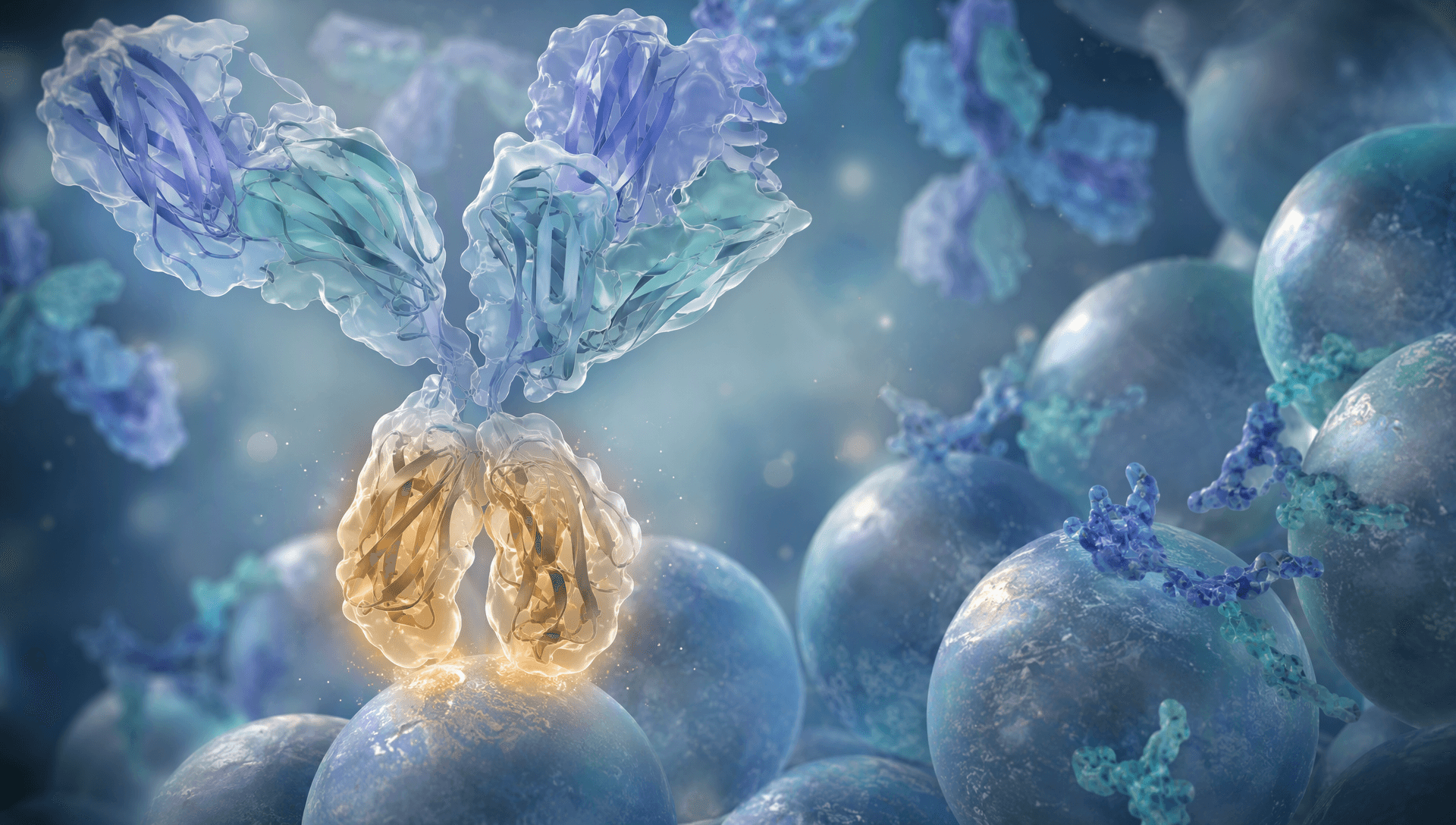
CH3 affinity resin domain-recognition overview
Protein A is often treated as the default platform for Fc-containing molecules, yet modern antibody engineering produces targets that do not always fit that default. An engineered antibody, isolated Fc fragment, or Fc-fusion protein may alter the accessibility, stability, or affinity of the region used for capture. The meaningful question is therefore not simply whether a molecule “has Fc,” but which Fc subdomain the ligand recognizes and whether that site remains accessible in the real construct.
A CH3 affinity resin addresses that question at the domain level. By focusing recognition on the CH3 region of Fc, it can provide a capture option for compatible intact human IgG, Fc fragments, and Fc-fusion proteins. It may also be worth screening when engineering has disrupted a conventional Protein A interaction. This does not make CH3 capture a universal replacement; it makes it a distinct tool whose value depends on architecture, feed composition, and product stability.
Why a CH3 affinity resin deserves its own category
The IgG heavy-chain constant region contains CH1, hinge, CH2, and CH3 elements. Protein A typically interacts near the CH2–CH3 interface, whereas a CH3-specific ligand focuses recognition on the CH3 domain. Both approaches may capture Fc-containing proteins, but they do not share an identical epitope, and they should not be assumed to have the same isotype scope, engineering tolerance, elution behavior, or cleaning requirements. Public technical literature explicitly describes this difference in binding location.
That distinction matters in protein engineering. Fc regions may be modified to tune effector function, half-life, stability, heterodimer formation, or fusion-protein architecture. A change near the conventional Protein A interaction surface can alter the performance of an established platform. If the CH3 domain remains structurally accessible, CH3-specific capture becomes a rational screening hypothesis. If the ligand epitope itself is mutated or obscured—or if the molecule lacks Fc entirely—the word “antibody” does not establish eligibility.
A CH3 affinity resin is therefore best understood first as a structural-eligibility tool rather than a performance promise. Ask whether the target contains a CH3 domain from a supported species, whether the ligand covers the relevant human IgG subclass, whether Fc engineering or fusion geometry could obscure the site, and whether the feed conditions preserve the required conformation. Capacity and throughput become meaningful only after these prerequisites are met.
Performance emerges from both ligand and matrix
An affinity medium is a coupled system: ligand, immobilization chemistry, pore architecture, particle size, surface chemistry, and mechanical behavior all contribute to column performance. The ligand establishes the selectivity concept, while mass transfer, ligand density, nonspecific adsorption, pressure, and bed stability determine how that concept behaves in a process.
CH3-specific ligands may be built from engineered antibody-derived binding domains. One public product guide describes a single-domain antibody fragment immobilized on a porous matrix for purification of recombinant human IgG, Fc-fusion proteins, and plasma-derived IgG. The same guide states coverage across human IgG1, IgG2, IgG3, and IgG4. Those are product-specific claims that illustrate how a defined medium presents its scope; they are not universal attributes of every CH3 ligand.
The matrix shapes the scale-up logic. Large molecules need access to usable pores, while the packed bed must tolerate operating flow and cleaning. Smaller particles can improve mass transfer or resolution but may increase pressure. A research column emphasizes convenience and repeatability; a manufacturing process adds packing windows, bed height, residence time, compression, system pressure limits, and lifetime. A binding-capacity number is incomplete unless it is read together with the sample, pH, flow, residence time, column geometry, and breakthrough definition used to obtain it.

Recognition relationship between CH3 ligand and Fc
Recognition relationship between CH3 ligand and Fc: epitope accessibility and matrix transport jointly shape capture behavior.
Three molecular classes, three application logics
Intact antibodies: replacement or complementary route?
For a conventional intact human IgG, CH3-specific capture can be evaluated without automatically replacing a mature Protein A platform. The relevant comparison includes effective dynamic capacity, elution severity, monomer retention, host-cell protein reduction, ligand leakage, cleaning recovery, and overall process economics. If the established route is robust and the molecule tolerates low-pH exposure, switching may add little value. If Fc engineering weakens Protein A binding or low-pH elution increases aggregation, the independent CH3 epitope and a potentially milder product-specific elution window become more relevant.
Fc fragments: a smaller target with explicit boundaries
An isolated Fc fragment retains CH2 and CH3 and therefore has a structural basis for CH3-affinity screening. Fragmentation can nevertheless change conformation, aggregation, and epitope exposure, so intact-IgG data should not be transferred directly. Fc controls, receptor-binding materials, and engineered Fc variants used in biological research should be tested first in batch binding or on a small column, followed by confirmation that dimeric state and function survive elution.
An enzymatic Fc feed may contain Fab, residual intact IgG, protease, and heterogeneous cleavage products. CH3 capture can enrich Fc-containing species, but it may not distinguish intact IgG from the desired Fc because both retain CH3. Selectivity then has to come from optimized digestion and orthogonal polishing based on charge, size, hydrophobicity, or another structural feature.
Fc-fusion proteins: the partner changes the process
An Fc-fusion combines Fc-associated dimerization, pharmacokinetic, or purification properties with another functional protein. The partner may change size, isoelectric point, hydrophobicity, low-pH stability, and the accessibility of CH3. Suitability therefore depends on both successful Fc capture and preservation of the functional domain during elution.
When a fusion protein aggregates or loses activity under a conventional low-pH condition, a specific CH3 medium that supports milder elution may be worth evaluating. “Mild,” however, must be defined by recovery, SEC monomer content, and a relevant functional assay for the actual molecule. Technical literature has discussed CH3-specific media as alternative capture tools for Fc fusions and engineered antibodies because their binding position differs from that of Protein A. This is a defensible development hypothesis, not a guarantee for every fusion architecture.
Reading specifications without letting one number make the decision
Dynamic binding capacity is more process-relevant than static adsorption, but it still depends on residence time, feed concentration, buffer conditions, and the breakthrough threshold. Product comparisons should preserve that test context. A result generated with a standard IgG in an ideal buffer is a screening reference, not a prediction for viscous harvest, plasma-derived feed, or a complex Fc fusion.
Elution conditions must be interpreted alongside molecular stability. Acidic buffers weaken many affinity interactions, yet low-pH exposure can promote reversible unfolding, aggregation, or activity loss in a molecule-dependent manner. Development should record pool volume, recovery, exposure time, neutralization delay, monomer content, and function. If a medium offers a milder elution range, map the practical window for the target rather than treating the stated pH as a universal outcome.
Cleaning compatibility governs reuse and impurity control. Ligand tolerance, matrix pressure resistance, and carryover risk are separate questions. A stronger alkaline condition is not automatically better; concentration, contact time, temperature, and cycle count all affect lifetime. Early biological research can begin with short repeatability experiments, while process development should trend capacity, peak shape, pressure, recovery, carryover, ligand leakage, and product quality using representative feeds.
Affinity does not eliminate nonspecific or product-related impurities. Host-cell proteins, DNA, aggregates, and mispaired species that share the same Fc can enter the eluate. If a contaminant contains the same accessible CH3 region as the target, the affinity step may have little structural basis for discrimination. Orthogonal polishing must then exploit another property.
CH3 affinity resin selection as an evidence map
A useful evidence map has four layers. Molecular evidence includes sequence, domain boundaries, species, subclass, Fc mutations, fusion partner, and expected assembly. Product evidence includes ligand target, coverage, capacity test conditions, matrix, recommended flow, elution, cleaning, storage, and format. Feed evidence includes concentration, pH, conductivity, turbidity, stability, and dominant impurities. Experimental evidence includes flow-through loss, recovery, purity, monomer, function, pressure, and cycle behavior.
This separation prevents claims from drifting across categories. A statement that a product guide covers human IgG subclasses is product evidence. A model suggesting that an engineered Fc retains CH3 is a molecular hypothesis. Recovery from the actual feed at a defined residence time is project-specific measured evidence. For protein engineering teams, this distinction helps prevent a design expectation from being mistaken for a chromatography result and turns failures into actionable feedback for construct or process redesign.

Application and validation dimensions of CH3 capture
How MatwingsVenus™(晓鹜™)supports CH3 selection
CH3 projects often require simultaneous review of domain architecture, engineered mutations, product documentation, and purification evidence. MatwingsVenus™(晓鹜™) can help organize literature retrieval, protein database queries, and protein engineering tasks so that CH3 retention, supplier claims, experimental conditions, and unresolved questions remain traceable. Platform outputs should distinguish measured database evidence, literature evidence, predictions, and unknowns, then connect them to chromatography and functional experiments.
At the product-information stage, the MatwingsVenus™(晓鹜™) official mall can serve as an entry point for product pages and technical support. For a CH3 affinity resin, check the stated epitope, species and subclass range, matrix format, flow and capacity test basis, elution conditions, cleaning compatibility, and supply format. The presence of a specific SKU, current inventory, and performance claims must be confirmed from the product page and current official documentation rather than inferred from the term “CH3.”
As experimental data accumulate, MatwingsVenus™(晓鹜™) can help connect sample lots, buffers, analytical results, and the next hypothesis. If an engineered Fc affects binding or stability, protein engineering tasks can be reframed around mutation position, accessibility, and functional constraints. The decision to redesign the molecule, modify the process, or screen another medium remains an evidence-based project choice.
FAQ: common questions about CH3 affinity resin
1. Is a CH3 affinity resin the same as Protein A resin?
No. Both may capture Fc-containing molecules, but their typical binding locations differ. A CH3-specific ligand focuses on CH3, while Protein A primarily recognizes the CH2–CH3 interface. Subclass scope, sensitivity to engineering, elution, and cleaning may also differ by product.
2. Can CH3 media purify antibodies from every species?
No universal species claim is appropriate. A particular medium may cover human IgG1 through IgG4 without having equivalent affinity for mouse, rabbit, sheep, or other immunoglobulins. Always verify the current guide and test the actual molecule.
3. Are Fab and scFv suitable targets?
Conventional Fab and scFv lack the Fc-terminal CH3 domain and generally have no direct structural basis for CH3 capture. Fc-containing Fab fusions must be assessed from their actual architecture. Fc-free fragments are better matched to CH1-, light-chain-, Protein L-, or tag-based routes.
4. Why can a CH3-containing target still show poor recovery?
Possible causes include species or subclass mismatch, epitope-altering mutations, steric occlusion, aggregation, unsuitable pH or conductivity, insufficient residence time, and incomplete elution. Analyze flow-through, wash, and elution fractions separately before concluding that the medium is unsuitable.
5. Does a milder elution pH always reduce aggregation?
It can reduce one risk, but aggregation also depends on concentration, salt, temperature, interfaces, exposure time, and the fusion partner. SEC, turbidity or particle analysis, and functional testing are needed to verify the effect.
6. Which criteria should be compared first in research?
Use a common framework covering structural eligibility, dynamic-capacity test context, target recovery, monomer and activity retention, critical impurity reduction, cleaning recovery, and repeatability. Add pressure, packing, and supply considerations when scale-up is anticipated.
Conclusion: CH3 is both a binding site and an evidence boundary
A CH3 affinity resin turns Fc-containing purification into a domain-specific question. It can support exploration of intact human IgG, Fc fragments, and Fc-fusion proteins, and it can provide an alternative screening route when engineering affects a conventional interaction surface. Any claim about subclass coverage, mild elution, or capacity must remain attached to the specific medium, condition, and molecule that produced it.
For protein engineering and biological research teams, reliable selection combines molecular architecture, product documentation, feed behavior, and experimental results. MatwingsVenus™(晓鹜™) can organize that evidence, while the MatwingsVenus™(晓鹜™) official mall supports product-information review. Final process conclusions must still come from representative samples and orthogonal analytics.