
BRENDA Enzyme Activity Data Querying: From EC Number to Kinetic Parameters
Published on November 9, 2026
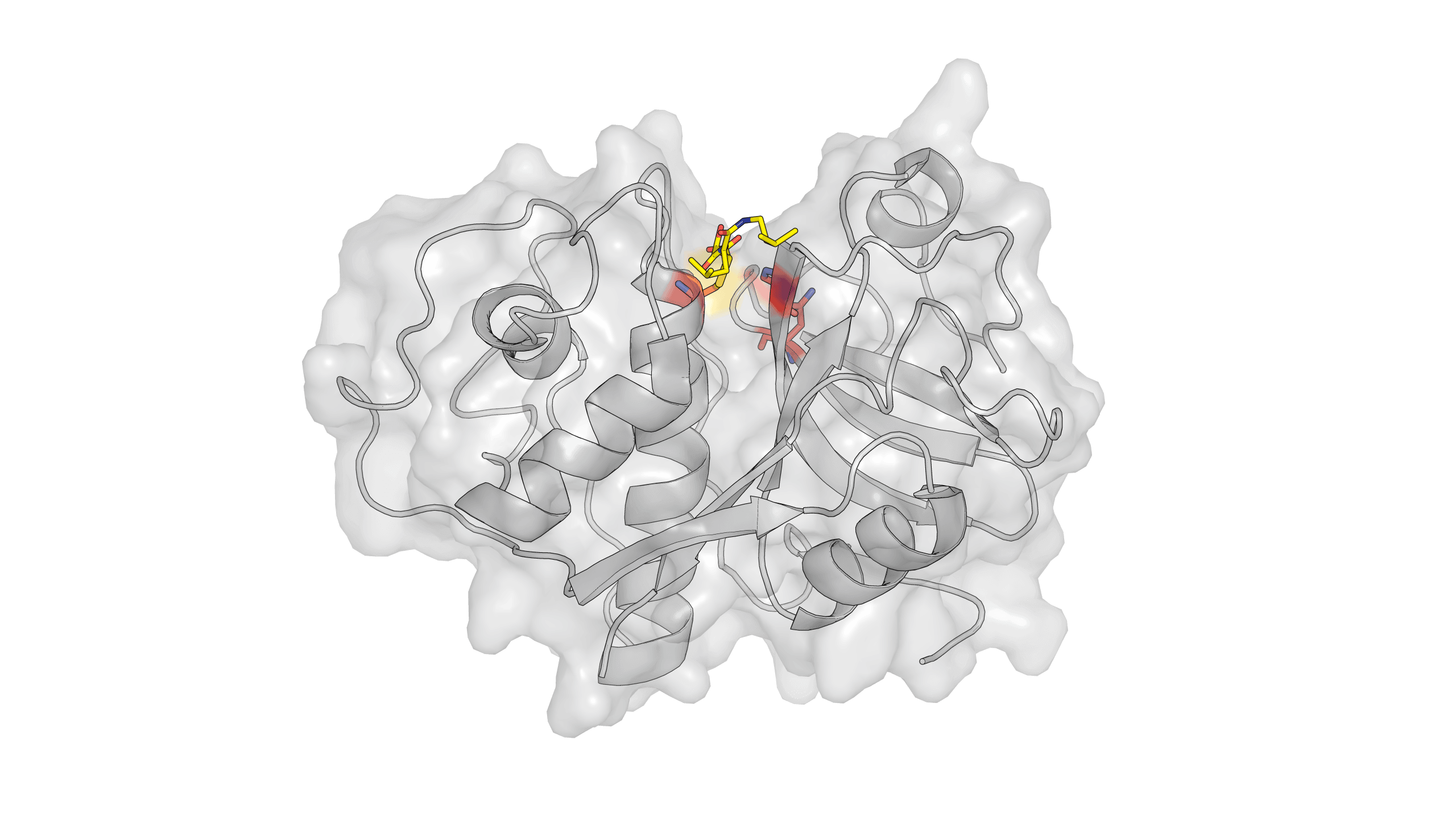
Fig. 1 | Overview: from EC number to kinetic parameters via BRENDA enzyme activity data querying
Enzymes sit at the heart of biocatalysis. To put an enzyme to work in research or industry, the first step is rarely "looking at the sequence" — it is "looking up the data": What reaction does this enzyme catalyze? Which substrate does it bind most tightly? How fast does it turn over? At which pH and temperature is it most stable? The answers to these questions converge in one authoritative, publicly maintained enzyme-function database: BRENDA (Braunschweig Enzyme Database). BRENDA enzyme activity data querying translates an enzyme's "identity" into quantifiable kinetic parameters that then guide experimental design and process optimization.
1. Why Do You Need Enzyme Activity Data?
In enzymology and industrial biocatalysis, enzyme activity data are the basis of decision-making. Whether selecting a natural enzyme, engineering a candidate, or designing a reaction route, you must first answer quantitative questions: what is the substrate specificity, how high is the catalytic efficiency (kcat/Km), is the enzyme inhibited by product or substrate, and is it stable under the target process conditions?
The value of BRENDA enzyme activity data querying is that it aggregates a large body of scattered experimental literature into a single searchable database. It is organized around the EC number (Enzyme Commission number), classifying enzymes by the type of reaction they catalyze, and records kinetic and functional data for each enzyme across different organisms and sources.
Data note: BRENDA is a publicly maintained enzyme-function database developed and maintained by Technische Universität Braunschweig (Germany). Its data are assembled through both manual literature curation and text-mining. The database scope and data fields described here are publicly verifiable; the example values in the figures are illustrative and are not drawn from any specific BRENDA record.
2. BRENDA's Structure and Data Taxonomy
To master BRENDA enzyme activity data querying, first understand how it organizes data. BRENDA uses the Enzyme Commission (EC) number as its primary classification framework, grouping enzymes by the type of reaction catalyzed into oxidoreductases (EC 1), transferases (EC 2), hydrolases (EC 3), lyases (EC 4), isomerases (EC 5) and ligases (EC 6), then subdividing each down to individual reactions.
Each enzyme entry is typically linked to several categories of functional data:
• Catalyzed reaction: substrates and products, equilibrium, cofactors, metal-ion requirements.
• Kinetic parameters: Michaelis constant Km, turnover number kcat, maximum rate Vmax, catalytic efficiency kcat/Km.
• Inhibition and activation: inhibition constant Ki, half-maximal inhibitory concentration IC50, activator information.
• Optimal conditions: optimum pH, optimum temperature, thermostability, solvent tolerance.
• Enzymatic properties: molecular weight, subunit composition, isoelectric point, subcellular localization.
• Source and organism: gene source, organism, tissue, organelle.
Below, a real enzyme structure illustrates what the "active site" means within enzyme activity data. The figure shows papain (EC 3.4.22.2), a cysteine protease whose catalytic triad Cys25–His159–Asn175 governs catalytic activity.

Fig. 2 | Papain catalytic triad Cys25–His159–Asn175 (real structure, schematic)
In the figure: papain catalytic triad Cys25–His159–Asn175 (real crystal structure 1PPP, with E64-C inhibitor). Kinetic parameters such as Km and kcat describe the enzyme's macroscopic behavior, while structural data reveal which residues participate in catalysis; combining the two is how you understand "how activity is modulated."
3. How to Query and Read Enzyme Activity Data
The general route for BRENDA enzyme activity data querying is as follows:
1. Choose your entry point: the EC number is the most common; you can also search by enzyme name, substrate, product or organism.
2. Pinpoint the target enzyme: from the result list, match the enzyme and organism source relevant to your system; note that kinetic parameters differ substantially across species and isoforms.
3. Read the kinetic fields: inspect Km, kcat, Vmax, kcat/Km, Ki, IC50, and note the substrate, pH, temperature and assay method associated with each record.
4. Cross-validate: a single parameter often has several literature values because assay conditions (pH, temperature, ionic strength, substrate concentration) differ. Prefer records close to your target conditions and inspect the source.
5. Export and organize: export the relevant records into a structured parameter table for modeling, comparison or experimental design.
The most important thing when reading is "condition binding." Km is not an isolated constant; it is bound to a specific substrate, pH and temperature. Comparing Km values across different literature sources while ignoring the assay conditions frequently leads to wrong conclusions. This is the heart of moving from "data query" to "usable information."
4. How Kinetic Parameters Guide Process Conditions
The activity data you retrieve ultimately serve the process question of "under which conditions does this enzyme perform best." The figure below links BRENDA query entry points, the kinetic parameters they output, and where these feed into enzyme engineering and bioprocess design.

Fig. 3 | Workflow from BRENDA query to enzyme engineering and process (schematic, not to scale)
Typical applications include:
• Selection and fit: choose the best enzyme by substrate specificity and kcat/Km; compare enzymes from different sources at the target pH/temperature.
• Setting process conditions: use optimum pH, optimum temperature and thermostability to set the buffer, temperature window and feeding strategy.
• Inhibition and tolerance assessment: use Ki and IC50 to judge product- or substrate-inhibition risk, guiding fed-batch or product removal.
• Enzyme engineering input: feed kinetic bottlenecks back to the design stage to identify active-site or substrate-channel residues to modify.
• Assay and QC: benchmark your own activity measurements against published kinetic parameters.
It is worth stressing: queried data ≠ measured data. Literature values from BRENDA are "reported data" whose accuracy is bound to the assay conditions; before applying them to your own system, validate experimentally or cross-check with predictions rather than treating them as ground truth for your system.
5. How MatwingsVenus® Helps: Turning Activity Data into Results
Retrieving enzyme activity data is only the first step in understanding an enzyme; the real value lies in turning those data into verifiable design, screening and process improvements. MatwingsVenus® provides dry-wet closed-loop capabilities for enzyme R&D and industrialization:
• Data to design: combine Km, kcat, Ki and other parameters with structural and sequence information to help identify active-site and engineering sites.
• Design to validation: use a wet-lab platform to measure activity, stability and kinetics of candidate enzymes, aligning literature values with measured data.
• Experiment to process: connect measured kinetics and stability to process-condition optimization, supporting scale-up from lab to pilot.
• Expert collaboration: work with enzyme-engineering and process-development experts on data interpretation, assay design and troubleshooting.
If you need to bring BRENDA-derived kinetic parameters into your own experiments and processes, MatwingsVenus® capabilities can help you move forward:
• Wet-lab and process validation
• Expert center and diagnostics
• Dry-wet closed-loop platform
FAQ (BRENDA Enzyme Activity Data Querying)
1. What parameters can I get from BRENDA enzyme activity data querying?
BRENDA enzyme activity data querying typically provides Km, kcat, Vmax, kcat/Km, Ki, IC50, plus optimum pH, optimum temperature, inhibitor and activator information, covering the functional characteristics of enzyme-catalyzed reactions.
2. How do I query BRENDA enzyme activity data using an EC number?
Enter the target enzyme's EC number (e.g., EC 3.4.22.2) into the BRENDA search box; the system lists the enzyme entry for that number along with source, kinetic and functional data, which you can further filter by organism and substrate.
3. Can I use BRENDA's Km and kcat values directly in my experiment?
Not recommended. Km and kcat are bound to a specific substrate, pH, temperature and assay method, and values differ substantially across literature sources; validate experimentally or cross-check with predictions before applying them to your own system.
4. Why does the same enzyme have very different Km values in different papers?
Because assay conditions (substrate, pH, temperature, ionic strength, enzyme purity and substrate concentration) differ. When reading, prefer records close to your target conditions and verify the data source and assay method.
5. Is the BRENDA database free?
BRENDA is typically freely accessible to academic users; commercial use may require licensing. Refer to the official BRENDA pages for access and licensing policies.
6. How do I use BRENDA kinetic data for enzyme engineering?
First define the kinetic bottleneck (e.g., low catalytic efficiency or product inhibition), combine structural and sequence information to locate candidate engineering sites, then compare literature values with measured values to form a design—validate—iterate loop.
7. What if BRENDA does not have the data I need?
Extrapolate using homolog data, structure prediction and sequence alignment, or measure your own system's kinetic parameters via wet-lab assays; consult an expert to help design the assay if needed.
Summary
BRENDA enzyme activity data querying bridges an enzyme's "identity" and its "usability." It uses the EC number as a backbone to aggregate scattered literature data—Km, kcat, Ki, IC50, optimal pH/temperature—into a searchable map. Reading it correctly, by attending to the substrate and assay conditions bound to each parameter, is the key to turning those data into sound decisions. Ultimately, the value emerges only when queried data are brought into verifiable design, screening and process optimization. MatwingsVenus®'s dry-wet closed-loop platform aims to make every step from "enzyme activity data querying" to a deliverable enzyme or process clearer and more verifiable.
【One-sentence Takeaway】
BRENDA enzyme activity data querying gives fast access to kinetic parameters such as Km, kcat, Ki, IC50 and optimal pH/temperature; reading and validating these data correctly is the crucial step that moves an enzyme from an "identifier" to designed, engineered and process-verified value.