Arg34-GLP-1(9-37): A Workflow from Material Definition to Process Handoff
Published on September 19, 2026
Arg34-GLP-1(9-37): A Workflow from Material Definition to Process Handoff
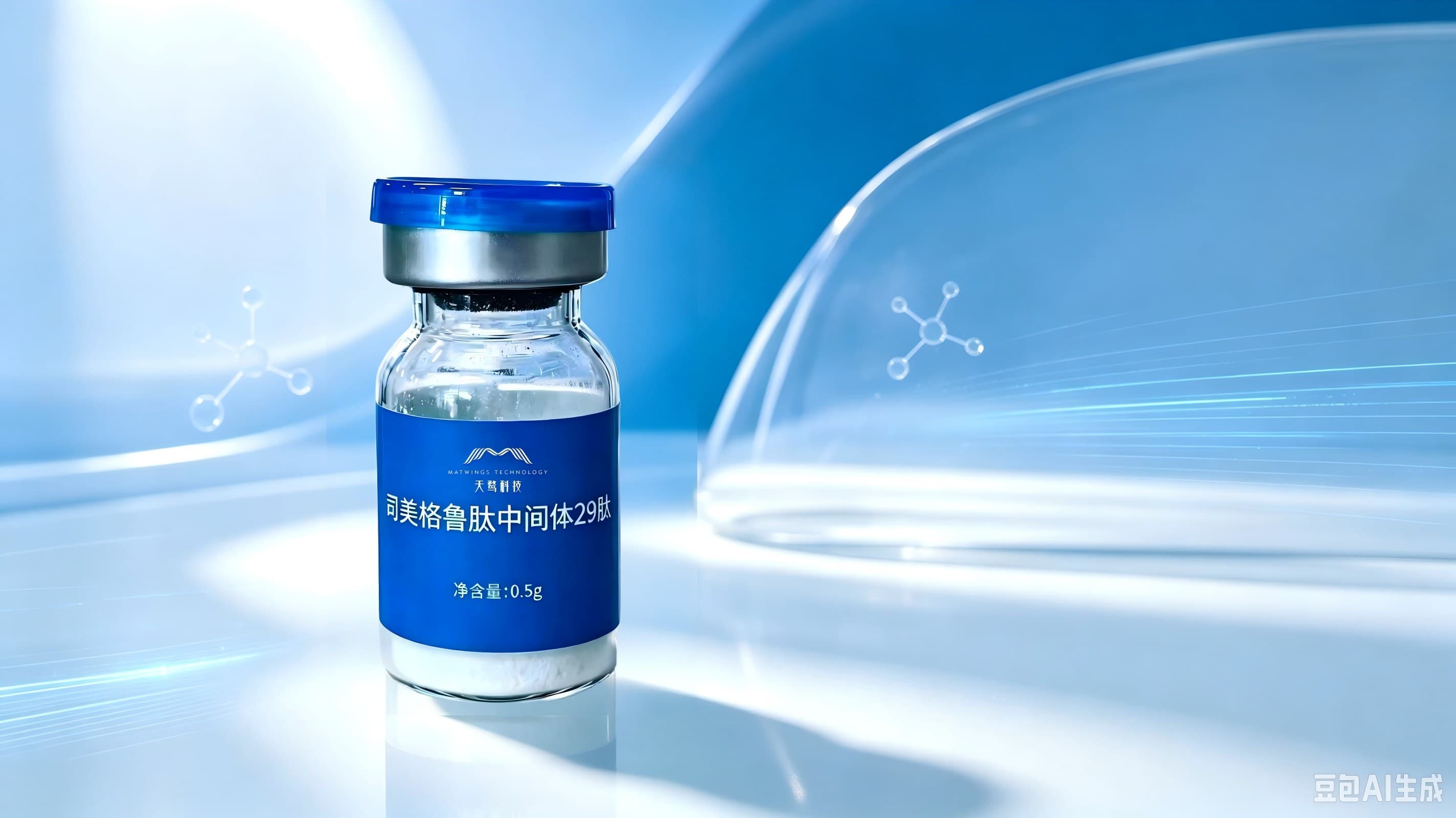
Arg34-GLP-1(9-37) is the P29 main-chain intermediate used in semaglutide synthesis. This workflow follows the material through sequence definition, fusion expression, selective cleavage, peptide purification, impurity analysis, stability assessment, and scale-up handoff, with clear inputs, outputs, and release decisions at every stage.
Arg34-GLP-1(9-37) is a P29 process intermediate rather than a finished dosage form. For protein engineering and bioprocess teams, the practical objective is to move a defined sequence through expression, release, separation, and analysis while preserving enough process data to explain every handoff.
The workflow below follows the sample in the order it moves through a laboratory. Each gate asks the same four questions: What is the input? What operation is performed? What output should be produced? What evidence is required before the material advances?
Arg34-GLP-1(9-37) Sequence Confirmation: What Belongs in the First Gate?
The workflow begins with molecular definition, not fermentation. Project records should freeze the complete amino-acid sequence, intended N- and C-termini, theoretical intact mass, expected charge behavior, and any additional residues that are allowed or prohibited. Arg34 highlights the arginine feature at position 34, while GLP-1(9-37) indicates the main-chain span.
Names such as P29 intermediate and semaglutide main-chain 29-mer may coexist within one project. That is manageable only when every sample identifier maps to one sequence version. If expression, purification, and analytical teams use different versions, an apparently clean main peak can still represent the wrong terminal state or molecular mass.
Incoming material can be evaluated at three levels. Document review covers sequence, lot identity, storage conditions, and sample state. Rapid characterization covers appearance, solubility, and initial chromatography. Identity work then combines intact-mass evidence with local sequence information when required by risk.
The output of this gate should be a clear identity statement and a list of unresolved questions, not merely an acknowledgment that a sample was received. Expression and cleavage development should begin only after sequence version, terminal boundaries, and analytical targets are aligned.

Identity gate|Arg34-GLP-1(9-37) sequence-confirmation workflow
Fusion Protein Expression: Converting a Short Peptide into a Processable Precursor
Direct production of a short peptide may be affected by degradation, host processing, recovery efficiency, and solution stability. A fusion partner can protect the target and provide a capture handle. Yet a more complex fusion also creates more release and removal work, so expression level cannot be the only selection criterion.
Precursor design should proceed backward from the required product. Define the final N- and C-terminal states first, then position the linker and recognition sequence. An unintended residual amino acid can alter retention, charge, and intact mass, while also increasing the burden on downstream purification.
A small set of complementary constructs is usually more informative than a large undirected screen. Each candidate should be evaluated for expression, solubility, preliminary recovery, precursor integrity, and cleavage accessibility. A strong protein band does not guarantee a high yield of qualified Arg34-GLP-1(9-37) if processing is incomplete or creates difficult impurities.
The input is the frozen target definition and quality boundary. The operation is construct design plus small-scale expression. The output is a short list of processable precursors. Release from this gate requires at least one candidate that is detectable, structurally credible, and accessible to the intended processing route.
Cleavage Optimization: Select the Recognition Logic Before the Enzyme Gradient
Cleavage strategy must match the engineered recognition sequence. A DDDDK linker supports evaluation of enterokinase, which cleaves on the C-terminal side of lysine. Recombinant enterokinase from MATWINGS MALL is a recombinant bovine enterokinase light-chain preparation with a stated working range of pH 4.5-9.5 and 4-45 degrees Celsius. This range can define an initial screen, but it is not a substrate-specific optimum.
A precursor containing Arg-Arg, Lys-Arg, or Pro-Arg dibasic motifs may support a Kex2 route. Recombinant Kex2 protease from MATWINGS MALL is expressed in Pichia pastoris with a His tag; the listed reaction pH is 7.0-9.0 and the optimum temperature is 37 degrees Celsius. Structural shielding around the motif can still slow conversion, so a time-course study with the real precursor remains necessary.
If release leaves an unwanted C-terminal basic residue, carboxypeptidase B may be evaluated for terminal trimming. Recombinant carboxypeptidase B from MATWINGS MALL removes C-terminal lysine, arginine, and related basic residues. Free arginine, free lysine, and EDTA can interfere with activity, making buffer compatibility an early development question.
A useful optimization sequence is narrow screening, time-course analysis, and endpoint confirmation. Compare a limited set of pH, temperature, and enzyme-to-substrate conditions. Follow precursor disappearance, target formation, and side-product growth. Confirm the selected endpoint with chromatography and intact mass rather than relying on the disappearance of one electrophoretic band.
The three enzymes do not form a fixed cascade. Enterokinase addresses DDDDK, Kex2 addresses dibasic motifs, and carboxypeptidase B addresses defined C-terminal trimming. The preferred route is usually the shortest one that creates the correct boundary and a traceable impurity pattern.

Cleavage-window map|Cleavage optimization routes for a P29 fusion precursor
P29 Intermediate Purification: Arrange Unit Operations in the Order Impurities Appear
A cleavage mixture is not a simple target-peptide solution. It may contain uncleaved precursor, partially processed forms, fusion partner, processing enzyme, host-related components, truncated peptides, oxidized forms, and terminal variants. Purification should begin by identifying the hardest impurity and its point of formation.
An early step often provides coarse partitioning between large precursor-related components and the smaller target peptide. A second, higher-resolution step addresses species that closely resemble the target. A final operation may support buffer exchange, concentration, or trace-impurity control. Reversed-phase, ion-exchange, or another mode should be selected according to sample properties and the critical impurity.
Method development should track purity, recovery, and compatibility with the next operation. A step that raises chromatographic purity but leaves the peptide in an unfavorable solvent or pH condition can increase hold time and degradation risk. The process chain needs continuity, not one impressive isolated result.
Collection boundaries require experimental justification. A wide window increases impurity carryover, while a narrow window reduces recovery. Separately analyzing the front, center, and tail of a major peak can show how purity and recovery trade off across the collection region.
The output of this gate includes pooling rules, recovery, main-component purity, critical-impurity trends, and buffer state. Those elements allow the analytical team to determine whether the sample is ready for quality confirmation.
Arg34-GLP-1(9-37) Purity Testing: Building an Orthogonal Analytical Set
HPLC is useful for following the main component and related impurities, but area normalization alone does not establish molecular identity. The method needs sufficient resolution, repeatability, quantitative range, and sample compatibility. Concentration and injection load should not distort the peak profile.
LC-MS or another intact-mass method tests whether whole-molecule mass agrees with expectation and helps identify truncation, oxidation, or an unexpected terminal state. Peptide mapping or terminal characterization can localize a change when needed. These methods answer different questions and become stronger when interpreted together.
Analysis should include process samples, not only the final pool. Samples collected before cleavage, during conversion, at the endpoint, from critical chromatographic fractions, and after concentration create a temporal data chain. When a deviation occurs, this chain helps localize it to precursor production, cleavage, side reactions, collection, or post-processing.
Each method should have a declared role. Intact mass supports identity, HPLC follows the major component and impurity trend, a content method supports material balance, and moisture or counterion information explains differences in weighed mass and concentration. This prevents the term purity from carrying incompatible meanings across teams.
Impurity Profiling: Turning an Unexpected Peak into a Process Action
The value of impurity profiling is not simply a low number of peaks. It is the ability to explain how each important peak forms. Uncleaved precursor suggests insufficient conversion. Overprocessed or truncated species suggest that the reaction window is too broad. Oxidized forms can direct attention to oxygen exposure, metal ions, light, or hold time. Terminal variants point back to the recognition boundary and trimming step.
When a new peak appears, first determine where it enters the process. If it is absent before cleavage and present afterward, review cleavage conditions. If it is minor before purification but increases after concentration, review solvent change, temperature, and residence time. Locating the formation stage is generally more informative than adding another separation step immediately.
A living critical-impurity list can record relative retention, mass difference, likely formation route, and control point. It does not need to be complete at the start. It should improve as process understanding grows, while ensuring that every priority impurity has an observation method and a response plan.
Stability and Sample Holds: Why Time Between Operations Is a Quality Variable
Peptide behavior can change with pH, temperature, concentration, and solvent composition. Process development often emphasizes reactions and chromatography while underestimating waits, transfers, concentration, and freeze-thaw events. These intervals can influence oxidation, aggregation, solubility, or surface adsorption.
Short hold studies should match the actual workflow: waiting after cleavage, pooled fractions before concentration, concentrated material before analysis, and any planned refrigerated or frozen storage. The same analytical set should be used at each time point to follow the main component, critical impurities, and recovery.
Container and contact-material effects also deserve testing. Low-concentration material may adsorb to surfaces, while high-concentration material may develop solubility limitations. Results should be converted into explicit time, temperature, and concentration windows that can be written into a process record.
Process Scale-Up and Handoff: Connecting Development to Reproducible Execution
Bench conditions cannot be multiplied by volume without reassessment. Larger systems change mixing time, local pH, addition duration, heat transfer, and sample representativeness. Cleavage development should therefore compare conversion curves across scales rather than only the final time point.
A minimum handoff package should include the frozen sequence, precursor construct, critical raw-material attributes, operating ranges, cleavage endpoint, purification loading window, pooling strategy, analytical method roles, critical impurities, and hold conditions. Every item should connect to a verifiable output.
Handoff can proceed in three rounds. The first confirms material and equipment compatibility. The second compares reaction kinetics and separation behavior. The third evaluates batch repeatability. If one round fails, retained process samples should be used to localize the cause before multiple variables are changed.
Cost should be calculated per unit of qualified P29 intermediate. Precursor recovery, cleavage conversion, purification yield, analytical workload, waiting time, and rework risk all contribute. A less expensive local step may still increase total process cost if it creates a difficult downstream impurity.

Process handoff network|Scale-up handoff and batch controls for peptide processing
Workflow Tools: Aligning Inputs, Tasks, Outputs, and Decisions
An executable Arg34-GLP-1(9-37) program can be managed through six connected gates. Sequence work outputs a frozen molecular definition. Expression outputs a processable precursor. Cleavage outputs a target peptide with the intended boundary. Purification outputs a qualified pool. Analysis outputs identity and impurity conclusions. Handoff outputs an operating range that another team can reproduce.
Tools belong inside specific tasks. The three recombinant enzymes available through MATWINGS MALL address DDDDK cleavage, dibasic-site processing, and C-terminal basic-residue trimming. They define different capabilities rather than one universal solution. Selection should follow precursor architecture and then be verified through conversion curves, intact mass, and impurity behavior.
Each experiment should retain four result types: actual input, executed conditions, measured output, and the next decision. If a result cannot move the workflow forward, the team should ask whether the method addressed the correct question. This discipline reduces repeated work and improves handoff among expression, purification, analytical, and scale-up groups.
FAQ
How is Arg34-GLP-1(9-37) related to the P29 intermediate?
In semaglutide main-chain process work, the names generally refer to the same 29-residue intermediate class. A project should still verify the complete sequence, terminal states, salt form, and any retained linker residues because naming agreement does not prove sample equivalence.
Why is fusion protein expression used for P29 intermediate production?
A fusion partner can protect a short peptide and provide a capture handle, but it also adds cleavage and fusion-partner removal steps. Constructs should be compared by expression, solubility, processing accessibility, and final recovery rather than upstream abundance alone.
Which indicators matter during cleavage-condition optimization?
At minimum, monitor precursor loss, target formation, side-product growth, and intact mass. A compact screen of pH, temperature, enzyme-to-substrate ratio, and time provides a more reliable operating window than one endpoint gel.
Is HPLC sufficient for Arg34-GLP-1(9-37) purity testing?
HPLC is essential for chromatographic purity but cannot independently confirm molecular identity. A stronger set combines intact mass with risk-based peptide mapping or terminal analysis, content measurement, and critical-impurity trends.
What is commonly missed during peptide process scale-up?
Mixing and hold times are frequently underestimated. Addition, pH adjustment, sampling, and pooling take longer at scale and may alter cleavage uniformity or peptide stability. Process curves and retained intermediate samples are therefore important.
Building a Repeatable P29 Intermediate Workflow Through Six Gates
Arg34-GLP-1(9-37) development should not be divided into unrelated expression, cleavage, and purification experiments. Sequence definition drives precursor design; precursor architecture drives processing; cleavage impurities shape purification; analytical results feed back into process parameters; and the handoff package converts the accumulated knowledge into executable instructions.
When every gate has a clear input, operation, output, and release decision, the team gains more than one acceptable batch. It gains a workflow that can be reviewed, compared, transferred, and scaled.