
Alkali-Resistant Protein A Affinity Resin — Can High Alkali Resistance Meet High Binding Capacity?
Published on November 12, 2026
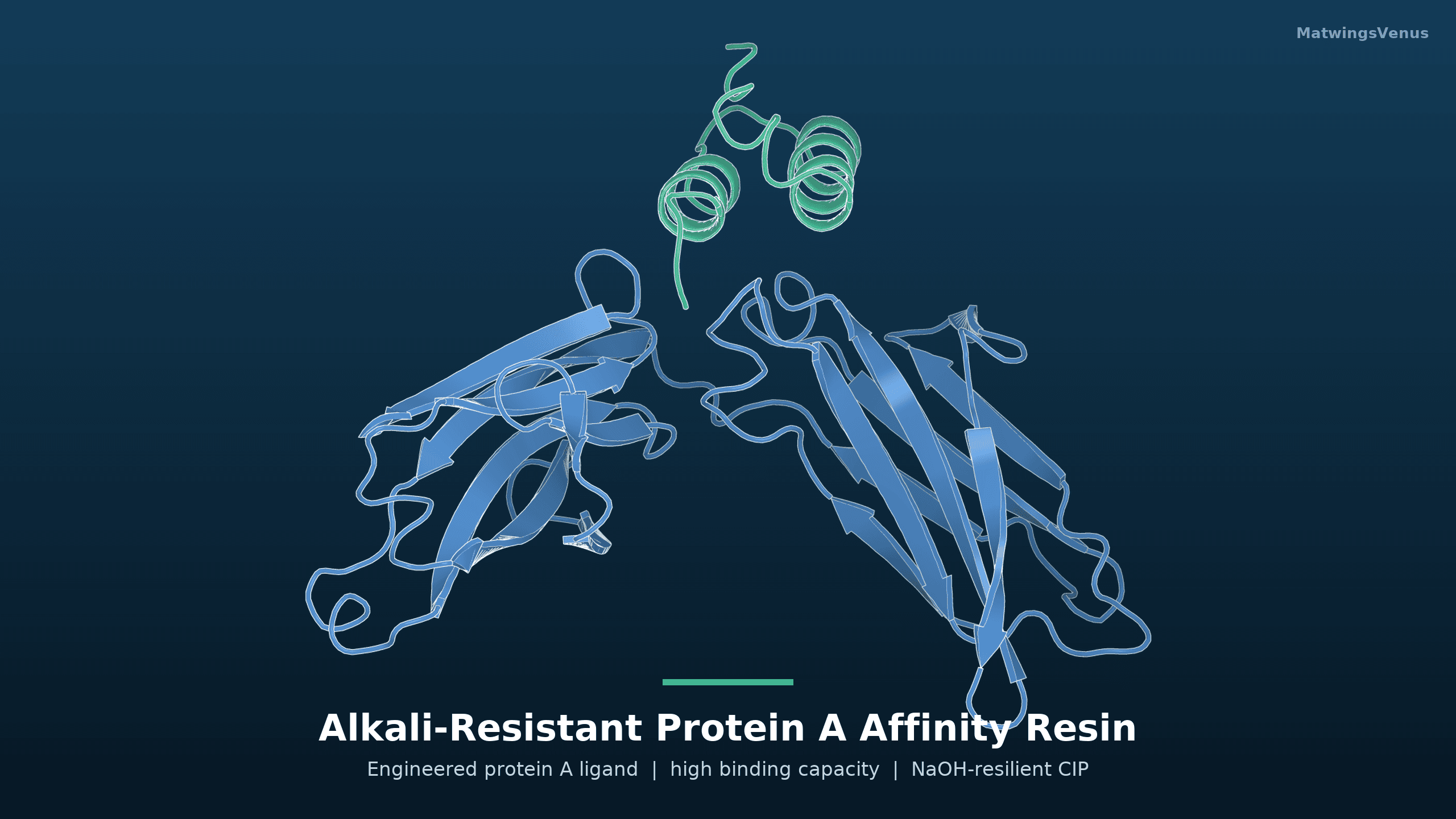
Fig 1: Alkali-resistant Protein A resin captures the antibody Fc via an engineered ligand
Protein A affinity chromatography is a key step in purifying monoclonal antibodies and Fc-fusion proteins. By relying on the specific binding between the Protein A ligand and the antibody Fc (CH2–CH3), it can raise purity substantially in a single step. Cleaning and disinfecting in production commonly uses sodium hydroxide, yet native Protein A is sensitive to strong alkali, and repeated cleaning causes capacity loss and shortened resin life. Alkali-resistant Protein A affinity resin is therefore a selection focus in large-scale manufacturing.
Why alkali resistance is a key Protein A resin criterion
In large-scale production, sodium hydroxide is often used for cleaning-in-place (CIP) and disinfection to remove impurities and control bioburden. Certain regions of native or conventional Protein A are unstable under strong alkali; repeated cleaning can degrade the ligand, reduce dynamic binding capacity and shorten resin life, raising consumable and cleaning costs. "The NaOH concentration at which a resin can be cleaned reliably" is therefore the most important selection criterion for alkali-resistant Protein A media.
In structure: how Protein A captures the antibody Fc
The CH2–CH3 region of the antibody Fc is the main binding site for Protein A domain B; the two interact through specific contacts at the interface for capture. The Nexligos™ series uses an engineered recombinant Protein A ligand designed by the protein R&D agent MatwingsVenus®, raising NaOH tolerance without disrupting the Fc binding site — balancing alkali resistance with binding capacity.

Fig 2: Binding interface between Protein A domain B and IgG Fc (CH2–CH3)
Three Nexligos™ alkali-resistant Protein A media: differences and selection
Matwings Technology’s Protein A series includes three alkali-resistant affinity media, differentiated by alkali strength, elution pH and molecule profile:
Parameter | Nexligos™ Protein A Pan Alkali | Nexligos™ Protein A Alkali | Nexligos™ Protein A ME |
Ligand | Recombinant Protein A | Recombinant Protein A | Recombinant Protein A |
Matrix | High cross-linked agarose | High cross-linked agarose | High cross-linked agarose |
Cleaning-in-place (NaOH) | 0.5–1.0 M NaOH | 0.1–0.5 M NaOH | 0.5 M NaOH |
Mean particle size | ~60 μm | ~60 μm | ~60 μm |
Dynamic binding capacity | ~80 mg trastuzumab/mL resin at 6 min residence time ~65 mg trastuzumab/mL resin at 4 min residence time | ~70 mg trastuzumab/mL medium at a 6minute residence time | ~60 mg/mL (trastuzumab) at 6 min residence time |
Recommended max flow | 300 cm/h | 300 cm/h | 300 cm/h |
Working pH stability | 3–12 | 3–12 | 3–12 |
Elution | Elutes at pH 3.5–4.0 (low pH) | — | Complete dissociation at pH 4.5–5.0 (weakly acidic / gentle); ≥85% recovery at pH 5.0 (86.9% for human IgG at 80% DBC load) |
CIP pH stability | 2–14 | — | 2–14 |
Molecule applicability | IgG subtypes, bispecific antibodies, Fc-fusion proteins; polyclonal from ascites/plasma; Fab (high recovery) | for mAb purification | Especially for IgG4, bispecific, multispecific, ADC and Fc-fusion proteins that are labile at low pH; also polyclonal from ascites/plasma (overview) |
Chemical compatibility | Compatible with aqueous buffers commonly used in Protein A chromatography | Compatible with aqueous buffers commonly used in Protein A chromatography | Compatible with aqueous buffers commonly used in Protein A chromatography |
Storage | 2–8 °C, 20% ethanol or 2% benzyl alcohol on request | 2–8 °C, 20% ethanol or 2% benzyl alcohol on request | 2–8 °C, 20% ethanol or 2% benzyl alcohol on request |
Supply | 25 mL–20 L (custom) | 25 mL–20 L (custom) | 25 mL–20 L (custom) |
All three ligands are engineered by MatwingsVenus® on a high-cross-linked agarose matrix with single-point coupling. The difference: Pan Alkali targets higher NaOH cleaning intensity and a broad molecule range, eluting at low pH 3.5–4.0; Alkali targets routine mAb capture with 0.1–0.5 M NaOH cleaning-in-place; Nexligos™ Protein A ME targets acid-sensitive, labile molecules and elutes gently at pH 4.5–5.0.
Application and process: gentle elution, alkali CIP and a broad molecule range
A typical flow is load → wash → elute → alkali CIP → re-equilibrate. Per testing, after 72 h immersion treatment in 0.5 M NaOH, Pan Alkali retains close to 100% of dynamic binding capacity; alkali CIP and a high flow of ~300 cm/h cut between-batch cleaning costs and shorten cycle time. For acid-sensitive, labile molecules such as bispecific antibodies, ADC-conjugated antibodies and Fc-fusion proteins, Nexligos™ Protein A ME elutes gently under weakly acidic conditions at pH 4.5–5.0, avoiding the denaturation, aggregation and activity loss caused by low-pH (3.0–4.0) elution; Pan Alkali elutes at pH 3.5–4.0.

Fig 3: Antibody purification workflow with alkali-resistant Protein A
Selection guidance
For low-pH-sensitive, labile molecules such as IgG4, bispecific, multispecific, ADC and Fc-fusion proteins, choose Nexligos™ Protein A ME for gentle elution at pH 4.5–5.0; for stronger NaOH cleaning, a broad molecule range and higher capacity, choose Nexligos™ Protein A Pan Alkali; for routine mAb capture with standard 0.1–0.5 M NaOH CIP that balances capacity and flow, choose Nexligos™ Protein A Alkali. When selecting, verify binding capacity, NaOH concentration, elution pH, particle size, flow rate and supply grade.
FAQ:
Q:Why is alkali resistance emphasized for Protein A resin?
A:CIP and disinfection commonly use NaOH, and native Protein A is unstable under strong alkali; repeated cleaning causes capacity loss and shortened life. Alkali-resistant media retain binding activity at high NaOH, lowering consumable and cleaning costs.
Q:How do I choose between 0.5–1.0 M NaOH and 0.1–0.5 M NaOH?
A:For stricter cleaning and disinfection, choose Nexligos™ Protein A Pan Alkali (0.5–1.0 M NaOH); for routine mAb capture with standard CIP, Nexligos™ Protein A Alkali (0.1–0.5 M NaOH).
Q:What is the benefit of gentle elution (pH 4.5–5.0)?
A:Eluting under weakly acidic conditions avoids the denaturation, aggregation and activity loss caused by low-pH (3.0–4.0) elution, especially for low-pH-sensitive, labile molecules such as IgG4, bispecific, multispecific antibodies, ADCs and Fc-fusion proteins, improving purity and activity and reducing downstream aggregate-removal load.
Q:Which antibody molecules can be purified?
A:Nexligos™ Protein A ME especially suits low-pH-sensitive, labile molecules such as IgG4, bispecific, multispecific, ADC and Fc-fusion proteins, and can also purify polyclonal antibodies from ascites or plasma; Pan Alkali suits mAbs (IgG1/2/4), bispecific antibodies and Fc-fusion proteins, plus Fab fragments; Alkali focuses on mAb purification.
Q:How do I get specifications and a quote?
A:Request a quote via the MatwingsVenus® mall; custom grades are available on request.
Related products & inquiry
• Nexligos™ Protein A Pan Alkali:High alkali (0.5–1.0 M NaOH), broad molecule range, high capacity; 25 mL–20 L, custom.
• Nexligos™ Protein A Alkali:Alkali-resistant (0.1–0.5 M NaOH), high-capacity mAb capture; 25 mL–20 L, custom.
• Nexligos™ Protein A ME:Gentle elution (pH 4.5–5.0) for IgG4/bispecific/multispecific/ADC/Fc-fusion and other acid-sensitive molecules; 25 mL–20 L, custom.
• Customization service:Custom grades, packing and process parameters to match downstream processes.
[One-line conclusion] High alkali resistance and high binding capacity can coexist: the engineered ligand on Matwings Technology’s Nexligos™ alkali-resistant Protein A affinity resin balances both, is selectable by process and scale, and supports custom grades.