
Biodiesel: From Waste Oil to Clean Fuel - Transesterification and Lipase Selection Guide
Published on November 1, 2026
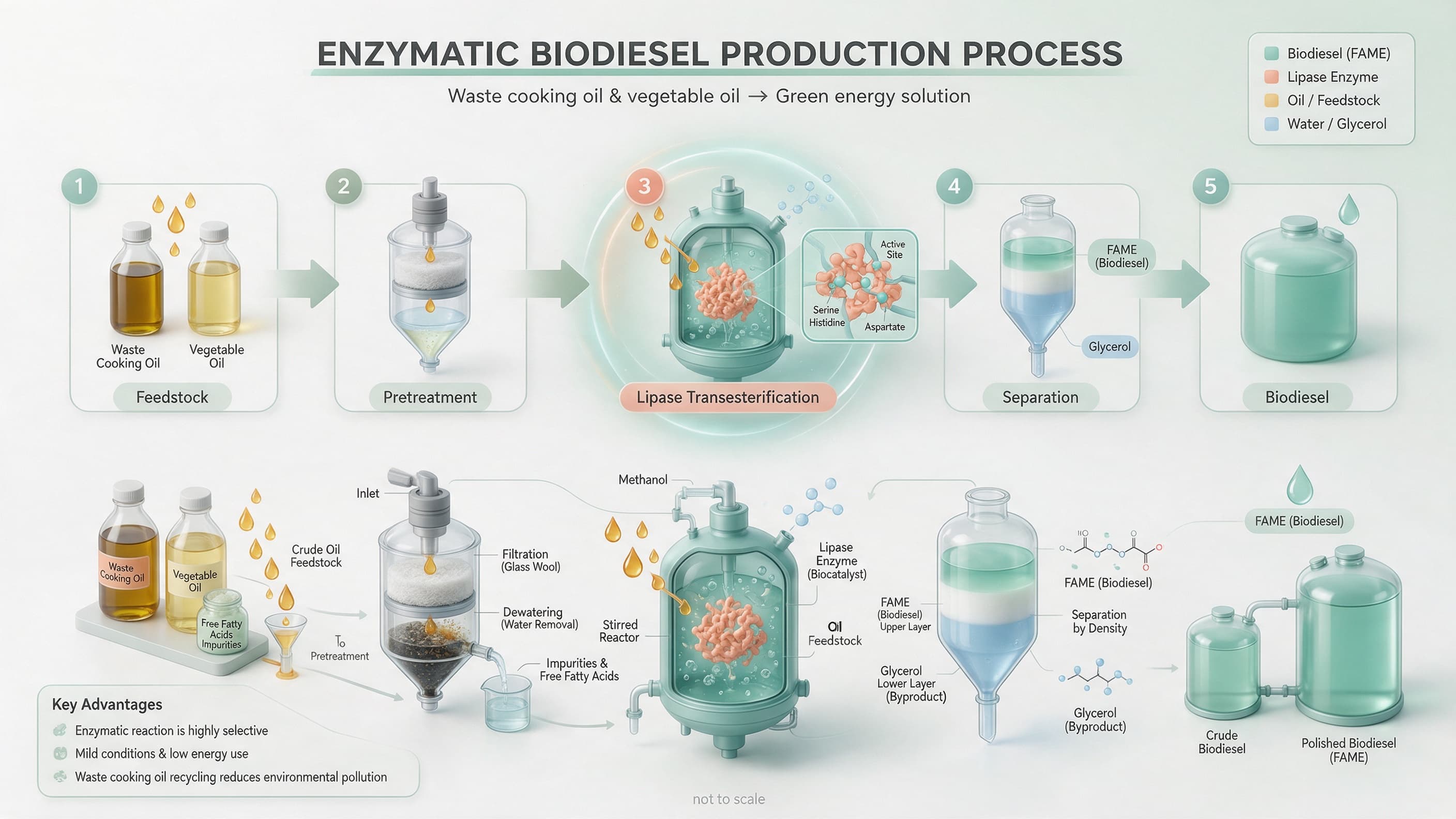
figure1. Overview of the full biodiesel production process chain
1. Biodiesel: From a Plain Understanding to a Renewable Fuel Definition
1.1 Understanding Biodiesel in Plain Language
Take leftover oil from a frying pan and put it through a "molecular transformation," and it becomes a fuel that can drive cars and ships. That fuel is biodiesel. It does not come from underground petroleum; it is reassembled from vegetable oil, animal fat, or used cooking oil.
More plainly, ordinary diesel is "dug out of the ground," while biodiesel is a fuel that is "grown and recovered." The feedstock may be rapeseed or soybean, or frying waste oil discarded by restaurants, and the combustion profile is more environmentally friendly.
Technically, biodiesel is a fatty acid methyl ester (FAME) produced by reacting oils and fats with short-chain alcohols in a transesterification reaction. It is a renewable liquid fuel.
Conventional diesel comes from finite petroleum, while biodiesel feedstock can be regenerated. It can be added directly to existing diesel engines without modification, which is its greatest practical value.
1.2 Industry Value and Application Directions
The value of biodiesel starts with carbon reduction. Biodiesel made from waste oils carries a notably lower carbon footprint than petroleum diesel, and also lower than routes based on soybean or palm oil, because it follows the principle of not competing with food crops for farmland.
Its applications focus on transportation fuel, marine fuel, and power generation. Product quality is governed by international standards: EN 14214 in the EU, ASTM D6751 in the US, and GB/T 20828 in China.
For the industry, biodiesel answers the question of "where the waste oil goes," turning a polluting byproduct into clean energy, delivering both environmental and energy benefits.
2. Two Manufacturing Routes: Chemical and Enzymatic Catalysis, Compared Simply and Technically
2.1 Features of Traditional Acid-Base Catalysis
The traditional routes are alkaline and acidic. The alkaline route uses potassium hydroxide or sodium hydroxide as the catalyst, offering low cost, fast reaction, and conversion rates typically above 90%, which is why it dominates industrial production today.
It has a critical weakness: sensitivity to water and acids. Moisture and free fatty acids (FFA) in the feedstock saponify with alkali, forming gel that consumes catalyst and complicates glycerol separation and product purification, while raising wastewater volume.
The acid route uses sulfuric or hydrochloric acid and can handle high-acidity feedstocks, but it is slow, requires high temperatures, and corrodes equipment, so it is not usually used alone at scale.
Both chemical routes share one trait: they are picky about feedstock, requiring pretreatment, drying, and pre-esterification to remove impurities and free fatty acids before running efficiently.
2.2 Features of Enzymatic Transesterification
The enzymatic route uses lipase, a naturally "mild catalyst." It is very tolerant of feedstock, and free fatty acids can be esterified directly by the enzyme without prior de-acidification.
Compared with chemical methods, the enzymatic route runs under mild conditions at ambient temperature and pressure, produces no saponification, generates less wastewater, and makes glycerol separation easier, which suits high-impurity, low-value waste oils.
Its drawbacks are also clear: higher enzyme cost, methanol inhibition of the enzyme, and longer reaction times. Choosing the right enzyme, immobilizing it, and using stepwise feeding are needed to control cost.
3. Lipase-Catalyzed Biodiesel Synthesis: Understand the Logic First, Then the Mechanism
3.1 A Plain Analogy for the Transesterification Reaction
Think of a triglyceride as a "glycerol backbone with three fatty-acid chains attached," and methanol as a "connector piece." Lipase acts like an experienced craftsman that, at its active site, snips the three chains off the glycerol and attaches a methanol connector to each chain.
Each of the three chains then carries methanol and becomes a fatty acid methyl ester; the remaining glycerol backbone is released as a byproduct, glycerol.
This reaction is transesterification, and in essence 1 triglyceride plus 3 alcohol molecules yield 3 fatty acid methyl esters plus 1 glycerol. It is reversible, so alcohol is usually added in excess to drive the reaction forward.

figure2. Molecular mechanism of lipase-catalyzed transesterification
3.2 Molecular Mechanism and the Core Advantages of the Enzymatic Route
At the molecular level, the active site of lipase is a catalytic triad of serine, histidine, and aspartate, acting like a precise "pocket" that grips the ester bond of the triglyceride and promotes its cleavage.
Once the ester bond breaks, the fatty-acid chain combines with alcohol to form a fatty acid methyl ester, a process completed gently with the enzyme, without strong acid or base.
The enzymatic route has three core advantages over chemical catalysis: first, free fatty acids can be esterified directly without pre-esterification; second, it is less sensitive to water, since modest moisture raises enzyme activity while excess inhibits it; third, the reaction temperature is low, around 40°C, saving energy and generating fewer byproducts.
4. Biodiesel Feedstock Classification and Matching Strategy
4.1 Edible Vegetable Oil Feedstocks
Edible vegetable oils include soybean, rapeseed, palm, and cottonseed oils. They have low acidity and few impurities, so both chemical and enzymatic methods handle them well, with mature processes and high conversion.
But using edible oils raises the "competing with food" concern, weakens the carbon-reduction advantage, and exposes cost to crop-price volatility.
4.2 Waste Oils, Acid Oil, and Other Low-Value Feedstocks
Waste oils (used cooking oil, UCO) include restaurant waste oil, frying oil, gutter oil, acid oil, and animal or vegetable oil byproducts, all with high acidity and abundant free fatty acids and impurities.
These feedstocks are the real stars of "waste oil to fuel," offering the strongest carbon-reduction benefit and serving as the main raw material for the biodiesel industry.
Their high acidity and impurity load make the alkaline route difficult, because alkali saponifies in the presence of acid and complicates downstream processing. The enzymatic route, with its FFA tolerance and mild handling of low-value waste oil, becomes the more relevant choice.
5. Key Process Factors in Enzymatic Biodiesel Production
5.1 A Plain View: Which Conditions Affect the Outcome
Making biodiesel enzymatically is like cooking: the "quality" of the feedstock, how much alcohol is added, the heat, and whether the oil contains water all affect the final product.
Too little alcohol leaves the reaction incomplete; too much makes separation and recovery harder. If the temperature is too high, the enzyme deactivates; too low, the reaction slows down.
5.2 Professional Dimension: Lipase Tolerance, Alcohol-Oil Ratio, Temperature, and Water Control
The methanol-oil molar ratio is the core parameter. The stoichiometry is 3 to 1, but the enzymatic route usually runs between 3 to 1 and 6 to 1, and going higher adds alcohol-recovery burden.
Reaction temperature is generally 25 to 50°C, with industrial operations around 40°C, which is lower in energy use than the roughly 60°C used in the alkaline route.
Water control has two sides: modest water raises the polarity and flexibility of the enzyme active site, while excess water forms water clusters that deactivate the enzyme, so feedstock moisture is usually kept low.
In addition, methanol inhibits lipase, so stepwise feeding in three portions or adding a solvent such as tert-butanol is common; glycerol also inhibits the reaction and should be separated between stages; immobilized enzyme can be reused, significantly lowering per-ton cost.

figure3. Process selection workflow for biodiesel and catalyst matching
6. MATWINGS MALL Lipase Products and Custom Solutions
6.1 Matching Direction for Biodiesel Transesterification Lipases
Biodiesel transesterification places three core demands on a lipase: tolerance to high free-fatty-acid feedstock, transesterification activity, and batch-to-batch stability in continuous industrial operation.
The relevant MATWINGS MALL enzyme product line can offer a matching direction based on feedstock acidity and impurity level, suited to different waste-oil and vegetable-oil systems, to help process developers shorten their development cycle.
6.2 Custom Tool Enzyme Development for Biodiesel
When standard off-the-shelf lipases cannot match the transesterification needs of complex, low-value feedstock, MATWINGS MALL's custom tool enzyme development service can help.
This service focuses on high-impurity feedstock tolerance, transesterification activity, batch stability, and industrial adaptability, extending from enzyme formulation development to lab and pilot process validation.
MATWINGS MALL's custom capability is built around "using the right enzyme and using it well," supporting developers to raise requirements based on their own feedstock acidity, impurities, and target conversion, then evaluated through the Expert Center so that enzyme suitability is grounded in real process data.
7. Industrialization Challenges and Optimization for Enzymatic Biodiesel
The biggest bottleneck in industrializing the enzymatic route is cost and stability. Enzyme unit price is high, so immobilization and recycling are used to spread the per-ton cost.
Methanol and glycerol inhibition call for process strategies, with stepwise alcohol feeding and stepwise glycerol separation being common. Conversion rate and reaction time must be balanced, often through multistage reactors and continuous design.
From lab scale to pilot scale to continuous industrial production, enzyme batch stability and equipment compatibility are critical. It is advisable to validate enzyme tolerance and activity on the real feedstock first, then scale up to continuous units to avoid unreliable lab data. Product indicators such as FAME content, acid value, and moisture should be monitored to standard to deliver consistently compliant product.
8. FAQ
8.1 What Is the Difference Between Biodiesel and Conventional Diesel?
Biodiesel is a fatty acid methyl ester from oils and alcohol, with renewable feedstock; conventional diesel is refined from petroleum and is non-renewable. Biodiesel runs directly in existing diesel engines and burns cleaner with lower carbon, though it generally has weaker cold-flow and oxidation stability.
8.2 Why Does the Enzymatic Route Suit Used Cooking Oil Better Than Alkaline Catalysis?
Used cooking oil has high acidity and many free fatty acids. Alkali saponifies in the presence of acid, forming gel, consuming catalyst, and adding downstream burden. Lipase can esterify free fatty acids directly, without saponification and under mild conditions, so it fits such high-impurity, low-value feedstock.
8.3 What Are the Typical Methanol-Oil Molar Ratio and Temperature for Lipase Transesterification?
The methanol-oil molar ratio is usually kept between 3 to 1 and 6 to 1, with a stoichiometric value of 3 to 1. Reaction temperature is generally 25 to 50°C, often around 40°C industrially. Moisture should be moderate, since excess water deactivates the lipase.
8.4 Can MATWINGS MALL Provide Custom Lipase for Biodiesel Specifically?
Yes. MATWINGS MALL supplies biodiesel transesterification lipases and custom tool enzyme development, focusing on high-impurity feedstock tolerance, transesterification activity, batch stability, and industrial adaptability, with process validation based on feedstock acidity and impurity levels.
8.5 What Is the Main Bottleneck of the Enzymatic Biodiesel Route?
The main issues are enzyme cost and stability. Immobilization and reuse spread the cost; methanol and glycerol inhibition call for stepwise feeding and stepwise separation. Scaling from laboratory to industrial continuous production determines whether the route can be deployed.
9. Conclusion
For general readers, biodiesel is a green fuel that "turns waste oil into clean fuel," and using the enzymatic route for used cooking oil is more environmentally friendly and gentler.
For process developers and procurement engineers, choosing the enzymatic route comes down to three threads: feedstock matching, parameter balance, and enzyme selection. When standard enzymes cannot match high-impurity feedstock, MATWINGS MALL's custom lipase development grounds "using the right enzyme" in real process data, from feedstock assessment through industrial validation.