High-Purity Ligand Proteins for GMP: Seven Judgments and a Six-Step Process
Published on August 23, 2026
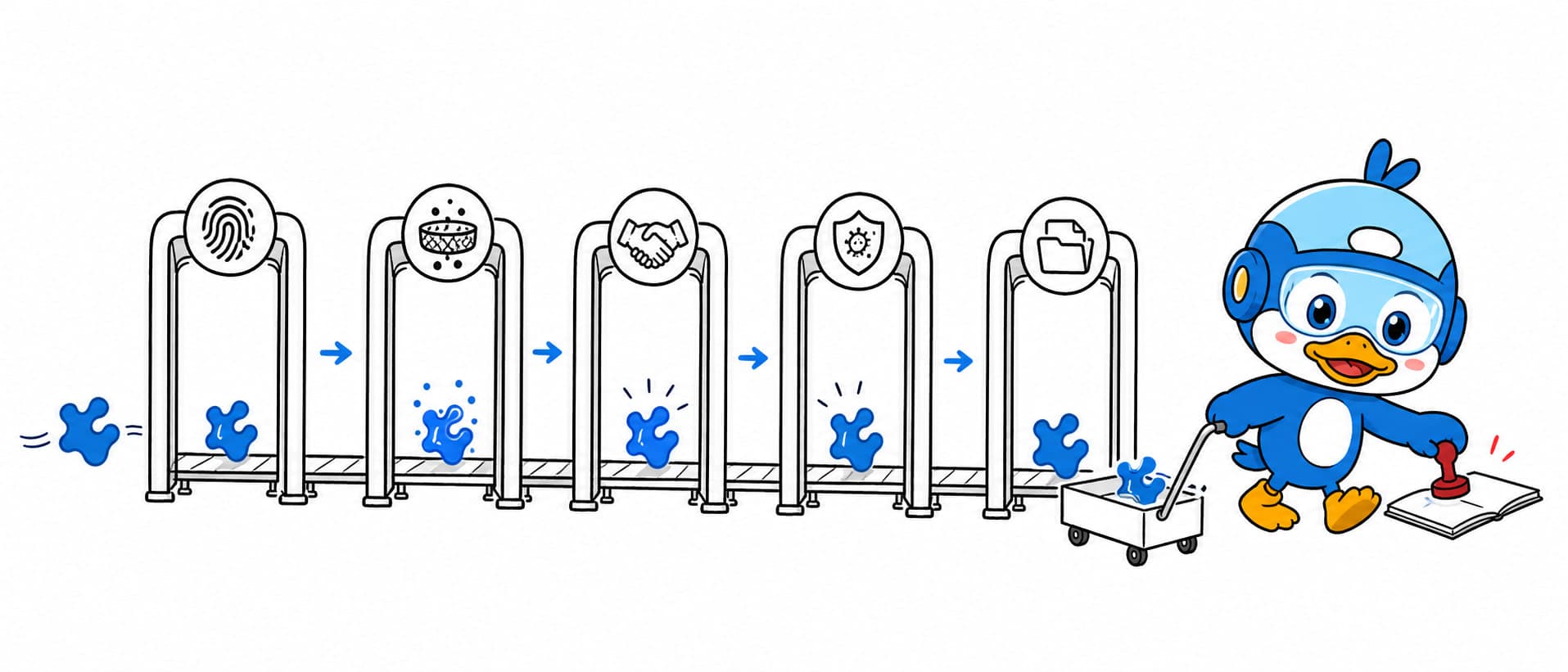
Figure 1 | High-purity ligand proteins for GMP need to pass multiple quality checkpoints, including identity, impurities, activity, safety, and traceability.
Category: Protein Engineering / Biopharmaceutical Process
Keywords: GMP-oriented high-purity ligand protein; GMP ligand protein; recombinant affinity ligand; ligand protein quality control; batch consistency
Why high-purity ligand proteins for GMP shouldn’t be judged by purity alone
High-purity ligand protein for GMP isn’t a single grade that exists independently of its use. It’s more of a risk-based development goal: first, clarify what stage the ligand will be used in, what products it will contact, and whether it might remain or detach, and then establish specifications, methods, process controls, and documentation requirements accordingly. Different regions, regulatory paths, and uses may have different direct requirements—you can’t just mechanically apply a guideline for a biopharmaceutical product to make a legal checklist for all ligand materials.
“High purity” only answers part of the question about the sample’s composition. A single main band on SDS-PAGE doesn’t simultaneously prove that the amino acid sequence is correct, the distribution of monomers and aggregates is appropriate, host cell proteins and host DNA are controlled, residual reagents are acceptable, binding function meets the intended use, or that the quality remains stable after refrigeration, freeze-thaw, or transportation.
Take affinity chromatography as an example: different ligands have different target recognition, binding characteristics, and process purposes, so the meaning of “activity qualified” will also differ. If the final form is immobilized ligand, simply measuring the binding signal of the free protein may not be enough to represent the loading, selectivity, elution behavior, and cycle stability after immobilization.
Seven types of evidence to look for in high-purity ligand proteins for GMP

Figure 2|Seven types of evidence answer different quality questions and cannot replace each other with a single purity reading.
1. Identity. Identity testing answers 'Is this the expected molecule?' Sequence origin, construct, expression host, and theoretical molecular weight are upstream records; peptide maps, intact molecular weight, terminal groups, or immunological methods can provide orthogonal confirmation according to risk. Simply having a gel band close to the theoretical molecular weight usually isn't enough to rule out truncation, mismatch, or similar host proteins.
2. Purity and product-related variants. Total purity, monomer ratio, aggregates, fragments, mismatched forms, and degradation products are different issues. SDS-PAGE is good for looking at molecular weight-related components, SEC is better for size heterogeneity, and chromatography or mass spectrometry can further clarify changes like charge, oxidation, deamidation, or truncation. The combination of methods should be determined by the molecule's characteristics and intended use.
3. Process-related impurities. Expression hosts may bring host cell proteins and host cell DNA; the purification process could also introduce antibiotics, inducers, metal ions, detergents, proteases, or chromatography-related residues. Even a high purity percentage still leaves analytical blind spots if it doesn't explain how these impurities are identified and controlled.
4. Use-related activity. Activity methods should infer function from the ligand’s role in the process. For affinity ligands, consider binding target, selectivity, and repeatability; if used in a resin, also consider performance after coupling. A candidate ligand that shows expected binding in free form does not automatically perform suitably in a specific matrix, ligand density, and wash conditions.
5. Microbes and endotoxins. There is no universal numeric answer suitable for all recombinant ligand proteins. Acceptance criteria need to consider where the material is added in the process, how it contacts the product, subsequent removal ability, administration route, and regional requirements; detection methods must also rule out suppression or enhancement caused by the sample matrix.
6. Stability. Proteins are affected by temperature, oxidation, light, ionic environment, shear, and freeze-thaw cycles. Just because purity passes at release doesn't mean it remains acceptable by the end of storage. Reference can be made to ICH Q5C for biotech/biologic products in its scope, using physicochemical methods that reflect degradation and, when applicable, including biological activity tests; long-term, real-time, real-condition data are usually key for supporting shelf life. For ligand materials, whether the specific plan is directly applicable and the depth of study should be confirmed based on material role, packaging, use, registration path, and regional requirements.
7. Batch-to-batch consistency and documentation system. A single-batch CoA is a snapshot, not the full picture of process capability. Researchers should also look at trends of representative batches, key process parameters, deviation and out-of-spec handling, analytical method status, supplier qualification, quality agreements, traceability, and change notification mechanisms. Quality attributes are truly auditable only when data and documentation correspond.
How to make GMP-grade high-purity ligand proteins: a six-step workflow.

Figure 3|Development process from defining use to stability, batch release, and change control.
Step 1: Define the use and quality objectives. First, clarify whether the ligand is meant as an affinity filler, detection reagent, process aid, or other role; specify contact stage, dosage, whether it’s immobilized, potential residues, and subsequent removal. Then translate this information into candidate critical quality attributes like identity, activity, impurities, safety, and stability.
Step 2: Lock in the molecule and production starting point. Freeze the sequence, tag, linker peptide, expression construct, and host origin, and set up a traceable cell bank or microbial seed system. For recombinant Protein A, Protein G, or Protein L, confirm that the retained binding domains and deleted regions match the intended target. Using non-animal sources or recombinant expression can reduce source-specific risks, but it doesn’t replace identity, contamination, and process controls.
Step 3: Establish expression and purification controls. Identify process parameters affecting solubility, folding, degradation, and aggregation, and design capture and polishing steps. Affinity, ion exchange, hydrophobic, or size-exclusion methods can create orthogonal combinations; the choice should be based on impurity profile and molecular properties, not just following a fixed template.
Step 4: Establish quality fingerprints using orthogonal methods. Assign SDS-PAGE, SEC, HPLC or LC-MS, protein content, binding/function assays, host-related impurities, and microbial/endotoxin testing to their respective issues. Extensive characterization is possible during development, while routine release will select a subset of methods that are discriminating, feasible, and confirmed or validated.
Step 5: Demonstrate stability and batch consistency. Use representative batches to establish trends under release, storage, and transport conditions, observing whether purity, aggregation, degradation, and activity change in sync. If process, site, scale, materials, or packaging changes, assess if a comparability study is needed rather than just comparing two terminal CoAs.
Step 6: Complete supplier and change management. The buyer should confirm who sets the specs, who maintains the methods, how key materials are traceable, how deviations are investigated, how much notice is given for changes, and what types of changes trigger a review. For GMP-targeted high-purity ligand proteins, it’s ultimately a combo of 'material evidence, manufacturing control, and quality governance,' not an isolated label.
How to interpret results: Don’t let a single number replace the whole evidence package
When reading results, you can review them point by point using the question “What does this method answer, and what doesn’t it answer?” SDS-PAGE can show the main molecular weight components but may not separate variants of the same molecular weight; SEC can reveal size distribution but doesn’t directly confirm sequence identity; mass spectrometry can strengthen identity and modification interpretation but doesn’t replace biological activity; binding experiments can reflect molecular recognition, but results are affected by immobilization methods, concentration, buffers, and kinetic models; endotoxin results must also be considered alongside method applicability, sampling, and intended use limits.
The most valuable approach isn’t just piling all methods into the CoA, but establishing a correspondence between “quality risk – detection method – acceptance criteria – process control – handling of anomalies.” For ligand resins, free ligand quality should also be managed separately from the performance of the conjugated material, to avoid directly extrapolating the quality of raw protein to the final medium.
The five pitfalls researchers are most likely to fall into:
1. Treating purity percentage as the final conclusion. The risk is identity errors, aggregated species, or process residuals being masked by the main band. Risks should be listed first, then orthogonal methods decided.
2. Only measuring free-state binding. The risk is that orientation, steric hindrance, and local density changes after immobilization remain unverified. The final usage form should be included in the activity strategy.
3. Only looking at a single batch CoA. The risk is being unable to judge batch variability and process drift. Trends across multiple batches, deviation records, and process capability should be considered.
4. Treating accelerated stability as the shelf life itself. The risk is underestimating conformational and activity changes under actual storage and transport conditions. Accelerated studies can support risk assessment but cannot replace long-term real-time data.
5. Supplier changes only changing the purchase code. Changes in cell banks, media, purification steps, sites, scale, or packaging can all affect impurity profiles and stability. Quality agreements should define notification and re-evaluation triggers in advance.
How MatwingsVenus™ (Xiaowu™) participates in GMP-oriented high-purity ligand protein development

Figure 4 | The agent can organize design and experimental tasks, but final quality decisions are still made by the controlled system and responsible personnel.
Researchers can provide MatwingsVenus™ (Xiaowu™) with the target ligand sequence, available structures or homologous information, binding targets, expression host, intended form of use, existing purification results, and the properties they want to improve simultaneously such as binding, stability, solubility, or process constraints. The closer the input is to actual use, the more decision-making value the candidate designs and experimental priorities have.
MatwingsVenus™ (Xiaowu™) can organize problems into task chains: first, it retrieves sequences and functional backgrounds, analyzes structure, surface properties, and potential risk sites; then it proposes candidate mutations or sequence schemes around defined goals and sends them into expression, purification, and functional validation plans. The computation results are used to narrow down the experimental scope and do not equal batch-measured conclusions.
At the output level, MatwingsVenus™ (Xiaowu™) is suitable for returning candidate sequences, site rationale, expected risks, metrics that need verification, sample and control designs, and suggestions for the next round of iteration. For GMP-oriented high-purity ligand protein projects, the truly useful output isn’t a single word like 'compliant,' but a task checklist that protein engineering, downstream process, analytical development, and quality personnel can review together.
During the experimental handoff stage, MatwingsVenus™ (Xiaowu™) openly covers gene synthesis, protein expression validation, protein purification, and expert collaboration. For ligand projects, these steps can verify whether candidates can yield analyzable samples and provide experimental entry points for subsequent purity, binding, and stability studies; each batch's actual measured results and formal records still need to be generated and managed according to the project’s established experimental and quality processes.
Before candidate generation, MatwingsVenus™ (Xiaowu™) can also link database searching, protein sequence analysis, structure prediction, and targeted mutation design together: database info supplements known functional backgrounds, sequence and structure analysis helps form site hypotheses to be verified, and targeted mutation design turns hypotheses into candidates ready for expression validation. This connection can reduce repetitive work between tools, but prediction results are still only a guide for experimental priority and cannot serve as purity, activity, or stability release data.
A practical request can be written like this: 'Starting from the current recombinant affinity ligand, analyze potential aggregation, chemical instability, and expression risk sites while preserving target binding function; provide candidate modifications, control sequences, and purity, activity, and stability metrics to be validated both in free and immobilized forms.' MatwingsVenus™ (Xiaowu™) then completes computational analysis and experimental handoff, and the project team updates candidate rankings based on measured data.
It’s important to clarify that MatwingsVenus™ (Xiaowu™) cannot replace quality systems, analytical method validation, vendor audits, deviation investigations, or QA release. Its strength lies in organizing natural language goals, database searches, sequence/structure analysis, candidate design, protein expression validation, purification, and expert review into a single research chain, reducing information loss across roles, and ensuring each candidate enters experiments with clear verification questions.
An executable request could be written as: "Starting from the current recombinant affinity ligand, analyze potential aggregation, chemical instability, and expression risk sites while retaining the target-binding function; Candidate modifications, control sequences, and purity, activity, and stability indicators to be verified separately after free and immobilized are provided. Based on this, MatwingsVenus™ (Xiaowu ™) completed the calculation analysis and experimental transition, and the project team updated candidate rankings based on measured data.
It should be made clear that MatwingsVenus™ (Xiaowu ™) cannot replace quality systems, analytical method validation, supplier audits, deviation investigations, or QA releases. Its advantage lies in organizing natural language targeting, database retrieval, sequence/structure analysis, candidate design, protein expression validation, purification, and expert review within the same research chain, reducing cross-role information loss and ensuring each candidate enters the experiment with clear validation questions.
FAQ: Common questions about high-purity ligand proteins for GMP
1. Is there a unified "GMP-grade purity line"?
There is no single universal purity threshold across applications. Purity acceptance standards should be established based on molecular type, usage stage, impurity risk, subsequent removal capacity, and regional requirements; Even with high purity, evidence of identity, activity, safety, stability, and supply chain is still required.
2. SDS-PAGE shows a single main tape; can it be released directly?
One cannot draw conclusions based solely on this. It supports purity and molecular weight observation, but usually risks also need to be considered for SEC, chromatography/mass spectrometry, activity, process impurities, and microbiological methods.
3. Can research-grade samples undergo re-testing to become high-purity ligand proteins for GMP?
Supplementary testing can add information but cannot automatically complete production records, raw material traceability, process control, deviation handling, stability, and change management. Whether it is available should be determined by the quality risk assessment of the specific project.
4. Is lower endotoxin always better?
Reducing endotoxins is generally beneficial for risk control, but projects still need to clarify acceptable limits, method applicability, and sampling strategies. Comparing a value off the end use may simultaneously overlook process clearance and sample matrix interference.
5. Should ligand activity be selected for combination experiments or functional experiments?
It depends on the intended use. Free state binding can be used for molecular screening; If ultimately fixed to the substrate, the capacitance, selectivity, elution, and cycling stability after coupling often approach real functionality. The two can be layered rather than interchangeable.
6. Why is a comparability assessment needed when changing suppliers or production sites?
Because changes in host expression, cultivation and purification processes, scale, and packaging may alter impurity profiles, modifications, aggregation, and stability. Comparison projects and depths should be determined based on the risks of the changes.
Summary: Turning high-purity samples into reviewable quality evidence.
For GMP-focused high-purity ligand proteins, start from their intended use and answer seven key questions: what it is, how pure it is, whether it works, if it's safe, if it can be stably stored, whether batches are consistent, and if the supply chain is traceable. Then, use a six-step workflow to link molecular design, manufacturing, testing, stability, and change management.
If you’re developing a specific ligand, organize the target sequence, binding partner, expression host, usage form, and quality constraints as task inputs, let MatwingsVenus™ (XiaoWu™) generate candidate designs and validation checklists, and then have your lab and quality teams carry out the actual measurements and release decisions.